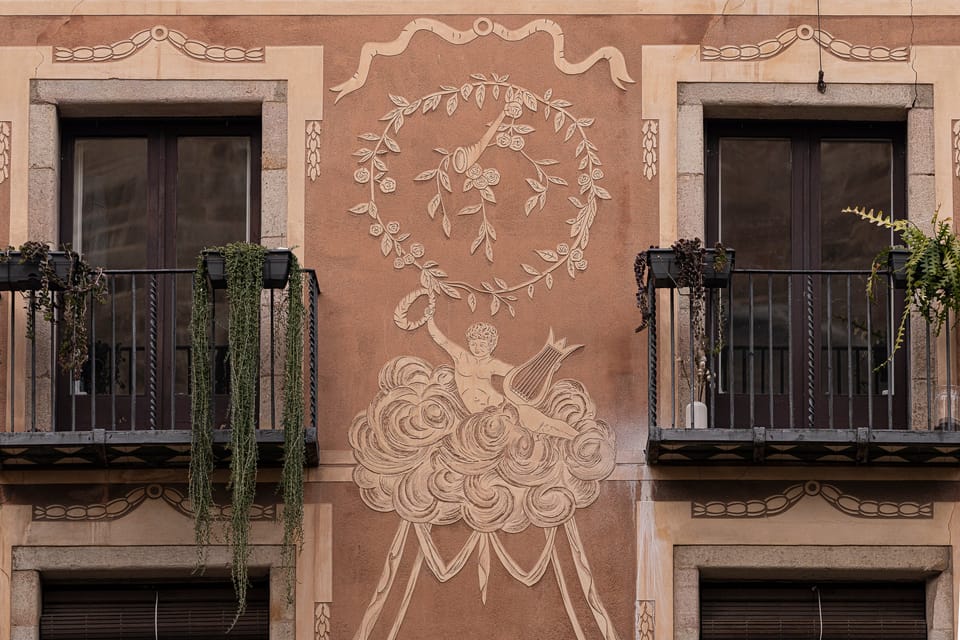
Barcelona is putting one of its lesser-known decorative traditions in the spotlight, with a new exhibition on Baroque sgraffito in Ciutat Vella. The show, Baroque Sgraffito of Barcelona, has been launched by the Ancient Guild of Retailers 1447 Association and runs until 29 May at its hall at Plaça del Pi, 3.
Curated by art historian Reinald González, the exhibition brings together nine historic façades from the city centre. It aims to show how this technique helped shape Barcelona’s streets and buildings over centuries, while also pointing to the pressure these façades face today.
Francesc Sendil, president of the Ancient Guild of Retailers 1447 Association, said Baroque sgraffito is “a very characteristic feature of the city”. He added that it helped explain Barcelona’s growth within its walls, where buildings could only expand upwards, and that it was used to distinguish one building from another. The guild says it is working to keep parts of Barcelona’s heritage visible and not lost to gentrification.
Baroque sgraffito first appeared in Barcelona during the Baroque period. The method uses several layers of coloured render, with the top layer scratched away to reveal the colour beneath. The result can include drawings, scenes or ornamental motifs, and the style later influenced other movements, including Modernisme. For background on the technique, see the sgraffito technique overview, and for the city’s historic centre, the Ciutat Vella district page from Barcelona City Council.
The exhibition also explains how the façades were made. Workers began with a base layer of lime mortar, then added a second coloured layer, using natural pigments such as ochres, ferruginous reds, carbon blacks and grey tones. A finer top layer was then scraped back to form the design. The process needed careful timing and thickness, and workers often used stencils, known as estergits, which helped create similar patterns across different buildings.
Visitors can also follow a walking route through the city centre to see the selected façades in situ. The route includes audio explanations, and the exhibition features texts and photographs by Pau de la Calle. The guild says many of the buildings are not well preserved, with damage, cables and ground-floor uses affecting the façades. The tour starts at the guild’s headquarters at Plaça del Pi, 3, in a building dating from 1781, whose main façade includes Archangel Saint Michael, the guild’s patron.