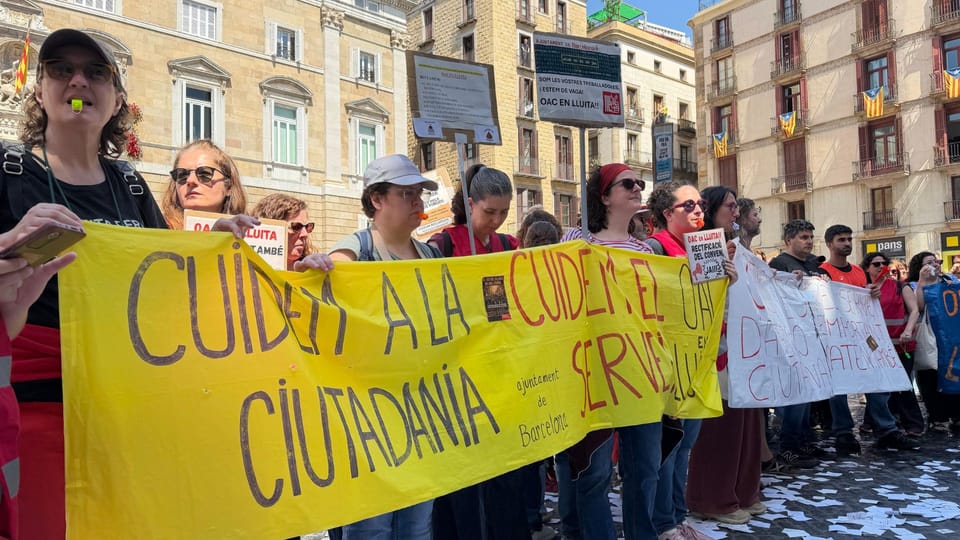
In Barcelona, a new labour agreement for City Council staff has split unions and sparked months of protests among direct service workers. The deal was approved in January and affects nearly 17,000 municipal employees.
About 3,500 direct service staff are involved in the protests. They include workers in social services, nurseries, citizen attention offices, feminism departments, the SARA centre, the Women’s Information and Attention Points (PIAD), and the community services linked to the Municipal Unit against Human Trafficking (UTEH).
The city government negotiated the text with the majority unions CCOO, UGT and CSIF. Together, they hold 12 of the 15 seats on the negotiation committee. These unions say the agreement improves working conditions compared with the previous one.
CGT, with three representatives on the committee, rejected the deal. CGT and Intersindical say it rewards masculinised sectors and penalises feminised ones linked to care and social attention, according to betevé. They also argue it cuts labour and conciliation rights, and they want a separate negotiation table for social services staff.
Library staff are in a different position. Some fall under the Consorci de Biblioteques and are covered by the new municipal agreement, while others depend on the Diputació and are not yet affected. Libraries also have their own works council, made up only of Intersindical and CGT representatives, which is also asking for a separate framework.
The majority unions recently sent a letter, seen by betevé, criticising Junts, BComú and ERC after the parties called an extraordinary plenary session to discuss the strikes. The unions said that move sets a dangerous precedent and weakens democratic worker representation. For more Barcelona local coverage, see our sport and community pages.
Originally published by betevé. Read the original report.