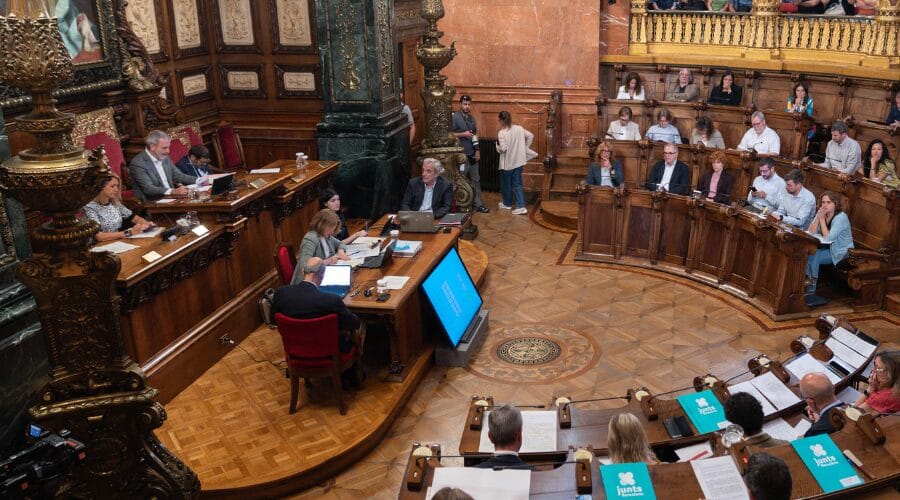
Barcelona City Council has approved new planning rules for religious centres in industrial areas of Barcelona, with the changes focused on Sant Andreu and Sant Martí. The measure was backed unanimously at the Plenary Council and now goes to the Generalitat de Catalunya’s Subcommission of Urbanism for final approval.
The modification to the General Metropolitan Plan (PGM) covers 231.6 hectares of industrial land, including Bon Pastor and La Verneda i la Pau, plus nearby areas. The aim is to allow religious centres in these zones while keeping urban integration, safety and accessibility in place, and avoiding an excessive concentration of large-capacity centres.
The plan does not change land use or require physical transformation of the area. Barcelona City Council says it sets planning conditions that protect mobility, safety and compliance, without affecting housing or reducing the amount of industrial land available.
Under the new rules, up to 20 places of worship will be allowed in the modified area, including existing legally established centres. Related cultural, social, educational and community activities will be permitted if they are directly linked to the religious use, and they cannot take up more than 50% of the centre’s total floor space. Each centre is capped at 2,000 square metres, and any site needing more than that must be on land set aside for public equipment.
Large-capacity centres, defined as those over 1,000 square metres or for more than 500 people, must be at least 100 metres apart. The rules also ban religious use on industrial land in 100-year flood risk zones, while sites in 500-year flood risk zones are limited to ground floor use without a basement and must have self-protection measures.
All centres must have direct access from a public road and provide private parking, in line with the rules used for entertainment venues under the PGM. For more local coverage, see our Community tag and Sport tag.
Originally published by Barcelona City Council Press Room. Read original article.