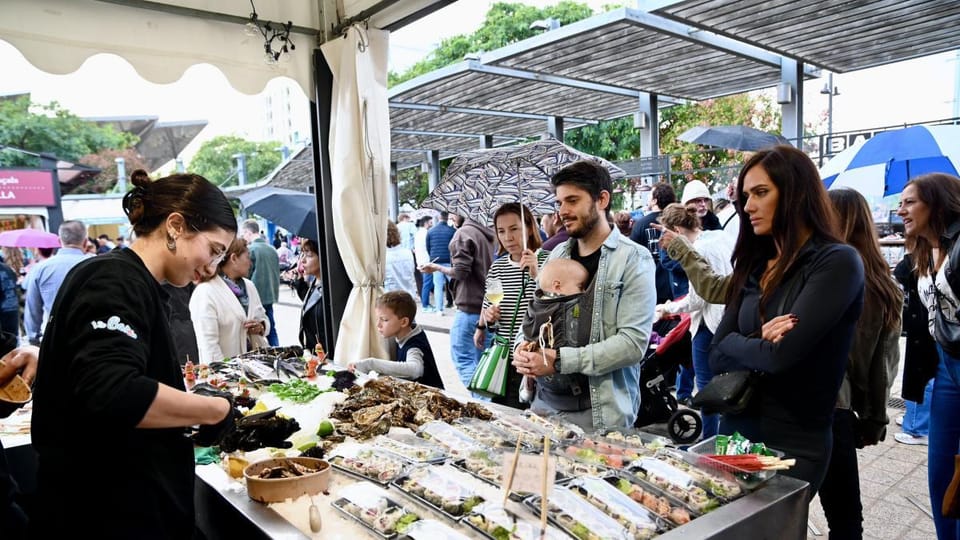
Plaça de les Glòries Catalanes in Barcelona is currently hosting a Local Trade Fair, running from Friday until Sunday. The event transforms the public space into a hub of stalls, aromas, and stages, highlighting an essential part of the city: its local commerce.
Organised by the Barcelona City Council, the fair brings together traders, restaurateurs, municipal markets, and commercial hubs from across the city. Its purpose is to show the richness and diversity of a commercial fabric that forms part of daily life in Barcelona's neighbourhoods. Visitors can explore local trade stands, discover products from municipal market stalls, or relax in picnic areas.
The gastronomic zone, featuring barbecues and various food options, invites attendees to taste the city's diverse flavours. The fair is open on Friday and Saturday from 11:00 to 22:00, and on Sunday from 11:00 to 21:00.
Celebrating Barcelona's Commercial Heart
A central feature of the fair is the Activities Classroom, which hosts cooking demonstrations, talks on nutrition, and sessions about the value of local trade. These activities allow visitors to see how everyday ingredients become elaborate dishes. They also provide insight into the work of traders and producers.
Meanwhile, stages offer live music, creating a festive atmosphere. Families also find dedicated spaces with workshops and activities designed for children, combining play and learning. One example is “Li deien Kalòpsia”, a show where narrator Lídia Clua helps children discover Europe from outer space, based on the story “Kalòpsia: un planeta no tan diferent”, published by the European Commission's representation in Barcelona.
The fair acts as a shop window for the Mediterranean commercial model, which combines proximity, specialisation, and direct customer relationships. This approach to commerce means market stalls focus on fresh, seasonal produce. Neighbourhood shops offer personalised service, often anticipating customer needs.
Economic and Social Benefits of Local Trade
This commercial ecosystem, which includes food, services, and restaurants, forms a living network beyond economic transactions. It also serves as a space for relationships and trust, building community ties. Money spent on local commerce stays within the territory and reinvests in the same community, generating wealth and economic activity.
Proximity commerce creates stable, locally connected jobs, directly impacting neighbourhood life. Shops do more than sell products; they act as meeting points, fostering neighbourly relations and bringing streets to life. Direct interaction with traders allows for expert advice tailored to each client.
Physical proximity saves time and travel. Being able to shop on foot, within one's own neighbourhood, simplifies daily life. Consuming local products reduces transport and, consequently, emissions, favouring shorter, more responsible supply chains. Especially in food, local businesses prioritise seasonal and zero-kilometre products, often with fewer intermediaries.
Barcelona: European Capital of Local Trade 2026
Local businesses form part of a city's heritage. Their continued operation maintains traditions, trades, and a unique way of life. Small shops offer unique, specialised, or artisan products not found in large chains. An active commercial fabric contributes to safer, more cohesive neighbourhoods with better public spaces.
Local trade is a major driver for Barcelona. Over 60,000 establishments open daily, and the sector contributes 13.2% of the city's Gross Domestic Product (GDP). It also accounts for more than 152,000 jobs, making it the primary employment sector. This influence shows in its presence across all neighbourhoods.
Every neighbourhood has commercial activity, which creates active public spaces, social cohesion, and a network of daily interactions. The fact that 90.9% of premises remain active shows the sector's resilience and adaptability. Many establishments also form part of the collective memory, including historic shops, century-old markets, and family businesses, which help build a recognisable urban identity.
Future Plans for Barcelona's Commerce
Barcelona's European recognition as the Capital of Local Trade 2026 reinforces this reality and opens new opportunities. The city works to modernise commerce with digital tools, promote sustainability, and make it more competitive without losing its local roots. The Barcelona Impulsa roadmap guides this effort.
This city strategy organises eight major economic areas and promotes sectors from trade and restaurants to innovation, health, and the blue economy. This approach seeks to balance growth and quality of life. The city aims to reduce tourist pressure and ensure economic activity benefits its citizens.
Barcelona is launching a programme of activities for the European Capital of Local Trade 2026, placing local commerce at the centre of its city model. The European Commission initiative recognised Barcelona as the first ‘Visionary City’, an award for a commercial model based on diversity and local embeddedness. The city, with 40 commercial hubs that structure its neighbourhoods and bring streets to life, is a European benchmark.
The programme, developed with over 70 sector entities, includes more than 200 activities across all ten districts. It focuses on three main areas to mobilise professionals and citizens: promotion, reflection, and legacy. The Local Trade Fair, opening today on Europe Day, is a key event.
Another significant moment will arrive in July 2026, with the start of the Tour de France from Barcelona. The city will use the international impact of the race to boost the visibility of its commercial fabric with specific street actions. A communication campaign, “A prize-winning local trade”, will promote Barcelona as the European capital of local trade and value the role of proximity establishments.
The city will participate in the European Forum of Cities and Regions of Local Trade, led by the Generalitat de Catalunya. It will also join benchmarking workshops promoted by the European Commission to analyse trends in innovation, sustainability, and social commitment. Additionally, the creation of a Local Trade Observatory is underway. With this agenda, Barcelona aims to strengthen its position as a European leader and show that local trade can lead the future of cities.
Come and join our Barcelona English Speakers community on WhatsApp.
Originally published by La Vanguardia Barcelona. Read original article.