The Barcelona Metro system faced immense disruption and transformation during the Spanish Civil War (1936-1939) and the subsequent post-war years. It functioned as an air-raid shelter and military storage facility, while its expansion plans stalled and operations struggled with severe resource shortages. The conflict brought a halt to the metro's development. Subsequent years saw electricity cuts and a significant lack of materials and labour.
Following the military coup on 18 July 1936, metro services initially stopped. Workers' committees, primarily affiliated with the CNT, later decided to restart operations. At this time, Barcelona's metro comprised two distinct companies: the Gran Metropolità, running from Lesseps to Liceu/Correus, and the Gran Transversal, connecting Santa Eulàlia to Marina. The Gran Transversal, the precursor to today's L1 line, uniquely featured an Iberian track gauge. Its service resumed with vigilance teams at depots and electrical substations to prevent sabotage.
Metro as Shelter and Storage
Espanya station played a special role during the war. It used its third track first as a train depot and inspection pit. Later, it became a storage facility for military equipment. This material entered through the current L1 tunnels. It was transferred at Espanya station to Ferrocarrils de la Generalitat trains for delivery. The first bombings on Barcelona occurred on 16 March 1937. This led many residents to use metro stations as shelters.
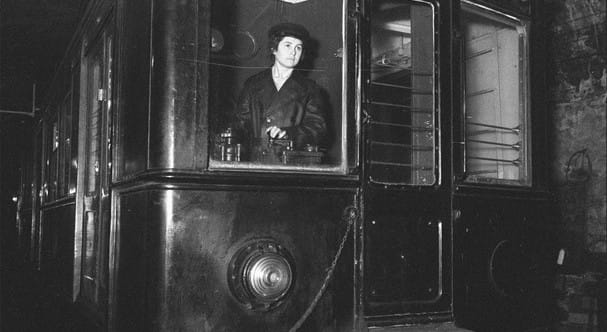
Fear prompted some citizens to move personal belongings, including beds, tables, and chairs, into the platforms and vestibules. They effectively lived underground. Authorities eventually prohibited this practice and confiscated items. They cited public health concerns. During the war, many men mobilised to the front lines. Women began taking on roles previously reserved for men, such as train drivers and chiefs. However, this shift was temporary. Labour discrimination against women returned with the arrival of Francoist troops in Barcelona.
Post-War Integration and Austerity
The post-war era brought further changes and restrictions to the Barcelona Metro. In February 1941, the Railway Organisation Law came into effect. This law revoked all concessions with Spanish track gauges, including those of the Transversal. The Ministry of Public Works ordered the company to close its accounting books. It arranged for the state to take over the concession, integrating the system into RENFE. After a lengthy process, the original company eventually regained control of operations.
The political and economic fallout from the conflict resulted in a severe lack of resources. This scarcity meant that only one new metro station, Ferran, opened until 1950. This modestly extended the Lesseps-Liceu line. Purchasing new trains became expensive. Any non-essential element was considered a dispensable expense. For instance, the S series trailers acquired during this period were manufactured without exterior cladding on the chassis or frame. Their appearance clearly reflected an era defined by resource shortages and austerity measures.
Rising Passenger Numbers Amid Challenges
Despite the significant difficulties of the post-war period, the Barcelona Metro continued to provide essential service to the city's residents. Passenger numbers increased year after year. This showed the public's reliance on the underground network. Between 1945 and 1948, the Gran Metro saw its annual passenger count rise from 28 million to 37 million. Meanwhile, the Transversal line nearly tripled its ridership. It grew from 24 million to 59 million passengers annually. This growth showed the metro's critical role in Barcelona's recovery and daily life, even with limited infrastructure expansion.
The Metro's Enduring Legacy
The Spanish Civil War and post-war years left a lasting impact on the Barcelona Metro. They shaped its development and operational practices for decades. The experiences of using stations as shelters and the challenges of resource scarcity became part of the system's history. Today, the metro remains a vital part of Barcelona's public transport network. It serves millions of residents and tourists daily. Its resilience during these tumultuous times highlights its enduring importance to the city.
Sign up for our new entrepreneurs community Bizcelona, now accepting our second wave of applicants.
Originally published by TMB Barcelona News. Read original article.