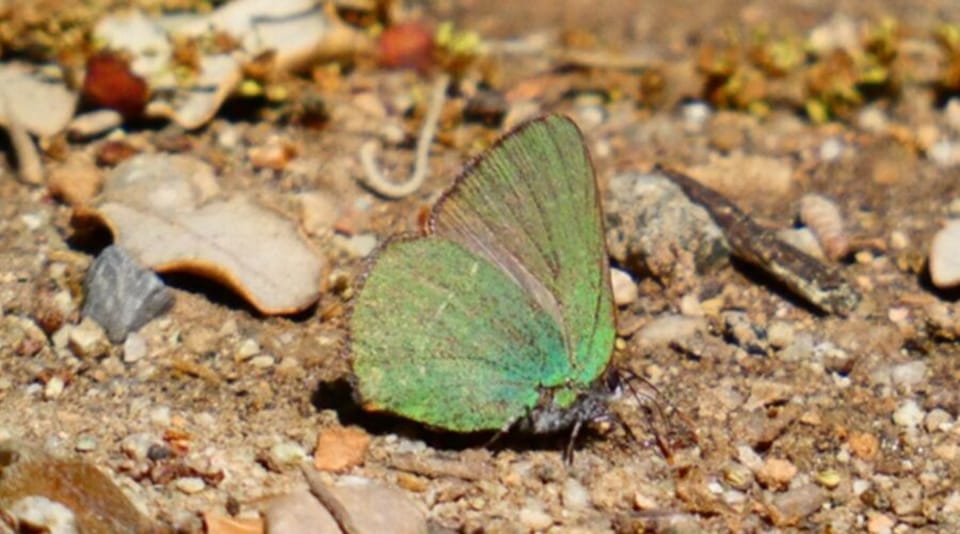
Barcelona has identified a new butterfly species, the Green-eyed Greenwing (Callophrys avis), for the first time within the city limits. Experts discovered the butterfly a few weeks ago during monitoring at the Parc del Laberint d'Horta in the Horta district. This finding brings Barcelona's total number of recorded diurnal butterfly species to 52, representing approximately 26% of all species found in Catalonia.
The Green-eyed Greenwing: A Specialist Species
The Green-eyed Greenwing is a univoltine species, meaning it produces only one generation each year. It flies exclusively from March to May. This specialist butterfly relies heavily on two specific plants for survival: the strawberry tree (Arbutus unedo) and the redoul (Coriaria myrtifolia). Butterflies like the Green-eyed Greenwing serve as important bioindicators of environmental quality. Their sensitivity to changes in vegetation, climate, and ecological conditions provides valuable information about urban biodiversity.
During their larval stage, these species depend entirely on a limited number of plants. Butterfly populations decline rapidly when these host plants disappear or decrease. Butterflies also respond very sensitively to the effects of climate change. Beyond their ecological value, butterflies play a fundamental role in urban ecosystems as primary consumers. They also act as a food source for numerous predators and parasitoids. Additionally, they help citizens connect with urban nature due to their easy identification and high aesthetic appeal.
Volunteer Efforts Drive Discovery
The discovery came through the volunteer network of the urban Butterfly Monitoring Scheme (uBMS). This project is coordinated by the Centre for Ecological Research and Forestry Applications (CREAF). It operates in Barcelona under an agreement with the Municipal Institute of Parks and Gardens of Barcelona. Around 40 volunteers actively participate in weekly butterfly monitoring across 29 city parks and gardens. They conduct visual censuses between March and November to collect data on species presence and abundance.
Barcelona also contributes to the Catalan Butterfly Monitoring Scheme (CBMS). This initiative comes from the Granollers Museum of Natural Sciences. The scheme conducts monitoring along two routes in Montjuïc and El Carmel. Butterfly monitoring programmes aim to gather long-term data on species presence and abundance. This helps understand species diversity, analyse population trends, identify urban factors affecting biodiversity, develop ecological management tools, and create urban biodiversity quality indicators.
Adapting to Urban Environments
Current data shows that while the number of detected species has increased, the five most common species account for 64% of all observations. This pattern indicates a community primarily composed of generalist species. These species adapt better to urban environments. Barcelona promotes various naturalisation strategies to support species with more specific ecological requirements. Key actions include establishing urban meadows and grasslands. They also involve low-intensity forest management in natural areas like Montjuïc, the Tres Turons, Collserola, and the Rec Comtal. The city also creates biodiversity refuges. These measures aim to improve ecological connectivity, increase habitat quality, and balance the abundance of different species.
Climate Impact on Butterfly Populations
Monitoring data also shows the direct impact of climatic and management factors on butterfly populations. In 2020, during the lockdown, reduced intervention in green spaces and wetter weather led to a notable increase in butterfly abundance. However, a prolonged drought between 2021 and 2023 caused a significant decrease in observed populations. Data from 2024 indicates a progressive recovery.
Residents interested in joining the uBMS volunteer network can find more information on the project's website. Continued monitoring and naturalisation efforts will be critical for preserving Barcelona's rich urban biodiversity.
Sign up for our new entrepreneurs community Bizcelona, now accepting our second wave of applicants.
Originally published by Barcelona City Council Press Room. Read original article.