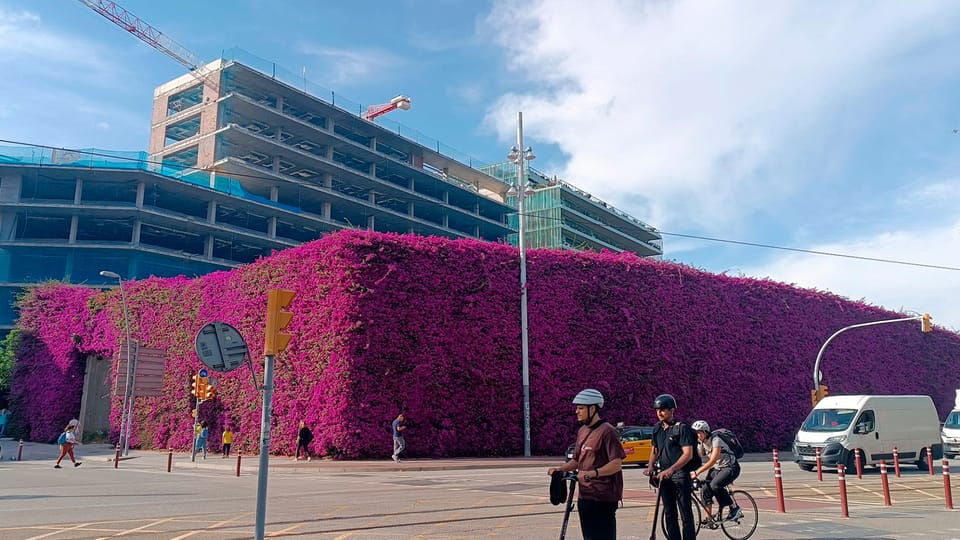
In Barcelona’s Sant Martí district, the Parc del Centre del Poblenou is full of bougainvillea, with the climbing plant covering the park’s exterior fence in bright magenta tones. The five-hectare green space in the Provençals neighbourhood, next to Diagonal avenue, opened in 2008.
The park is split into several areas and puts vegetation at the centre of the design. It has more than 1,000 trees, 35 palm trees, over 5,000 shrubs and nearly 11,000 climbing plants. Wisteria and bougainvillea are among the most visible species.
Bougainvillea comes from the Amazon region of South America, including countries such as Colombia, Peru, Brazil, Paraguay and Argentina. In Barcelona, it flowers for several months each year, with the strongest bloom usually in summer. The colour people notice is not from the flowers themselves, but from the bracts, which are modified leaves that sit close to the small white flowers.
The plant suits Barcelona’s Mediterranean climate well. It needs plenty of light, does well in mild winters and can cope with the city’s usual rainfall, although it may need extra watering in the driest summer months. In colder inland areas, it needs protection from low temperatures.
Bougainvillea is also common across the city, not just in Poblenou. The Atlas of Biodiversity from the Ajuntament de Barcelona says common bougainvillea is present in all districts. It is especially visible in Sants-Montjuïc, where it appears in many parks and gardens on Montjuïc mountain. Barcelona Parks and Gardens grows four types of bougainvillea.
For more Barcelona city coverage, see our Community and Sport pages.
Originally published by betevé. Read original article.