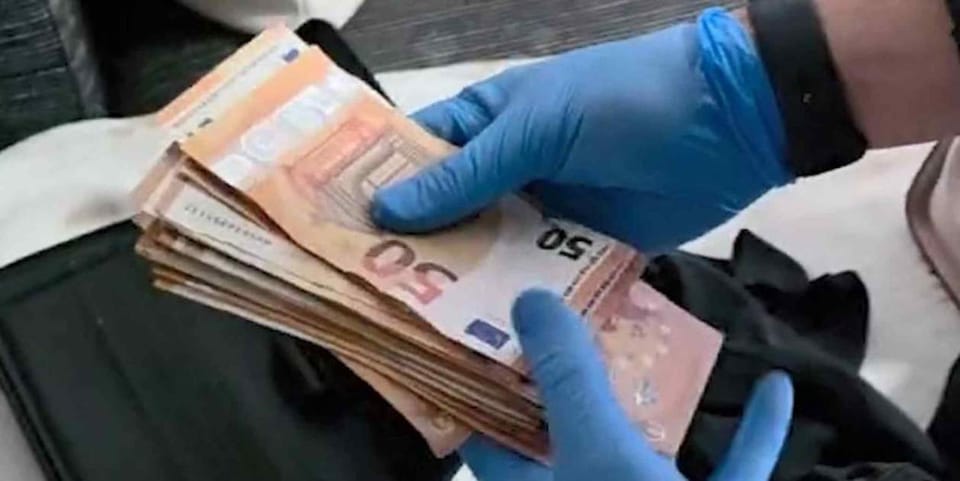
Mossos d'Esquadra arrested a 32-year-old man and a 29-year-old woman on 5 May, accusing them of distributing high-quality fake €50 notes across the Barcelona metropolitan area. The couple allegedly targeted lottery vendors, using a nine-month-old baby to gain trust during their fraudulent transactions.
Investigators from the Mossos d'Esquadra's Currency Forgery specialists started an investigation in March. They noticed a rise in fraud reports from businesses in municipalities like Barcelona, L'Hospitalet de Llobregat, and Mataró. The couple reportedly bought scratch cards costing €1, €2, or €5, paying with a counterfeit €50 note. They then received real currency as change. El Caso reported that the pair targeted 46 lottery vendors. Many victims only discovered the fraud when depositing their earnings at the bank. On one occasion, the couple gave the same vendor two fake notes on the same day without detection. This method allowed them to exchange low-value purchases for significant amounts of genuine cash.
Investigation Leads to Cardedeu Arrests
Investigators faced challenges identifying the man and woman due to difficulties in obtaining physical descriptions. The suspects acted daily in different municipalities, making their movements hard to track. Police therefore created a map based on the days and times of their operations. This mapping allowed them to establish the couple's typical routes and identify them.
Police obtained judicial authorisation to search the couple's home in Cardedeu, in the Vallès Oriental region of Barcelona. The search on 5 May uncovered 56 fake banknotes, three mobile phones, and stolen documents. The man and woman, who have around 20 prior arrests, now face charges of fraud and currency counterfeiting. Their nationality remains undisclosed by authorities.
High-Quality Counterfeits from Italy
The counterfeit notes were of very high quality, almost perfectly imitating the tactile marks of legitimate euro banknotes. These reproductions belonged to the new Europa series of the euro. Experts consider them particularly dangerous, according to the European Central Bank. The fake notes could only be identified by observing the bottom-left corner of the front side. The green-printed facial value did not change colour or produce a shimmering effect when moved, unlike authentic banknotes.
Investigators determined the couple bought these notes on the black market. They originated from southern Italy, linked to the Camorra mafia. This connection highlights a significant international dimension to the counterfeiting operation. The high quality of these fakes made them difficult for everyday vendors to spot, causing financial losses for small businesses.
Broader Counterfeiting Network in Catalonia
Many fake banknotes found in Catalonia come from this mafia group based in Naples. This arrest follows other recent operations against counterfeit currency distribution in Catalonia. In January, police arrested three people in Terrassa and Torelló for distributing similar fake money. In November, Mossos d'Esquadra also caught a family in Badalona using fraudulent €100 notes, also traced back to the Naples mafia.
These incidents highlight an ongoing issue with organised crime groups supplying high-quality counterfeit currency to the region. The repeated discovery of notes from the same source suggests a well-established supply chain. This network poses a continuous threat to the local economy and the integrity of financial transactions.
Vigilance for Barcelona Residents and Businesses
The arrests aim to disrupt the flow of these dangerous counterfeit notes into Barcelona's economy. Residents and businesses, especially small vendors and those in the lottery sector, should remain vigilant when handling cash transactions. Understanding key security features of euro banknotes can help prevent financial losses. Authorities continue to monitor and act against organised crime networks involved in currency counterfeiting, protecting the financial well-being of the Barcelona metropolitan area.
Sign up for our new entrepreneurs community Bizcelona, now accepting our second wave of applicants.
Originally published by El Caso (El Nacional). Read original article.