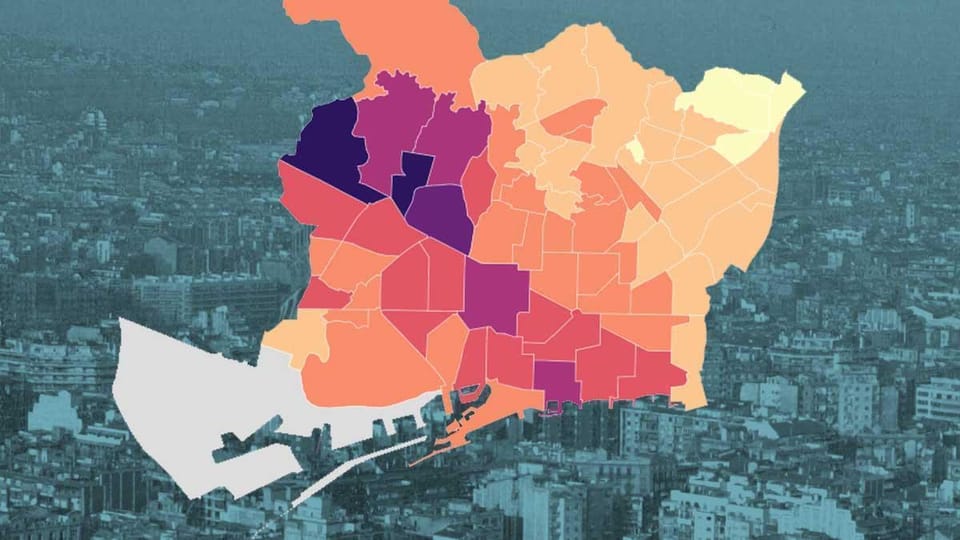
Barcelona's rental market experienced significant price increases across 41 of its 73 neighbourhoods during the fourth quarter of 2025. New data from the Catalan Land Institute (Incasòl) reveals the city's average monthly rent reached €1,161, as El Periódico reported on Saturday, continuing an upward trend despite existing rent controls.
This represents an increase from €1,153 just three months prior. The Incasòl data, based on tenancy agreements with deposited deposits, shows only 28 neighbourhoods recorded minor decreases. Four areas lacked sufficient sample size for analysis.
Wide Disparities Across Districts
Rent prices varied dramatically across the city. Ciutat Meridiana in Nou Barris recorded the lowest new contracts at €600 per month. In stark contrast, Pedralbes in Les Corts saw rents climb to €2,248, an increase of almost €130 in a single quarter.
Seven of Barcelona's ten districts registered quarterly increases. Only Gràcia, Les Corts, and Nou Barris experienced reductions during this period. However, a comparison from the beginning of 2025 shows generalised increases across the city.
Impact of Rent Controls and Shrinking Spaces
Catalonia's rent limitation law, implemented two years ago, permits only annual updates on new contracts. Despite this measure, the market continues to see high prices due to a severe shortage of available rental properties. High demand consistently outstrips supply.
The price per square metre also rose significantly, from €16.19 at the start of 2025 to €17.04 by the end of the year. This trend, coupled with a decrease in average flat size to 71 square metres, means residents face a greater real increase in rental costs.
Neighbourhoods See Notable Shifts
Sant Andreu district recorded the largest quarterly absolute rise, increasing by €44 in three months to an average of €911 per month. Sant Martí also saw rents rise by more than €20, reaching €1,141 for new contracts. Ciutat Vella experienced similar increases, with average rents at €1,029.7.
Sarrià-Sant Gervasi remains the city's most expensive district, averaging €1,626.6. Les Corts followed at €1,369.6, despite a €17 quarterly drop. The Eixample district, a central area home to 260,000 residents, averaged €1,310.6.
Nou Barris continues to offer the most affordable district rents at an average of €805 per month. Following Sant Andreu, Horta-Guinardó is the next most accessible district, with rents averaging €934.8. These three districts are the only ones remaining below the €1,000 threshold.
Specific Neighbourhood Price Changes
Several neighbourhoods saw significant quarterly increases. The Raval, a vibrant area in Ciutat Vella, increased from €947 to €992. Barceloneta, known for its beach access, rose by more than €23 monthly. Sant Pere, Santa Caterina i la Ribera saw an increase of over €33, reaching €1,118.4.
In the Eixample, Dreta de l'Eixample surged by almost €94 to €1,677.9, driven by high-end renovations. Nova Esquerra de l'Eixample increased by nearly €35 to €1,235. Sant Antoni saw rents rise by almost €75, reaching €1,188.8 per month.
The Marina del Prat Vermell in Sants-Montjuïc experienced a boom in new construction, pushing prices up by more than €110 to €1,159. Font de la Guatlla also rose by €85 to €1,085.5. In Nou Barris, Prosperitat increased by €55 to €856.
Poblenou, a rapidly developing area, reached €1,242 monthly. Provençals del Poblenou saw a substantial €173 quarterly increase, or €250 over the year, reaching €1,273.2. Sant Martí de Provençals climbed by approximately €75 to €1,022.
Conversely, some neighbourhoods experienced notable decreases. Fort Pienc in the Eixample dropped by about €85 to €1,108. La Bordeta in Sants-Montjuïc fell by €45 to €1,122.8. Sants-Badal retreated by almost €50 to €936.5.
Vallcarca i Peninents saw a decrease of almost €92 to €1,034.8. La Salut dropped by €137 to €1,022.8, and Verdun by nearly €95 to €726.8. El Congrés i els Indians reduced by over €60 to €880.3. Parc i la Llacuna del Poblenou softened by about €85, settling at €1,214.8.
The persistent imbalance between high demand and limited rental supply continues to drive Barcelona's housing market. Residents and prospective tenants face ongoing challenges in securing affordable accommodation across many parts of the city.
Come and join our Barcelona English Speakers community on WhatsApp.
Originally published by El Periódico Barcelona. Read original article.