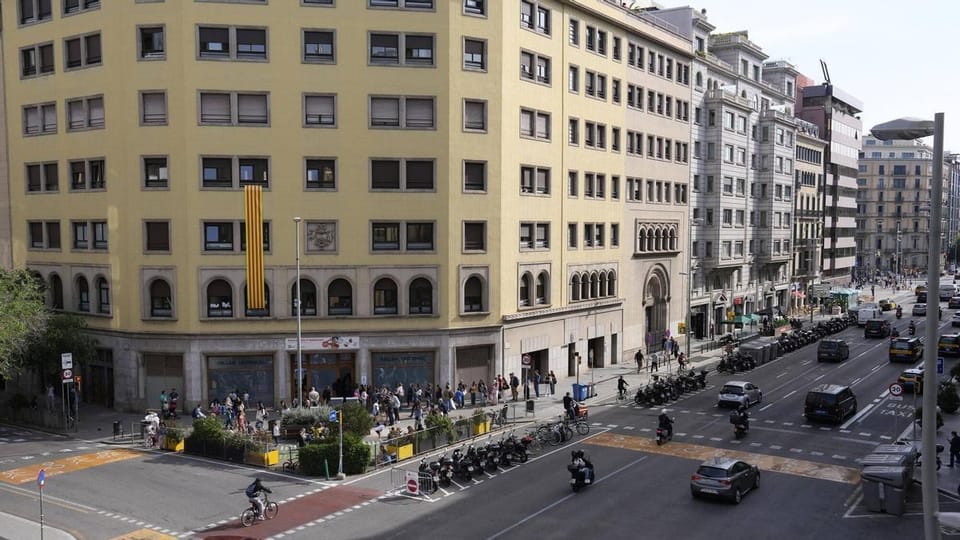
Barcelona City Council has started the process to make 11 temporary street calming measures permanent across six districts, transforming pandemic-era "tactical urbanism" interventions into fixed urban infrastructure. These projects, many located near schools, will involve widening pavements and creating single-level streets, with construction expected in the next municipal term.
The municipal company Barcelona d'Infraestructures Municipals (BIMSA) is managing the tender for technical projects. This contract, valued at nearly €344,000, includes preliminary designs, executive projects, and technical assistance during construction. "They are part of the participatory budgets, there is no calendar yet," municipal sources stated, highlighting the ongoing planning phase.
The City Council first implemented these "tactical urbanism" measures between 2021 and 2023. These temporary interventions used painted surfaces and removable elements to quickly transform areas. However, the council noted "inconveniences such as a high maintenance cost" with these provisional solutions.
The permanent transformation will replace coloured paint with fixed paving, known locally as 'panots'. This aims to create more durable and accessible public spaces. The reurbanisation areas range from 250 square metres to 1,900 square metres, depending on the specific location.
Consolidating Urban Spaces
BIMSA estimates the total construction cost for all 11 works at approximately €5.5 million, including VAT. The project drafting phase is expected to take nine months. This means actual construction will likely fall into the next municipal mandate. The projects are spread across Sants-Montjuïc, Sarrià-Sant Gervasi, Sant Andreu, Eixample, Horta-Guinardó, and Nou Barris.
Residents will see wider pavements and safer pedestrian areas, particularly around educational centres. For example, in the Poble-sec neighbourhood, part of the Sants-Montjuïc district, the school environment on Puig i Xoriguer street will gain a wider pavement on its mountain side. A similar solution will apply to three blocks of Passeig de l'Exposició, between Nou de la Rambla and Poeta Cabanyes streets, also near a school.
Key Projects Across Districts
Three of the planned projects are located near Montjuïc. The section of Leiva street, currently closed to traffic between Águila and Hostafrancs streets, will become a single-level platform. This will include an elevated crossing. A second phase will extend the pavement on Hostafrancs street, reaching the Bordeta road.
In Sarrià-Sant Gervasi, the project on Lincoln street, between Laforja and Via Augusta, will explore maintaining its current mix of pedestrian and traffic use. This will involve a single-level platform across a significant portion of the street, redeveloped in two phases. Additionally, Vendrell street in Bonanova, between Císter and Dominicos, will combine a single-level platform with a redistribution of services.
Eixample and Horta Improvements
In the Eixample district, home to 260,000 residents, two corners of Aragó street will see permanent pavement widening. These are at its intersections with Roger de Llúria and Pau Claris. Both locations are near school entrances and experience heavy traffic, making pedestrian safety a priority. This move contrasts with some previous "eco-chamfers" announced during Ada Colau's second term, four of which Mayor Jaume Collboni later discarded. However, the Aragó with Bruc chamfer, just one block away, was maintained.
In Horta, the intersection of Can Pujolet, Peris Mencheta, and Baixada de Can Mateu streets will also undergo changes. Can Pujolet and Baixada de Can Mateu will become single-level platforms. Peris Mencheta street will gain more pavement space on its west side. This area already has a controversial reurbanisation underway, involving the removal of three small houses and allotments on Aiguafreda street.
Enhancing School Environments
Nou Barris will benefit from two more school environment projects. Orduña street in Turó de la Peira, between Nil and Doctor Pi i Molist, and Torres de Roquetes street, between Alcàntara and Artesania, will both have their pavements widened. This aims to consolidate existing space and improve accessibility for students and residents.
The City Council's tender documents explain that tactical urbanism allowed for "very rapid transformation in different areas at an adjusted cost." However, the council now seeks "excellence in design" for these permanent solutions. They will prioritise people, durability, energy efficiency, and adaptability to future changes. The awarded contractors must study pedestrian routes and flows, ensuring safety at crossings. They will also create "staying spaces where appropriate," all while maintaining city services.
Sign up for our new entrepreneurs community Bizcelona, now accepting our second wave of applicants.
Originally published by El Periódico Barcelona. Read original article.