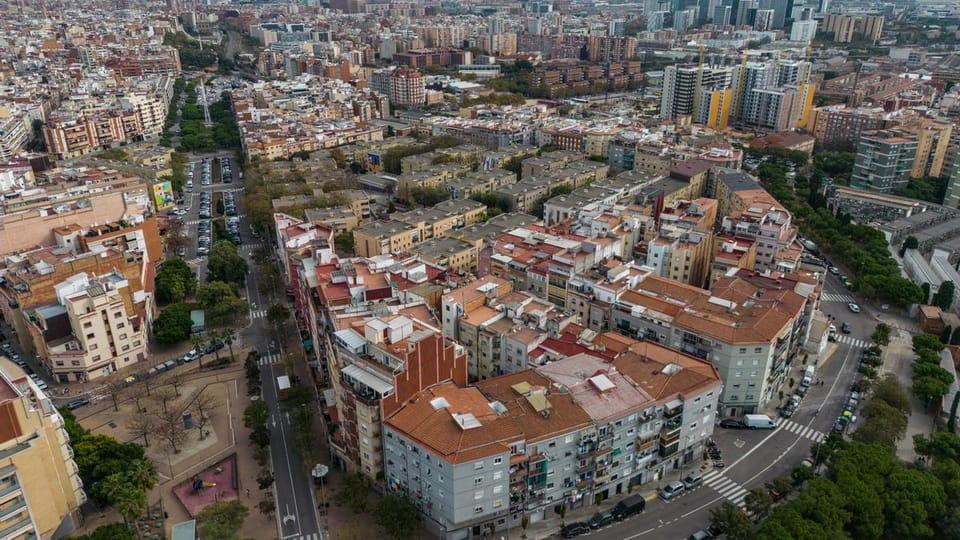
L'Hospitalet de Llobregat, Europe's most densely populated city, has reached a record population. New data from the National Statistics Institute (INE) indicates it now exceeds 300,000 residents. This marks the highest population figure for the Barcelona metropolitan area city since 1981.
The INE figures, which are provisional, place L'Hospitalet's population above 300,000. However, official municipal data currently reports nearly 298,000 registered residents. This represents an increase of approximately 6,000 people since the end of 2025.
Both figures surpass the city's previous record of 295,000 residents, set in 1981. Municipal sources explain that the INE maintains an open period for appeals. They expect the year to close with 298,000 residents.
The distinction between 298,000 and 300,000 residents holds significant political weight. Spanish municipalities with over 100,000 inhabitants have 25 councillors. They gain two additional seats for every subsequent 100,000 residents. L'Hospitalet, with over 200,000 residents, currently has 27 councillors. Exceeding 300,000 would increase this to 29 councillors. The council rules out this happening in the immediate future.
Spain's Population Growth
Spain's overall resident population increased by 97,021 people during the first quarter of the year. It reached a record 49,687,120 inhabitants by 1 April 2026. The estimated annual population growth was 459,462 people. This national growth primarily stemmed from an increase in foreign-born residents. The number of people born in Spain, however, decreased.
In 2025, L'Hospitalet saw one of the largest population increases among major cities, growing by 2.9 per cent. Other cities with significant growth included Torrevieja (4.6 per cent) and Roquetas de Mar (2.6 per cent). Conversely, Cádiz (-0.6 per cent), Córdoba (-0.4 per cent), and Santa Coloma de Gramenet (-0.3 per cent) experienced population declines.
A Century of Transformation
L'Hospitalet underwent a significant transformation over the last century. At the beginning of the 20th century, it was a small agricultural village with few industries. It had barely 5,000 residents. In just over 100 years, its population has soared by nearly 6,000 per cent. These residents now live within an area of approximately 12 square kilometres. This area is roughly equivalent to Castelldefels, which has a population of 70,000. This high concentration of people means L'Hospitalet contains Europe's two most densely populated square kilometres, according to Eurostat data.
Historical Migratory Waves
The city saw its first major demographic expansion in the 1920s. Thousands of migrants from southern Spain settled in the Collblanc and La Torrassa neighbourhoods. These areas border the Sants district, which housed much of the industry at the time. L'Hospitalet's population nearly tripled from 12,393 residents in 1920 to 33,567 in 1930. This period led to the formation of a dense urban fabric in northern L'Hospitalet, characterised by few services and precarious housing.
A second mass arrival of migrants from various Spanish regions fuelled further urban development between the 1950s and 1970s. Officials approved the 1953 Comarcal Plan to organise urban planning for Barcelona and its conurbation. This plan aimed to address the large migratory phenomenon. Many migrants fled poverty in their home regions, seeking a better future. The city grew steadily, reaching its previous population peak in 1981.
Ongoing Challenges for the City
Since 1981, L'Hospitalet has grappled with overcrowded neighbourhoods and a lack of services. Despite some improvements over the years, deficiencies remain notable. These include a shortage of facilities, schools, and health centres, particularly in the northern districts. These same neighbourhoods also show higher levels of vulnerability and immigration. Today, immigrants primarily arrive from countries in the Global South. This situation presents a major challenge for the local administration and community organisations. They work to meet the needs of the growing and diverse population.
The provisional nature of the INE data means L'Hospitalet's exact population count remains subject to final confirmation. Regardless, the city's continued growth highlights persistent urban planning and social integration challenges. Local authorities must address these issues as the population expands.
Come and join our Barcelona English Speakers community on WhatsApp.
Originally published by El Periódico Barcelona. Read original article.