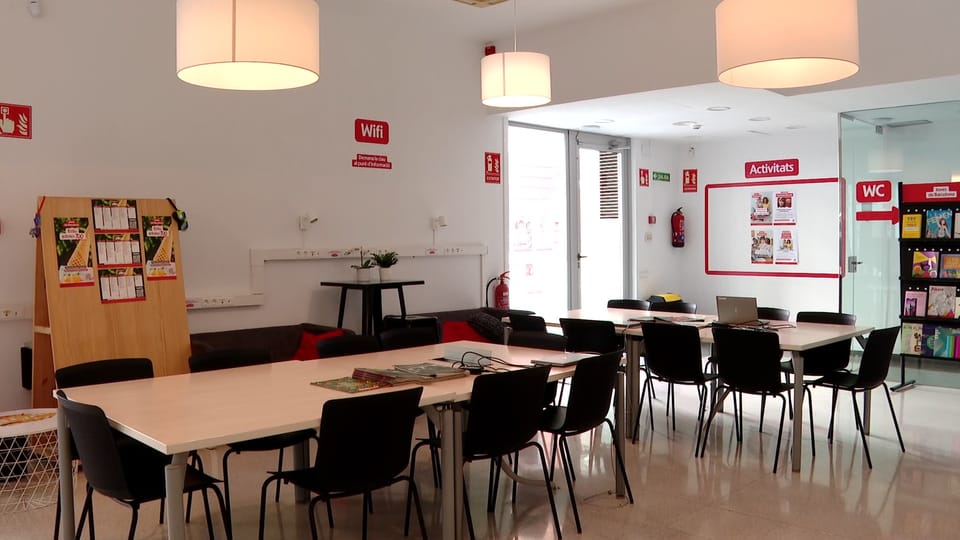
In Barcelona, City Council study rooms across the city’s 10 districts are still largely empty just days before the Selectivitat 2026 university entrance exams. That is despite an indefinite library strike, which has reduced access to the usual public study spaces.
At the Centre d’Informació i Assessorament in Raval, there were no students at all last Saturday. That is a sharp contrast with the same period last year, when the rooms were full. Some libraries, including Biblioteca El Poblenou and Manuel Arranz, are open until midnight on weekends, but many students say they do not know about them or cannot get there easily.
“It’s a problem because some people cannot study at home,” said Roser, a student affected by the shortage of nearby study areas. Another student said they travelled for an hour from Badalona to Poblenou because no closer facilities were open.
The pressure is already high for students facing Selectivitat. One unnamed student said there is “a lot of stress” because of the amount of work, concepts and subjects to memorise. Another said the exam format changed two years ago, removing the option to choose between two models, which leaves less time and more material to cover.
Students are also dealing with disruption linked to the Pope’s arrival in the city, which is affecting travel plans for people trying to get to work or exams on time. One student said they would leave home at 05:30 to make sure they arrived on time.
Selectivitat is a key step for students hoping to enter public universities in Catalonia, where high marks are needed for competitive degree courses. With the library strike still ongoing, Barcelona City Council’s alternative study rooms are meant to fill the gap, but students say access and communication remain a problem. For more local coverage, see our community and sport pages.
Originally published by betevé. Read original article.