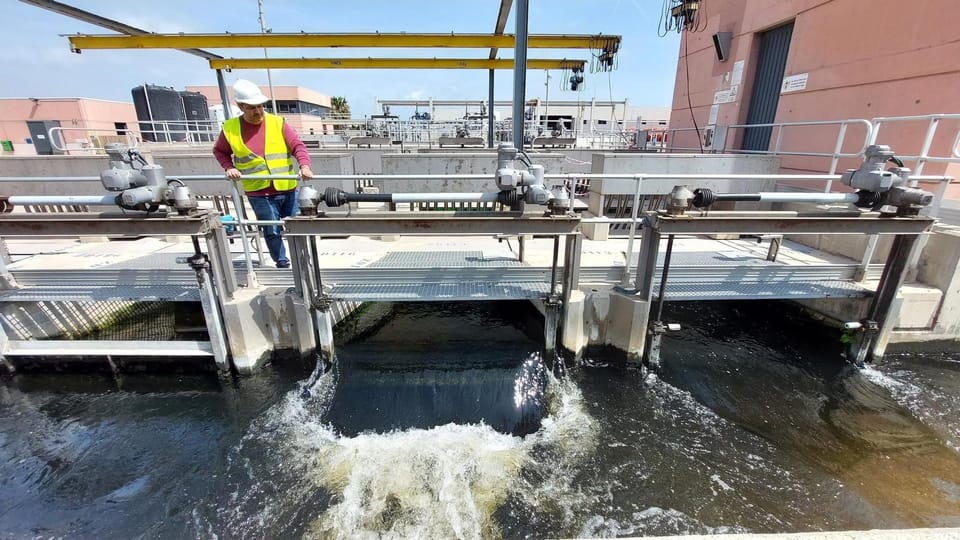
Barcelona’s metropolitan area, home to 3.3 million residents, has built a water regeneration model that experts say could be copied by other Mediterranean cities. The idea is being discussed ahead of the III Mediterranean Economic and Social Forum, which runs from 16 to 18 June.
The main lesson from Barcelona is simple, according to those involved: long-term political agreement and a single, solvent operator matter. That combination helps cities respond to water scarcity, which is getting worse as the climate crisis deepens.
Francesc Castillo, director of operations at Aigües de Barcelona, said, “We cannot be short of water.” He added that “there must be an emergency reserve for possible maximum climatic demands.” Aigües de Barcelona is a mixed company that manages the full water cycle for 23 metropolitan municipalities, including the city of Barcelona.
Catalonia’s regional government, the Generalitat de Catalunya, wants 70% of the region’s water supply to be independent of rainfall by 2027. That target puts more pressure on regeneration and reuse projects like Barcelona’s.
Fernando Cabello, director of water cycle services for the Barcelona Metropolitan Area (AMB), said unified management helps “standardise” the system and gives “security in terms of management”. He also said Aigües de Barcelona has built trust through its work on regeneration, pointing to its laboratories and technology for analysing water.
Experts also see room for the model to travel beyond Barcelona. Albert Sáez, director of EL PERIÓDICO, said the reference should be “a large city” and stressed the need for political consensus similar to the AMB. Marta Colet, director of concessions for Veolia in Spain, said applying the model in Tarragona “is absolutely feasible”.
There is also interest from industry. Mar Perrote, global director of climate change at Moeve, said there is “a very interesting opportunity for collaboration between industry and municipalism”. She noted that Moeve works with the Mancomunidad del Campo de Gibraltar (ARCGISA), where 4.2 million cubic metres of wastewater are reused instead of being discharged into the sea. “We need water to manufacture green hydrogen,” she said.
The article also points to wider cooperation between the Generalitat, the AMB and Aigües de Barcelona, plus bodies such as the Agència Catalana de l’Aigua and the Agència de Salut Pública de Catalunya. For more Barcelona coverage, see our Community and Sport pages.