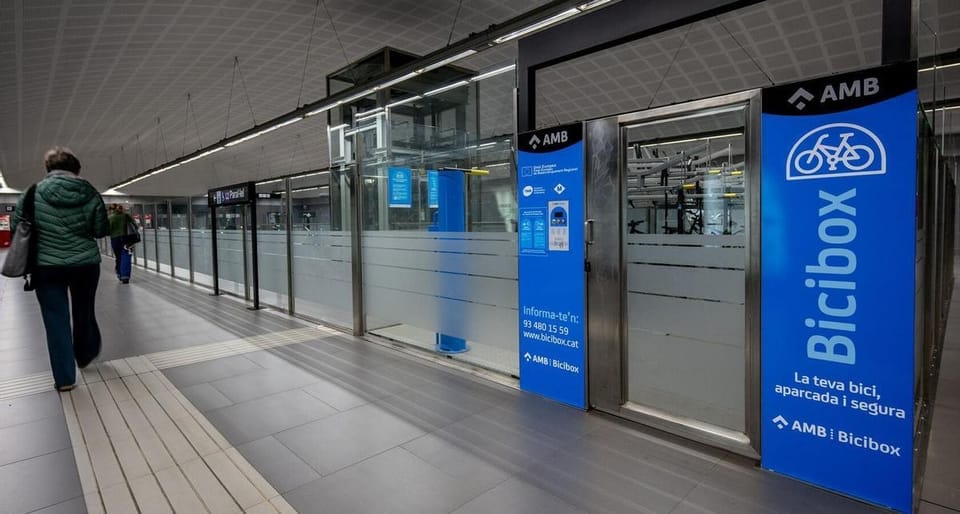
Barcelona is set to get more secure bike parking, as the AMB plans to grow Bicibox by 20% across the metropolitan area by 2027. The network will rise to 4,000 spaces, with the focus moving from small modules to larger facilities at key transport hubs.
The AMB currently manages 3,380 Bicibox spaces. Around 2,700 are in smaller units for 7 or 14 bikes, spread across nearly 200 locations. The rest are in high-capacity parking sites, and the new plan puts those bigger units at the centre of future growth.
Marc Iglesias, director of sustainable mobility services at the AMB, said the authority is looking at where demand is highest and will now grow in high-capacity sites. The change follows the success of larger Bicibox installations already in use.
Eight new large facilities are now in progress. Four are under construction in L'Hospitalet de Llobregat, at Bellvitge Rodalies station, Bellvitge Hospital, Carrilet Avenue near the FGC and Metro L1 station, and Collblanc Metro station. Benito Urban won the public tenders for these projects, which are each valued between €120,000 and €160,000.
Other sites are also being added, including a high-capacity facility at El Prat de Llobregat Rodalies station. That will join recently launched Bicibox units at Cèntric and Les Moreres Metro L9 Sud stations, and at Viladecans Rodalies station. The AMB says the aim is to make bike travel easier by giving commuters a secure place to leave their bikes near rail and metro links. For more on local transport coverage, see Sport and Community.
The AMB also plans to move existing smaller modules from places where they are underused, or where they are being replaced, to municipalities with less bike parking per person. It is also working with Ferrocarrils de la Generalitat on closed parking sites, known as Bicitancats, at stations including Sant Vicenç dels Horts, Pallejà, Sant Andreu de la Barca and Martorell Enllaç. The Generalitat plans 20 large parking facilities at train stations by 2030 under its 2030 Bicycle Action Programme.
Further changes are also in the pipeline, including a €200,000 contract for a new Bicibox app that will let users open parking facilities from their phones instead of using a physical card. The AMB is also looking at Bicibox spaces in residential buildings, plus possible subsidies and planning changes for new developments and major renovations. Officials say the service already has about 13,000 active users and is expected to pass half a million uses this year.