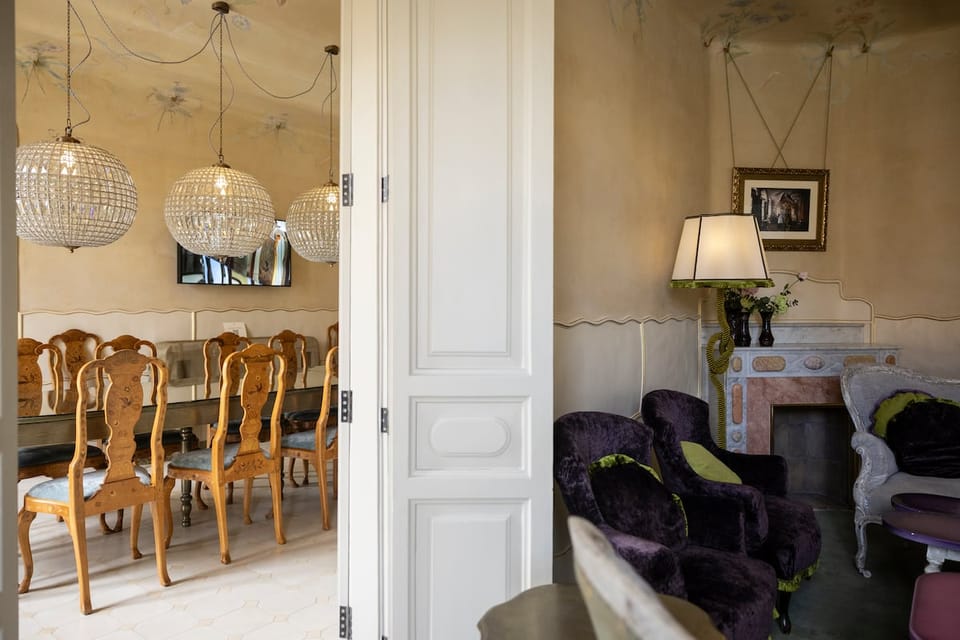
Barcelona's iconic Casa Batlló now offers its meticulously restored third floor for hourly rental, allowing private events and meetings within a fully authentic Modernist setting. This marks the first time the 400-square-metre space, previously a private residence, has been accessible to the public in this way.
The apartment, located at number 43 Passeig de Gràcia in the Eixample district, features several salons, two dining rooms, a library, a bedroom with a bathroom, and a kitchen. Groups of 2 to 20 people can hire the space from 200 euros per hour, with catering services also available.
Gary Gautier, the director of Casa Batlló, stated the Bernat family, current owners, aim for the building to be "not just a place to visit, but also to live in." This new offering allows visitors to experience Gaudí's original vision more intimately.
Restoring Gaudí's Vision
Antoni Gaudí designed Casa Batlló between 1904 and 1906, creating a masterpiece of Catalan Modernism. The building is a UNESCO World Heritage site and attracts significant numbers of visitors each year. According to 2025 data, 1.9 million people visited Casa Batlló, making it Barcelona's second most visited Modernist building after the Sagrada Família, which saw 4.8 million visitors in the same year.
The Bernat family, founders of Chupa Chups, acquired the property in the 1990s. Before their ownership, Iberia Seguros owned the building, which housed offices, laboratories, and medical practices. These previous tenants often covered Gaudí's original forms with contemporary decorations.
This latest renovation follows a series of rehabilitation projects funded by ticket revenues. Previous works included restoring the first floor, the rear facade, and the patio. The family also introduced immersive experiences like mappings on the main facade and a ground-floor immersive room.
An Archaeological Renovation
The third floor's renovation began after the death of Mercedes Arbiol Muntané in 2019. She was the last descendant of the Batlló family to reside in the central Barcelona apartment, which offers views of Passeig de Gràcia and Carrer Aragó. The project aimed to return the floor to its original 1906 appearance.
Architect Xavier Villanueva described the process as "archaeological work." Teams carefully scraped away layers of paint and additions from many years, revealing the practically intact original architecture underneath. They analysed, restored, or faithfully reproduced original carpentry, flooring, stucco, and ironwork.
This detailed restoration, costing four million euros, involved multidisciplinary teams, artisans, and new technologies. Two years were dedicated solely to prospections, tests, and reviewing original elements, Villanueva explained. He has worked on Casa Batlló's recovery for decades.
Hidden Details and Discoveries
The renovation uncovered several surprising details. Teams restored original carpentry, including doors, windows, and wainscoting. They also replicated the tribunes, complete with their joinery, glass, and cross-ventilation systems. Villanueva noted these systems were remarkably ingenious for the period.
Gaudí demonstrated a pioneering spirit of recycling, reusing many doors from the previous building on the site. Instead of demolishing everything, he preserved the facade and much of the existing structure. The recovery of original stuccoes revealed hidden floral decorations, featuring olive leaves and gladioli, which had been concealed for a century.
Villanueva added that Gaudí always presents surprises and new discoveries. During the restoration of original ironwork, including knobs, handles, and mechanisms, workers found a crank designed by the architect previously unknown at Casa Batlló. Architect and designer Paola Navone, from Otto Studio, furnished the spaces. She integrated contemporary pieces with Gaudí's architecture, ensuring modern comforts while respecting the building's unique language.
This latest renovation highlights the Bernat family's ongoing commitment to preserving and sharing Gaudí's architectural legacy. It offers a unique blend of historical immersion and modern functionality. The project ensures future generations can appreciate the intricate details and innovative spirit of one of Barcelona's most celebrated landmarks.
Come and join our Barcelona English Speakers community on WhatsApp.
Originally published by El País Barcelona. Read original article.