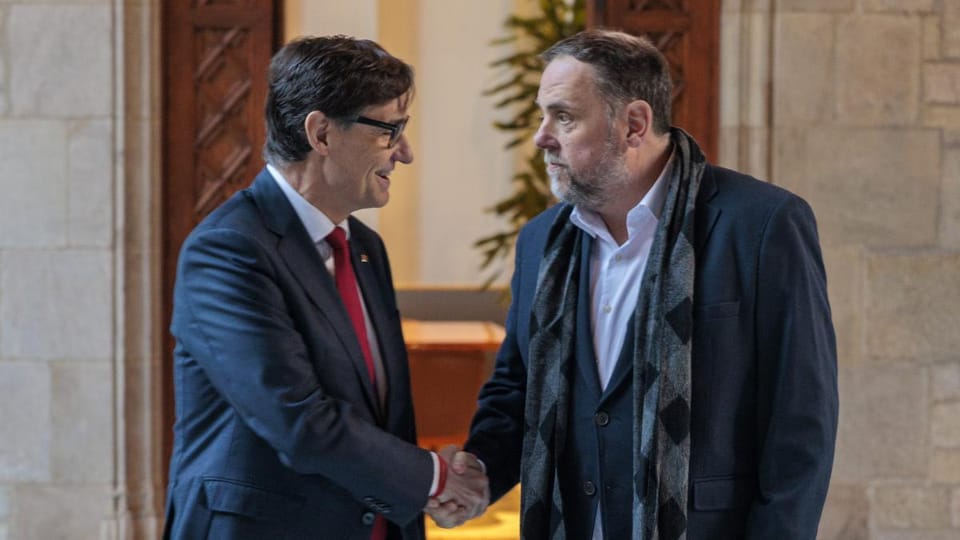
Catalonia's Socialist Party (PSC) and Esquerra Republicana (ERC) are set to finalise a budget agreement for 2024 next week, marking the region's first new budget since 2023. Officials expect the Catalan Parliament to give final approval to the accounts by early or mid-July. This agreement will be the first budget for the PSC-led government.
The proposed budget includes several sector-specific commitments. These focus on territorial balance, mobility, public services, and the Catalan language. Education and fiscal matters, including the role of the Catalan Tax Agency (ATC), will receive particular attention.
Isaac Albert, spokesperson for Esquerra Republicana, underscored the importance of securing these funds. He stated, "The country is better with budgets than without, and that is absolutely compatible with asking for [Josep Lluís Trapero's] resignation or dismissal."
Sectoral Commitments and Fiscal Policy
The agreement addresses ongoing challenges, particularly in education. The government has faced protests and strikes from public school teachers in recent weeks. Additionally, the budget seeks to boost the Catalan Tax Agency. This aims for greater fiscal autonomy and improved revenue collection. The government intends to sign this budget agreement before unblocking other pacts. These broader agreements require central government involvement.
Major Infrastructure Projects
These broader agreements include developing the orbital railway line, known as the fourth train belt. This significant infrastructure project will connect Vilanova i la Geltrú to Mataró, specifically bypassing Barcelona. The project aims to improve regional connectivity and reduce congestion on existing lines. It also involves establishing a new commercial infrastructure company. This entity will manage state investments in Catalonia more effectively. It replaces the previous investment consortium, which Junts rejected in the Congress of Deputies. This new company will act with greater effectiveness than current management commissions allow for planned works.
Pursuing Greater Autonomy
A specific chapter in the agreement focuses on the transfer of competencies. This is a priority for ERC, which has consistently called for "gaining sovereignty." This includes establishing the Catalan Airport Authority. President Salvador Illa announced this authority in the Parliament months ago. The authority aims to enable a degree of co-management for Catalonia's main airports. This model would be similar to an agreement the central government signed with the Basque Country last month. ERC, however, seeks a stronger role than the Basque model. Isaac Albert confirmed their ambition for "voice and vote in decisions affecting airports." He acknowledged the complexity due to Aena's role. He added that they must "start building instruments that respond to this will," implying a gradual approach. Other matters concerning the Department of Territory, such as coastal protection and planning, are also part of the bilateral discussions. This is critical given the significant climate change risks to Catalonia's coastline.
Intergovernmental Negotiations and Political Hurdles
The orbital railway project alone represents a substantial investment. Estimates place the total cost at €4 billion to €5 billion, which the state will progressively pay. The central government must also approve the new infrastructure company and the transfer of competencies. A bilateral meeting between the Catalan and central governments will "reinforce" the budget agreement. However, no official date or agenda is set for this meeting. La Vanguardia reported that some sources suggest this meeting could also occur next week. The Ministry of Territorial Policy, led by Ángel Víctor Torres, will convene the bilateral commission.
Throughout months of negotiations, external factors have influenced the discussions. The recent Andalusian elections, for example, played a role. Internal crises also emerged, including controversies in education and with the Department of Interior. The most recent involved two Mossos d'Esquadra agents infiltrating a teachers' assembly. This led ERC to demand the resignation or dismissal of the Catalan police director general, Josep Lluís Trapero. However, ERC has explicitly stated this is not a condition for the budget agreement. Isaac Albert reiterated, "The resignation is not a condition for Esquerra; they will not make us happy with it; it is that they recognise an evident error."
Next Steps for Approval
The Consell Executiu will need to approve the budget after its expected signing next week. This approval will initiate its parliamentary processing. President Illa is likely to convene a specific meeting with his ministers to formalise the agreement, as he did on a previous occasion when the government approved accounts that were later withdrawn. This budget aims to provide crucial stability and resources for public services across Catalonia after a period without new accounts.
Come and join our Barcelona English Speakers community on WhatsApp.
Originally published by La Vanguardia Catalonia. Read original article.