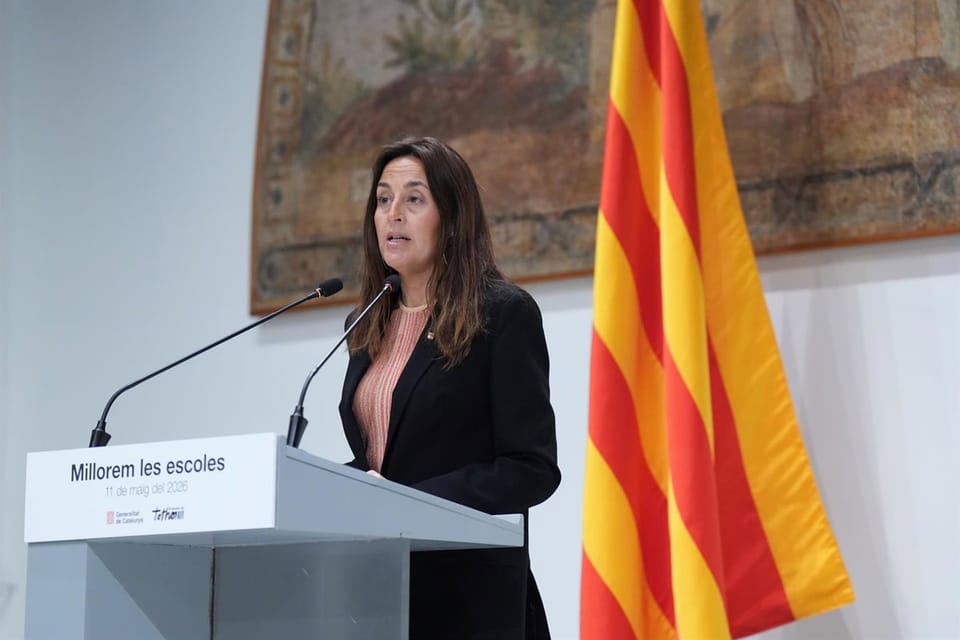
Catalan Minister for Education and Vocational Training, Esther Niubó, stated her commitment to "redirecting" the disputes with education unions, aiming for a smoother end to the current school year and an improved start to the next. Speaking in an interview with La Vanguardia, as reported by Europa Press on Saturday, May 16, she emphasised the Catalan government's resolve to remain at the negotiation table.
Minister Niubó expressed confidence that solutions exist. She hopes the unions "see the importance of reaching an agreement to start building the foundations for education in the coming years." She defended a previous agreement reached with CC.OO. and UGT, which Ustec·Stes, Aspepc·Sps, and CGT Ensenyament did not join. Niubó called this agreement "a very important step forward," noting the regional salary supplement had been frozen for 25 years. The agreement increased it by 30%, meaning teachers will receive an additional €3,000 over four years.
Niubó highlighted a renewed dialogue with all unions in recent days. At a sectorial meeting last Thursday, the Catalan government proposed incorporating other professional profiles. They also discussed new pay demands.
Addressing Teacher Discontent
Niubó acknowledged a "deep-seated unrest" within the educational community. This sentiment, she explained, stems from years of issues combined with new challenges facing teachers. The government must find ways to improve working conditions. These improvements should ultimately benefit student learning, all within a €2 billion investment framework.
Officials are currently evaluating whether to accelerate the payment of the regional salary supplement. This includes considering "modifications to the calendar, if possible, or other issues." This decision could significantly impact teachers' financial planning across Catalonia.
Controversy Over Overnight Stays and Police Presence
The Minister also addressed the "paradoxical" situation regarding overnight stay supplements for school trips. For over a decade, no compensation was paid for these stays. When a €50 per night compensation was finally established, some schools decided to stop organising the trips. Niubó called for this situation to be "redirected" as well, highlighting the importance of these educational experiences for students.
Additionally, Niubó discussed the pilot plan to deploy plainclothes Catalan police (Mossos d'Esquadra) in some Catalan schools. She affirmed that this plan only applies to centres that voluntarily accepted it. These agents specialise in prevention and mediation; they do not replace educators. The plan aims to foster a safer environment without altering the educational staff structure.
Niubó stated the plan will undergo evaluation. If it proves effective, the government will make it available to more centres. If not, it will not continue. She defended the project, though she conceded that its timing "was probably not the best" and contributed to inflaming the educational climate. Separately, Interior and Public Security Minister Núria Parlon apologised for the infiltration of Catalan police into a Barcelona teachers' assembly.
Looking Ahead for Catalan Education
The Catalan government remains committed to ongoing dialogue with education unions. The evaluation of the plainclothes police plan and continued discussions on salary supplements will shape the future of education in Catalonia. These efforts aim to improve conditions for teachers and enhance learning environments for students across the region, including Barcelona's extensive school network.
Sign up for our new entrepreneurs community Bizcelona, now accepting our second wave of applicants.
Originally published by Europa Press Barcelona. Read original article.