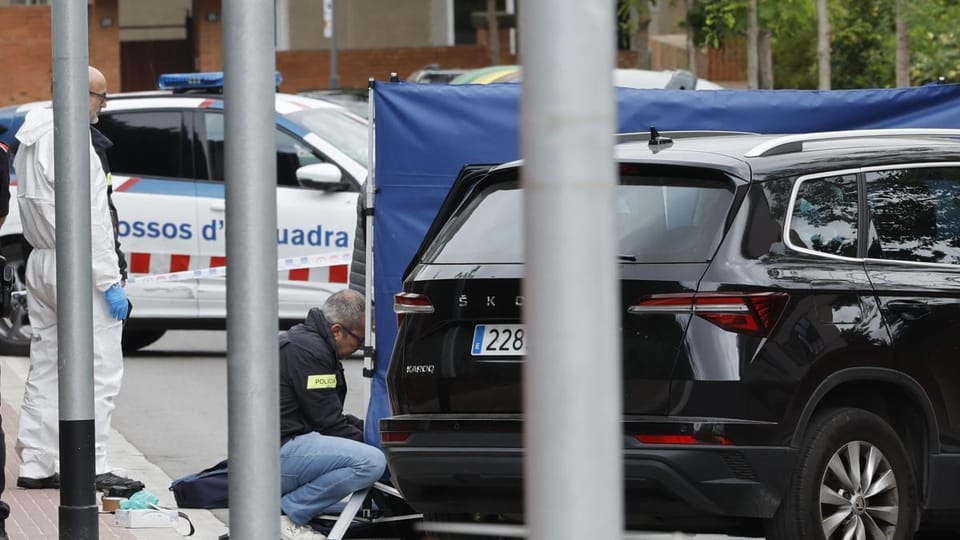
Catalan political and police leaders faced strong criticism for their initial response to a series of recent murders across the region. Critics argue their approach lacked empathy for victims and residents. It focused on presenting positive crime statistics. This affected communities in Barcelona, Esplugues de Llobregat, and Salt. This institutional reaction seemed to follow a pre-programmed "manual," designed to reduce social alarm.
The criticism follows three tragic deaths that occurred a week ago in these municipalities. Among the incidents, a woman died in the street in Esplugues de Llobregat. Officials reportedly used a strategy of immediately highlighting declining crime rates. This aimed to reassure the public despite the recent violence. Many observers saw this as insensitive and inappropriate.
Initial Response Draws Criticism
La Vanguardia, a prominent newspaper, highlighted the perceived insensitivity of this official communication. It questioned the appropriateness of citing declining crime rates so soon after violent deaths. The article suggested this response failed to acknowledge the profound distress felt by local communities. Residents living in fear found little comfort in "cold Excel" data, as the newspaper put it. They had witnessed a horrible event in their neighbourhood.
The newspaper drew parallels to other sensitive situations. It asked what would happen if a political leader responded to a gender violence death. They might cite a drop in overall victim numbers. Similarly, it questioned downplaying a fatal traffic accident by showing a decrease in road deaths. In these contexts, a single victim represents a tragedy. No one would counter it with detached statistics.
Calls for Empathy and Action
Consellera Núria Parlon later acknowledged the gravity of the situation. She stated the events produced "rage and anger." Parlon added, "These are difficult moments after a shocking weekend." She made these comments while addressing the Mossos d'Esquadra, Catalonia's police force. Parlon encouraged them to "reinforce and expand" their work. This aimed to prevent a general "sense of impunity" from taking hold.
The public praised these later statements for their more human and empathetic tone. They contrasted sharply with the initial, data-focused approach. Ramon Chacón, head of the Mossos d'Esquadra's Criminal Investigation General Commissariat, also described the period. He called it a "tragic week that has shaken us all."
Impact on Residents and Public Trust
Critics argued that the initial statistical response risked alienating residents. It could also inadvertently push them towards populist narratives. These discourses often distort reality to attract votes. Officials must avoid sending equivocal messages that fuel public unease and distrust. The public expects a more compassionate and responsive approach.
Esplugues de Llobregat, a municipality bordering Barcelona, experienced one of the recent killings. Salt is another municipality located near Girona, highlighting the regional scope of these incidents. The events prompted calls for officials to revise their communication strategies. This revision should focus on compassion and concrete action.
Instead of focusing solely on past achievements, the public expects transparency about future actions. This includes checking for any failures in previous warnings or interventions. Authorities should review protocols and seek social complicity to find lasting solutions. The goal is to address underlying issues of public safety effectively and visibly.
Revising Official Protocols
The critique calls for a fundamental change in how authorities respond to such tragedies. Future official responses must prioritise empathy and a clear commitment to action over statistical reassurance. This shift would better serve the public and rebuild trust in institutional responses. It would also ensure that victims and their communities feel heard and supported during difficult times.
Sign up for our new entrepreneurs community Bizcelona, now accepting our second wave of applicants.
Originally published by La Vanguardia Barcelona. Read original article.