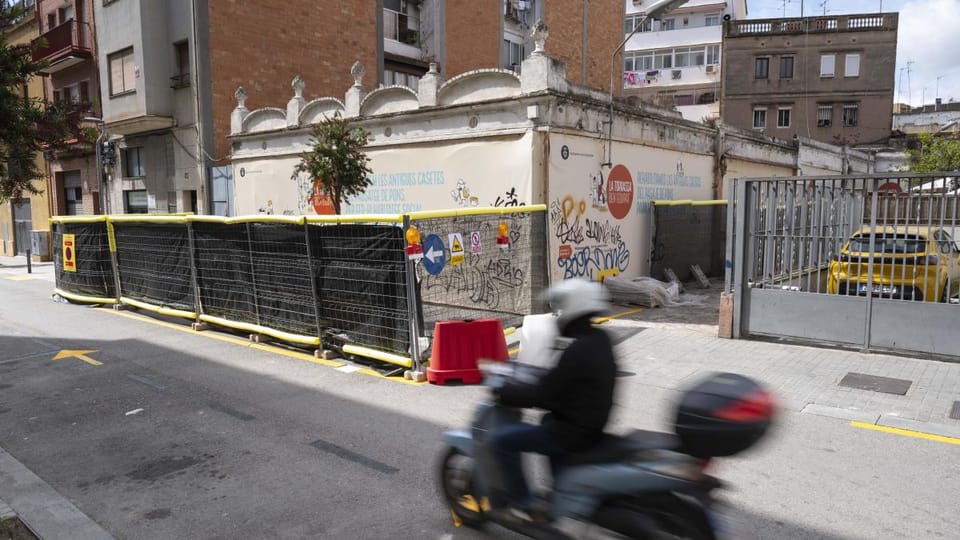
L'Hospitalet de Llobregat has started a €1.2 million project to restore historic "casitas" in the La Torrassa neighbourhood, transforming the former workers' homes into five social housing units. This initiative, funded by the Àrea Metropolitana de Barcelona (AMB), marks the beginning of works on the Pasaje Pons properties, which developers built in 1925.
This rehabilitation addresses a long-standing demand from local residents. Manel Trullols, a member of the Castell de Bellvís a la Torrassa (Acbalat) association, stated, "For about ten years, neighbours have been fighting for this issue." He added, "We are happy, but it is a bittersweet victory."
These small houses, once known as "Murcia Chica" due to the large Murcian immigrant population, represent a unique form of corridor urbanism. Carme Rimbau, president of the Centre d'Estudis de l'Hospitalet, explained they were built "for the workers of the Barcelona International Exhibition of 1929."
Preserving L'Hospitalet's Industrial Past
The L'Hospitalet de Llobregat Ajuntament acquired these protected properties in late 2016. This purchase aimed to safeguard their historical value and prevent unauthorised occupation. However, the rehabilitation works have taken nearly a decade to start. L'Hospitalet, Catalonia's second-largest city, holds many such historical pockets. These remind residents of its industrial past and rapid growth.
The "Murcia Chica" nickname reflects a significant period of migration. Many people from Murcia moved to the area in the early 20th century. They sought work after a mining crisis in their home region. This led to the construction of many small, simple homes. These were often aligned facing a common exterior corridor. The Pasaje Pons houses are a prime example of this urban layout.
Balancing Heritage and Modernity
The project will convert nine original houses into five larger units. Most will measure approximately 65 square metres, an increase from their initial 35 square metres. The Ajuntament confirms it will maintain the "typology, volumetry and the patrimonially protected elements" of the buildings. Additionally, the "singular ornamental features of the facades" will be respected.
However, the interior organisation will adapt to current regulations. Municipal administration sources explain the original homes lacked "accessibility and ventilation conditions." They also had "habitability, ventilation and lighting" deficiencies. These issues will now be corrected.
Carme Rimbau expressed a common concern among heritage advocates. She believes that "if it is a rehabilitation, the houses should be as they were before." This highlights the tension between historical preservation and modern living standards. The shared interior patios will disappear. New "outdoor spaces linked to each dwelling" will be created instead.
Future Social Housing for Vulnerable Residents
The Ajuntament has consistently stated these homes will be dotacional, or social housing. They will serve specific groups, such as elderly people or those with reduced mobility. The municipal housing service will manage the allocation of these properties.
While specific criteria for eligibility are not yet formalised, municipal sources confirmed the original idea remains. They stated, "Due to their size and being at street level, it makes perfect sense for them to be for people with reduced mobility or the elderly." This ensures the renovated homes meet a critical social need in the community.
Officials expect to complete the project in one year if works proceed smoothly. The rehabilitation of these humble dwellings contrasts with Barcelona's ongoing renovation of the Montjuïc exhibition palaces. Both projects, however, commemorate the centenary of the 1929 International Exhibition. L'Hospitalet focuses on the homes of the workers who made that event possible.
The completion of this project will not only preserve a significant piece of L'Hospitalet's history but also provide much-needed social housing. It represents a tangible effort to honour the city's past while addressing contemporary urban challenges.
Sign up for our new entrepreneurs community Bizcelona, now accepting our second wave of applicants.
Originally published by La Vanguardia Barcelona. Read original article.