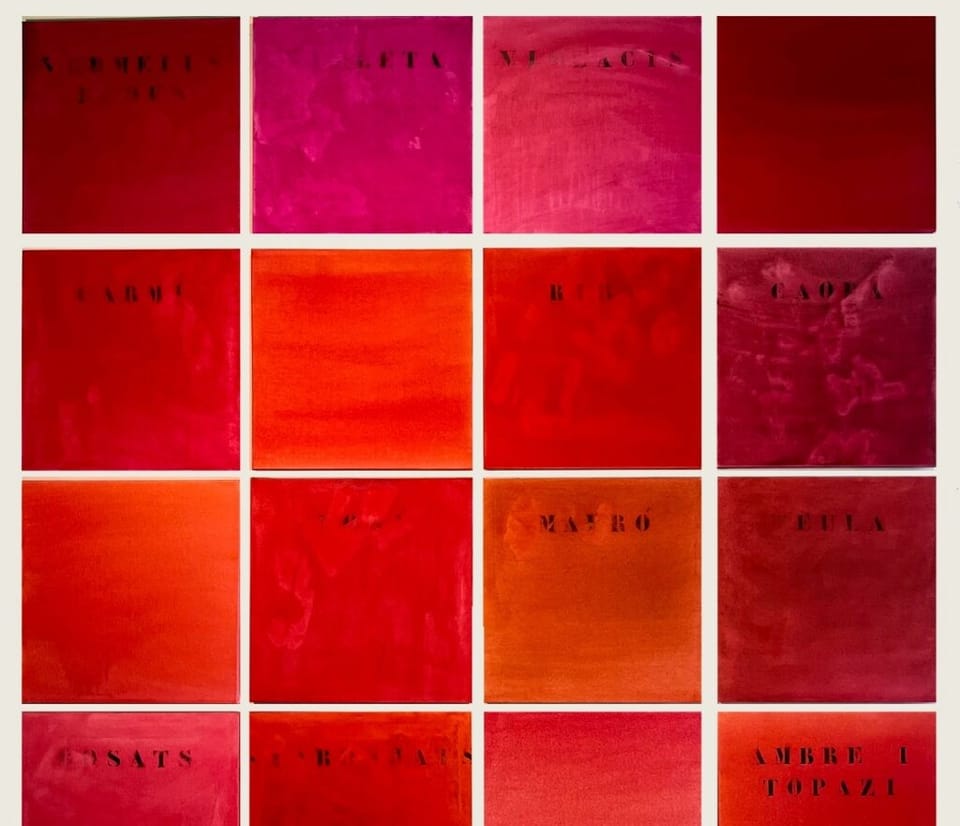
In Barcelona and across Catalonia, more winemakers are using the old term vi vermell again, for wines that are often blended, lower in alcohol, and made with methods that echo older local practice. The shift is as much about language as it is about wine.
Historically, vi vermell was the common Catalan term for what is now usually called vi negre. Joan Coromines notes this in the Diccionari Etimològic i Complementari de la Llengua Catalana, and medieval texts also use the phrase. Francesc Eiximenis wrote of vins vermells de la terra in Lo Crestià, while Carles Díaz Martí records friars in Barcelona selling vi blanc, vermell i cuit between 1481 and 1483.
One example is La Miranda, made near Sant Jeroni de la Murtra monastery in Badalona by the Vall de Betlem cooperative. Anna Abellan and Ignasi Niubó revived a vineyard that had disappeared in the late 1960s, and the 2024 vintage produced 480 bottles. The wine comes from 600 Macabeu vines and 300 Sumoll vines, with co-fermentation, 24-hour skin maceration, and six months of ageing on lees in stainless steel tanks. Its alcohol content is 10.5 degrees.
Other producers are using the term in different ways. In Moixent, Celler del Roure makes El Vermell from Mandó and Arcos grapes, using 2,800-litre clay jars and short, soft maceration at low temperature. In Agullana, Alt Empordà, Còsmic Vinyater’s Salvador Batlle makes Vi de Pagesos i Pageses with Carinyena Blanca, Carinyena Negra, Garnatxa Grisa and Monestrell, sold in bag-in-box packaging. David Maltas, a former restaurateur and sommelier from Vilassar de Mar, makes En Maurici from Syrah grapes after a rainy summer kept alcohol levels low.
The common thread is a return to mixed vineyards, spontaneous or low-intervention methods, and wines meant to be fresh and easy to drink. For these winemakers, vi vermell is not just an old label, it is a way of linking present-day bottles to Catalonia’s wine history.
For more local food and drink coverage, see our Community and Sport pages.
Originally published by VilaWeb Feed. Read original article.