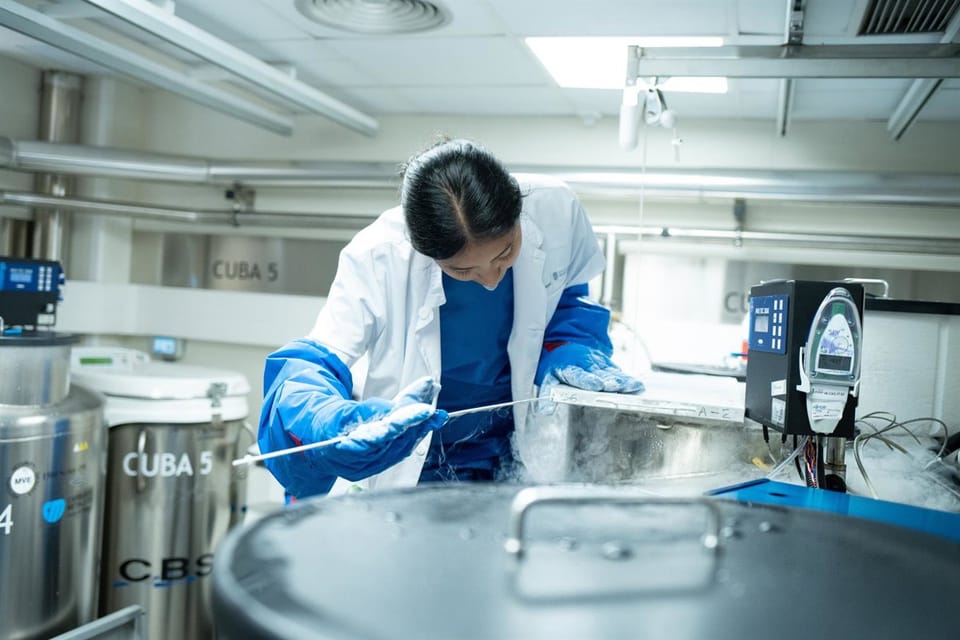
Catalonia has significantly strengthened its international standing in clinical research, now ranking fourth in Europe and seventh globally for the number of active clinical trials. This achievement, detailed in the BioRegion of Catalonia 2025 Report, was announced on Monday, 11 May, by Biocat, the organisation promoting the region's life sciences and health sector.
Catalan centres currently participate in 5,768 active studies. This figure represents 92% of all clinical trials registered across Spain, demonstrating the region's dominant role. This volume of activity places Catalonia ahead of several European nations. These include the United Kingdom, Germany, Turkey, and the Netherlands. The new ranking marks an improvement from the previous year, when Catalonia held the fifth position in Europe and eighth worldwide. This confirms the strength of Catalonia's clinical research system.
The volume of clinical trials involving Catalan participation has grown by 7.5%. This growth rate surpasses the 1.9% increase recorded for Spain as a whole. Oncology remains the primary driver of clinical research in Catalonia, with 1,667 active trials. The region holds the sixth position in Europe for oncology specialisation.
Robert Fabregat, Biocat Director General, stated, "Catalonia has become one of the main engines of clinical trials on a global scale in recent years." He added, "To remain leaders across the entire value chain and help patients access these therapies, we must combine this leadership in research and development with a firm commitment to scaling and producing these therapies."
Expanding Research Horizons
The report shows a growing diversification into other clinical areas. Dermatology saw a 20.3% increase in trials. Metabolic diseases increased by 8.9%, and nervous system studies rose by 3.6%. Additionally, trials linked to the immune system, respiratory and cardiovascular conditions, the digestive system, haematology, and mental health also grew. This broader focus highlights a maturing research environment beyond its strong oncology base.
Advanced Trial Phases and Industry Support
Clinical trials progress through distinct phases. The Biocat report indicates that 45% of active trials in Catalonia are in Phase III. Phase II trials account for 33%, while Phase I trials make up 20%. A smaller 2% are in Phase IV. This distribution shows Catalonia is a competitive environment for both early validation of new therapies and advanced studies. These advanced studies have a strong potential to reach patients.
Catalonia's model combines significant industry-promoted activity with non-commercial research. Industry sponsors 75% of the trials. Non-commercial trials, however, make up a relevant 25%. Academic institutions, hospitals, scientific societies, and clinical researchers drive these non-commercial studies. This balance ensures a broad spectrum of research.
Leading in Advanced Therapies
Catalonia also strengthens its position in advanced therapies. The region has 156 active clinical trials in this area. This represents 82% of Spain's total advanced therapy trials. The BioRegion currently has 20 therapeutic assets under clinical development. These are distributed between Phase I and Phase II.
The report highlights programmes driven by several companies. These include Esteve, Theriva Biologics, OneChain Immunotherapeutics, and SpliceBio. Hospitals and research centres also play a critical role. Key institutions include Hospital Clínic, the Vall d'Hebron Institute of Oncology (VHIO), the Blood and Tissue Bank (Banc de Sang i Teixits), the August Pi i Sunyer Biomedical Research Institute (IDIBAPS), the Bellvitge Biomedical Research Institute (IDIBELL), the Sant Pau Research Institute (Institut de Recerca Sant Pau), and the Germans Trias i Pujol Research Institute (IGTP). Many of these institutions are located in the Barcelona metropolitan area, contributing significantly to the city's reputation as a hub for medical innovation.
Catalonia's continued leadership in clinical trials offers significant benefits to residents and the wider medical community. It attracts investment, fosters innovation, and provides access to advanced treatments. The region aims to maintain its strong position by focusing on both research and the practical application of new therapies. This strategic approach ensures that groundbreaking discoveries can translate into patient care.
Sign up for our new entrepreneurs community Bizcelona, now accepting our second wave of applicants.
Originally published by Europa Press Barcelona. Read original article.