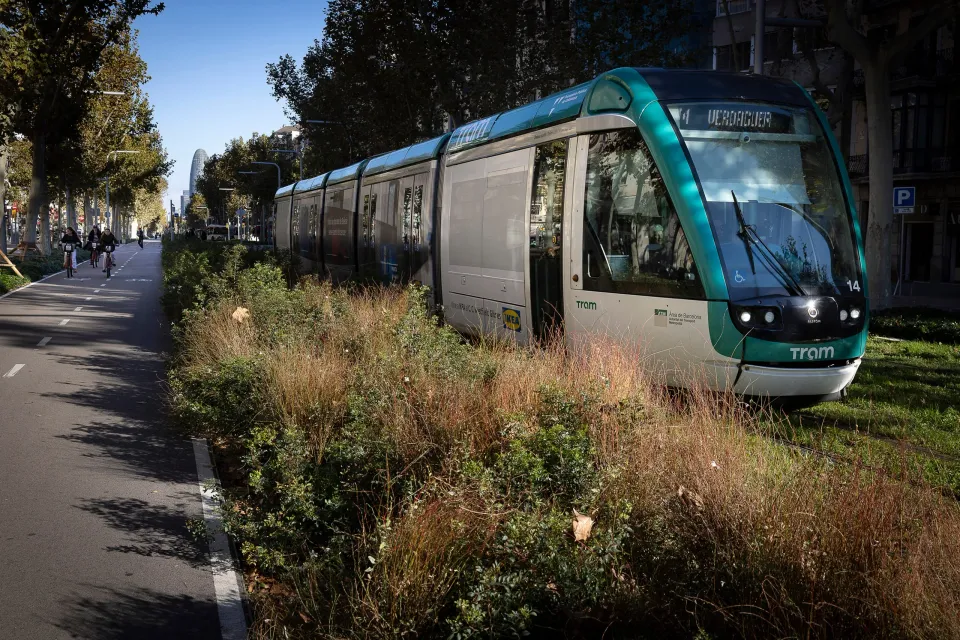
The Metropolitan Transport Authority (ATM) has approved the second phase of the Diagonal tram connection, a pivotal step towards unifying Barcelona’s tram networks. This decision greenlights the construction project for the section between Verdaguer and Francesc Macià.
The consortium confirmed the approval. It comprises the Generalitat de Catalunya, the Ajuntament de Barcelona, and the Àrea Metropolitana de Barcelona (AMB). This 2.8-kilometre extension will connect the Trambaix and Trambesòs networks, creating an uninterrupted route across the city.
The ATM stated, “These new stops will reinforce intermodality with the rest of the public transport network, with connections to Metro lines L3 and L5, various urban and interurban bus lines, as well as with the Ferrocarrils de la Generalitat de Catalunya (FGC) network at Provença station and, in the future, with line L8 around Francesc Macià.”
This unified tram service will link nine metropolitan municipalities, stretching from Badalona to cities in the Baix Llobregat area.
Major Infrastructure Project
The project is part of the Infrastructure Master Plan 2021-2030. It has an estimated cost of approximately 200 million euros. The Ajuntament de Barcelona will cover 60% of the expenses, with the Generalitat de Catalunya funding the remaining 40%. Construction is expected to last three years.
This phase introduces three new tram stops: Diagonal-Cinc d’Oros, Balmes, and Casanova. Additionally, Francesc Macià, currently the terminus for the Trambaix line, will undergo reforms to become a major transport interchange.
Enhancing Public Transport
The new section will feature a single platform for both trams and Transports Metropolitans de Barcelona (TMB) buses between Passeig de Gràcia and Via Augusta. This design aims to streamline traffic flow and improve efficiency along this busy corridor.
The ATM anticipates the full connection will attract 120,000 new users to the tram network daily, effectively doubling current ridership figures. Officials expect the unified service to balance public transport demand across the city.
Proven Success and Political Support
Reports from the consortium indicate the connection is effective. The Trambesòs extension to Verdaguer, completed this year, has already seen its ridership double since 2023.
The project faced controversy in previous years. It now holds significant political backing within the Ajuntament. The Socialist Party of Catalonia (PSC), Barcelona en Comú (BComú), and Republican Left of Catalonia (ERC) all support its implementation.
With this crucial approval, Barcelona moves closer to realising a fully integrated and efficient tram system. The upcoming construction will transform a key urban artery, significantly enhancing sustainable mobility for residents and visitors alike.
Sign up for our new entrepreneurs community Bizcelona, now accepting our second wave of applicants.
Originally published by Tot Barcelona. Read original article.