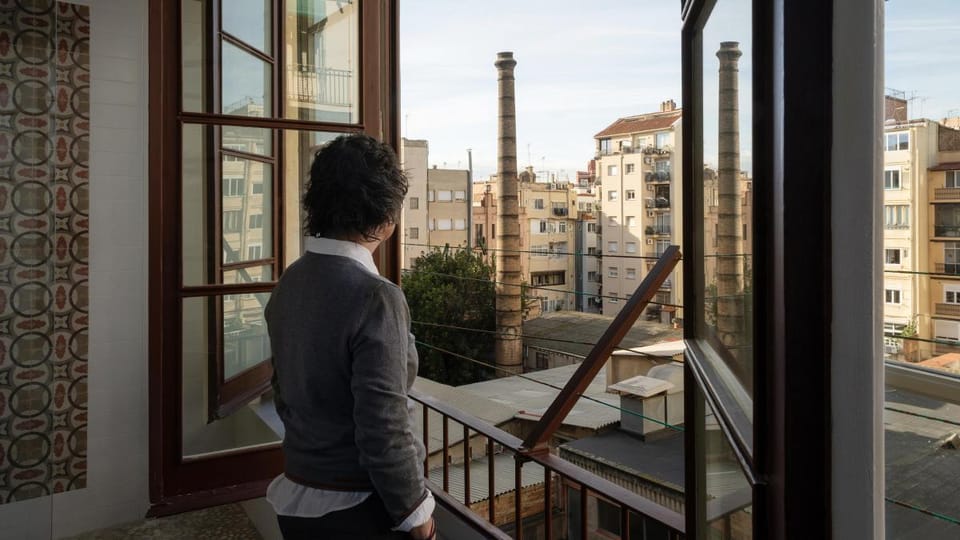
Photographer Bea Schulze will unveil a new exhibition, "Ànima Interior" (Inner Soul), on 15 May, revealing the hidden inner courtyards of Barcelona's Eixample district. The display on Rambla de Catalunya will showcase the unique architecture and personal stories of residents living within these often-unseen spaces.
Unveiling Hidden Urban Heritage
The project, a collaboration with the Rambla de Catalunya Merchants Association, aims to highlight a significant but overlooked part of Barcelona's urban heritage. Bea Schulze, a Venezuelan-born photographer who has lived in Barcelona for 18 years, initiated the concept 14 years ago during her studies at the Institut d’Estudis Fotogràfics de Catalunya. "The Eixample is created by these blocks with many stories and details inside," Schulze stated, adding, "If you do not live in the neighbourhood or get invited to dinner, you do not see them and are not aware."
Schulze explained her motivation: "Many people tell me the inner courtyard is ugly. I am not talking about pretty or ugly; I simply want to see what is really there. Everything has value. We must learn to see them with beautiful eyes and share them." The exhibition will feature large-format panels with selected images and residents' testimonies. It forms part of Barcelona's designation as the World Capital of Architecture.
Cerdà's Vision and Eixample's Evolution
The Eixample district, designed by engineer Ildefons Cerdà, marks the 150th anniversary of his death this year. Cerdà's 1867 "General Theory of Urbanisation" envisioned a humanistic and egalitarian urban plan for Barcelona. He prioritised hygiene, health, and green spaces for all inhabitants, regardless of origin or social class.
His original design for the grid-patterned blocks included inner courtyards dedicated to gardens. However, a construction boom distorted Cerdà's vision. This resulted in a densely built Eixample with scarce green areas, a significant departure from his initial plans.
Reclaiming Public Green Spaces
It was not until the 1980s, with the return of democratic city councils, that a municipal plan began to reclaim these courtyards as public gardens. The first such space, the Water Tower courtyard between Roger de Llúria, Roger de Flor, Consell de Cent, and Diputació streets, opened to the public. Since then, the City Council has opened nearly 50 inner courtyards as public parks.
The Eixample district contains an estimated 423 block interiors. Many of these serve diverse purposes today. These include car parks, schools, factories, or private residential patios adorned with palm trees and clotheslines.
Capturing Residents' Stories
The "Ànima Interior" project also documents the daily lives of residents. Each participant is photographed in their home, looking out onto the inner courtyard, and shares their personal story. "I knew I wanted to do a participatory project where the neighbour was also a spokesperson for their story of the place where they live," Schulze explained. "I have found wonderful stories."
These stories include multiple generations living in the same flat and current residents of former military housing on Vilamarí Street. One testimony recounts objects, like chairs and clocks, flying into courtyards during Civil War bombings. An individual remembers their grandfather naming objects to identify them if they needed collecting from the street, preserving a named clock to this day. Javier López, manager of the Rambla de Catalunya Merchants Association, praised the initiative. "It is like a tribute to the Eixample, its neighbours, and this heritage that, due to the neighbourhood's own physiognomy, remains somewhat hidden," López said. "When you discover it, there is always a point of surprise."
The Project's Future
The exhibition opens on 15 May in the afternoon and will run for one month on Rambla de Catalunya at its junction with Consell de Cent Street. While Schulze has photographed around 100 courtyards so far, the "Ànima Interior" project extends beyond this initial show. The long-term goal is to photograph every single inner courtyard within the Eixample district, preserving and sharing this unique urban landscape for future generations.
Sign up for our new entrepreneurs community Bizcelona, now accepting our second wave of applicants.
Originally published by La Vanguardia Barcelona. Read original article.