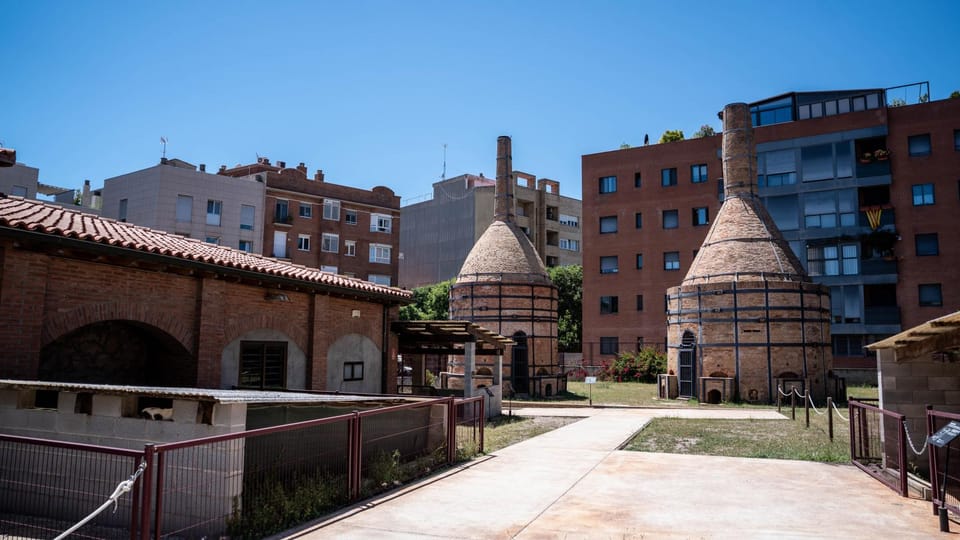
In Esplugues de Llobregat, just outside Barcelona, La Rajoleta played a key role in Antoni Gaudí’s ceramic work. The factory, then known as Pujol i Bausis, supplied tiles and materials that helped shape some of his most recognisable buildings, including the Park Güell bench.
Gaudí began working with the factory in 1879, one year after qualifying as an architect. He went there to test colours, buy tiles and work with ceramics for his projects. Carme Comas Camacho, president of the museum, said: "Now Gaudí is very great and La Rajoleta little known, but in the past it was the other way around."
The factory was also used by Gaudí’s teachers, including Elías Rogent and Lluís Domènech i Montaner. Other Modernista architects, such as Puig i Cadafalch, Salvador Valeri and Antoni Maria Gallissà, also used its kilns and laboratories. Pujol i Bausis became an important centre for ceramic innovation in Catalonia.
Gaudí experimented directly in the factory’s laboratories and created custom colours, including yellow, green and blue. He also helped revive older techniques, such as metallic reflection, which gave the factory added prestige. The archives confirm that 12,000 tiles from Pujol i Bausis went to the Park Güell bench, and that Gaudí bought second and third-category tiles for 30 pesetas per square metre to break them for his trencadís mosaics.
Ceramics from La Rajoleta appear in almost all of Gaudí’s works. Casa Vicens was one of the last documented projects to confirm the use of these Esplugues ceramics, and researchers are still studying whether the sunflower motif at the Comillas Seminary also came from the factory. Experts estimate that about 90% of the ceramics in Gaudí’s buildings likely came from Pujol i Bausis.
Today, La Rajoleta is a protected industrial heritage site with five original kiln types still preserved, including rare bottle kilns. The site sits on clay-rich land in Baix Llobregat, close to Barcelona and with its own water well, which helped support production and the later installation of a steam engine. For more on the area’s cultural links, see our community coverage and local sport updates.
The museum now faces the challenge of building a new project to highlight Esplugues’ heritage and its place in Catalan Modernisme. Visitors also hear the story of Gaudí’s tile-breaking test for Park Güell workers, where the fastest and most artistic tile-breaker got the job. La Rajoleta museum remains the main place to learn more about the factory’s history.