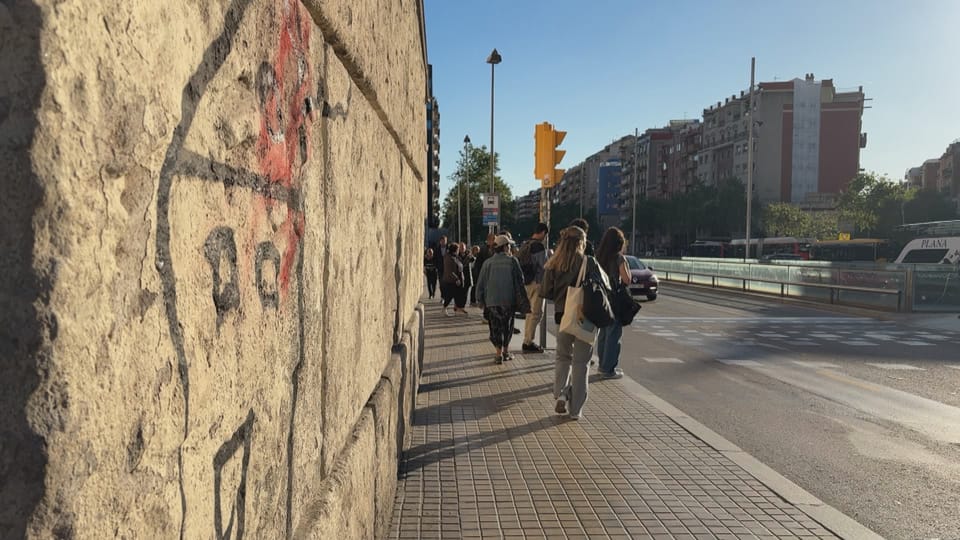
Residents in Barcelona's Sants-Montjuïc district are renewing calls for a wider pavement and continuous cycle lane along a critical section of Gran Via de les Corts Catalanes. The partial demolition of the Palau del Vestit at Fira de Montjuïc has reignited their campaign. They seek improved pedestrian safety and accessibility.
The neighbourhood of La Font de la Guatlla views the demolition as a unique opportunity to rectify a significant mobility black spot. They demand that the future building's facade be set back by several metres. This would create more pedestrian space and ensure the cycle lane's continuity.
Lluís Maté, President of the Font de la Guatlla, Magòria Neighbourhood Association, told Infobarris that the current situation is unsustainable. "We want this pavement to gain more space so people can pass safely, without the danger of falling onto the road and being hit by a vehicle," Maté stated. He emphasised that while part of the building holds heritage value, safety must remain the priority.
Demolition Sparks Renewed Demands
Residents presented their concerns at a recent neighbourhood council meeting. They reiterated their demands at an information session this Tuesday regarding the transformation of the Fira de Barcelona area. With a large section of the Palau del Vestit scheduled for demolition, residents see a chance to push the new facade inwards. This would create much-needed additional space. Maté added, "This entire wall will disappear and become a glass facade. So, let it continue and reach Sant Germà street. Bigger things have come down and nothing has happened."
Safety Concerns on Gran Via
Another pressing issue in this pavement section is the absence of a dedicated cycle lane. Additionally, intense bus traffic towards Plaça d'Espanya often stops immediately next to a pedestrian crossing. This combination frequently causes the pavement to become severely overcrowded. Pedestrians, bus passengers, and cyclists or scooter users often converge, creating hazardous conditions.
Jesús García, a resident of La Font de la Guatlla, highlighted the dangers. "Some cyclists use the bus lane, risking their lives. Perhaps one day we will have an accident we will regret," García warned. He noted that the new cycle lane from Plaça d'Idelfons Cerdà involved "sacrifices" on the sea-side section. This included removing loading zones, disabled parking, and even waste containers. "We lost all of this up to Sant Germà street, but the cycle lane does not continue to Plaça d'Espanya," García lamented.
Cycle Lane Disruption and Obstacles
García described the cycle lane's abrupt halt in this section as "unnatural." He called the existing building an "urbanistic hammer," acting as a physical obstacle. He argued that architectural solutions exist to reconcile heritage preservation with mobility needs. García cited examples like CaixaForum and the Arenas de Barcelona shopping centre, where arcades allow pedestrian passage. He suggested similar solutions could extend the cycle lane where the pavement currently stands. Residents insist the new building will be separate from the preserved heritage section. Therefore, they believe it can easily be set back by two or three metres.
Official Response and Future Plans
Albert Aixalà, the Sants-Montjuïc Mobility Councillor, addressed residents' complaints regarding the truncated cycle lane and pavement situation. He explained that the future building will align with the heritage section that will not be demolished. For now, the pavement will remain as it is. Aixalà acknowledged the problem but stressed that officials must address this mobility debate later. This will happen once the L8 metro line works at Plaça d'Espanya conclude. According to the councillor, officials must also define which buses and vehicles will use the surface. They must also determine which will use the tunnel before any decision. This factor will significantly influence the space's final configuration.
The future of this critical Gran Via section remains uncertain until major infrastructure projects conclude. Residents, however, continue to advocate for immediate safety improvements. They hope the Palau del Vestit demolition will ultimately lead to a more accessible and secure urban environment for everyone.
Come and join our Barcelona English Speakers community on WhatsApp.
Originally published by betevé. Read original article.