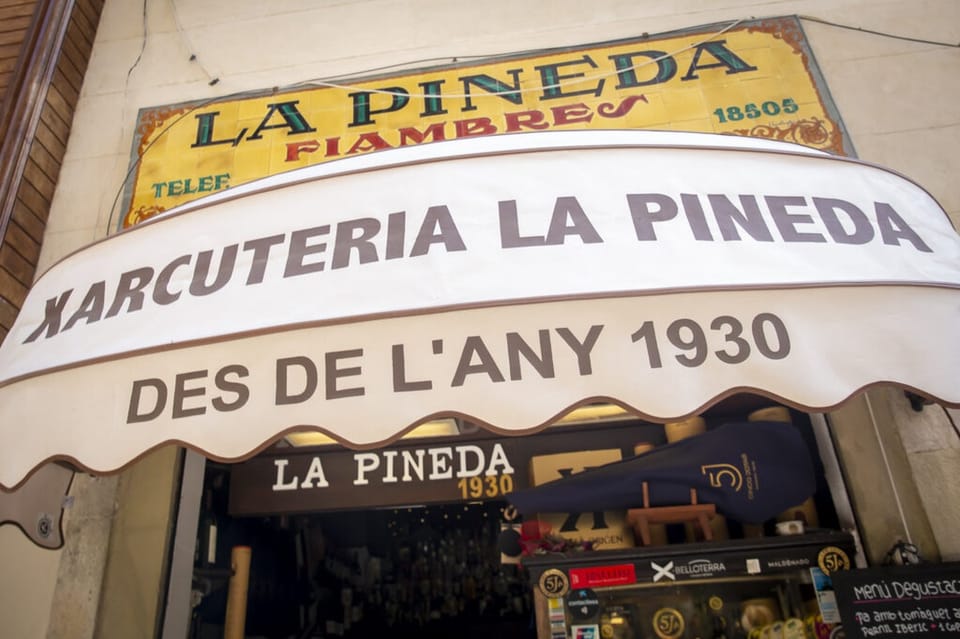
La Pineda, a historic charcuterie shop on Carrer del Pi, 16, in Barcelona's Ciutat Vella, continues its nearly century-long tradition of offering select cured meats and personalised service. This establishment, which first opened in 1904, has been under the Mir family's ownership since 1930.
Pere Mir, the current owner, champions a core philosophy: "The client is not a number." This approach prioritises human connection over transactional interactions. The shop stands as proof of resistance against commercialisation in a rapidly changing urban environment.
A Family Legacy in Ciutat Vella
The charcuterie began as a butcher's shop in 1904. Pere Mir's uncle, Florenci Mir, arrived in Barcelona from Aragon in 1917. He started as an apprentice in another Ciutat Vella food shop at 17 years old. Apprentices in such shops were called "saltataulells" (counter-jumpers) because they climbed counters to arrange goods and sometimes slept beneath them, Pere Mir explained. Many Aragonese people came to Barcelona during that era to open grocery stores.
Florenci Mir worked in several shops on Carrer de Sant Pau and Carrer del Carme, then known as the Chinese Quarter. He joined La Pineda in the late 1920s. The owner, Mr Verdaguer, quickly recognised Florenci's diligence and offered him a partnership. Florenci accepted, and by 1930, he acquired the establishment, which had already transitioned into a charcuterie, though it still sold meat.
After taking over the shop, Florenci called his siblings, Pere, Joaquim (the current owner's father), and Carme, to join him in Barcelona. They all learned the charcuterie trade at La Pineda. Florenci also brought their parents, Joaquima and Pere, to the city. The Spanish Civil War then broke out, and authorities requisitioned almost all products. Pere Mir noted that they could make some exchanges with other merchants, such as bakers.
Pere Mir's father fought on the Ebro front, where he sustained injuries. He later contracted tuberculosis and entered a residence in Sant Quirze Safaja. There, he met Elvira Rodés, a healthcare worker, and they married. Together, they moved to Barcelona and managed two stalls in La Boqueria market, selling cured meats, ham, and cheese. Pere's other brother, also named Pere, took two stalls at the Mercat de la Revolució in Gràcia, selling the same products. They shared suppliers, enabling them to buy in larger quantities for better prices.
Iberian Ham and Select Delicacies
Florenci and Carme continued at the charcuterie. They combined retail sales of cured meats, cheese, and ham with in-store tastings at small marble tables and wooden stools. Customers still use these today. The shop's display case shows a generous variety of select goods.
Maria Rivero, the shop manager since 2018, detailed their offerings. "We have cured meats from everywhere," she said. "Some from the Basque Country, Aragon, and also from the south, the most emblematic ones, like moixama." She recounted a recent customer's social media post about buying moixama at La Pineda since age four, continuing the tradition with his grandfather and now at 44.
Cecina and various tinned preserves, including seafood from Galicia and the Cantabrian Sea, are also popular. The shop also stocks select wines, Cava, and Champagne. Iberian ham remains the shop's most popular product. Four hams are always positioned for slicing in the middle of the establishment, where master slicer Jenia Surugai works. These Iberian hams come from Salenco in Guijuelo, Jabugo in Huelva, Belloterra in the Valle de los Pedroches in Córdoba, and Maldonado in Alburquerque, Extremadura. They also sell ham from Girona and shoulder ham from Córdoba.
Maria Rivero confirmed that "ham is king," the most requested product for tasting in the shop. They source hams one by one from the drying rooms, using about 200 hams annually. Their deep product knowledge helps build a loyal customer base.
Balancing Tradition and Tourism
Tourists can make up 60% of their clientele, depending on the season, with locals accounting for the remaining 40%. "In winter months, more local people visit, especially in the afternoons and at weekends," Maria commented. "Many people from other regions also come then." International visitors primarily include English, American, Italian, and French customers. Italians visit particularly around New Year and Christmas.
Maria also discussed product evolution. The range of Catalan cheeses, including goat, sheep, and cow varieties, has multiplied. "The quality has gone up a lot," she stated. The shop now offers a greater assortment and higher quality of bulls and homemade sausages, as well as wines. "Wines from the Tarragona area were undrinkable before, but now they have improved a lot," Maria observed. She also mentioned xolís from Isona, and bull and botifarra from Alpens and La Noguera. "We have clients who call us to order pork scratchings," she added.
La Pineda is nearing its centenary since the Mir family took ownership in 1930. It maintains a welcoming atmosphere, offering select charcuterie from suppliers who have also served them for generations. The shop is part of the "Ruta dels Emblemàtics," a programme recognising historic establishments.
Preserving Barcelona's Identity
Pere Mir expressed gratitude that the building owners, who are not his family, value the business's nearly century-long activity. This has helped maintain its neighbourhood ties and diverse clientele. La Pineda remains a reference point and a symbol of resistance for historic commerce. "In all cities, like Berlin, London, or Paris, shops like this should be protected," Pere Mir argued. "Multinationals, chains, all this rots and distorts cities."
He acknowledged that running such businesses in the old town is challenging. "There is a lot of rotation here, and that affects two levels: there is no commercial stability in the neighbourhood, and it does not provide personal service, it is very impersonal." Pere Mir remembers his uncle's lesson: "The client is not a number." He believes this personalisation is now disappearing. "Florenci was a great salesman and took great care of the client, building loyalty," Pere recalled. "He would serve a client a small glass of wine and say: taste this cured meat, and if you like it, you will buy it another day." Pere added: "That was knowing how to treat the client, and he had internalised it very well."
"We continue like this, trying to build client loyalty, even if they are passing through," Pere affirmed. "It is a mistake to mistreat visitors or tourists; it harms the Barcelona brand." He recognised the shop's privileged location on Carrer del Pi as an advantage. Pere Mir believes Barcelona should preserve its unique shops. "If we lose small businesses, we lose a way of being and doing that gives the city a distinctive seal, a different emblem," he stated. "With each small business that closes, we lose our origins and identity, because it is part of that, and thus the city is distorted."
He also highlighted staff welfare as a factor in business maintenance. "We have always given good salaries, and 48 hours of continuous rest; this is basic for people to respond." Pere Mir started working part-time at the charcuterie at 18, balancing it with psychoanalysis studies. After finishing his degree, he managed the shop from 1992 to 2022. The shop now employs around six staff members, allowing it to stay open all day since the pandemic, closing only on Tuesdays.
Pere's 29-year-old son, Marcel Mir, now handles the administrative side of the business. The team of workers drives the dynamic of this space, offering selected products and maintaining a family-like, knowledgeable approach to every item. "Here clients are not only clients. You know their name and surname and the type of product they prefer," a staff member explained. They emphasise that while customers can eat quickly, "this is not a fast-food place; here, we care for and transmit everything you want to know about what you can eat."
La Pineda plans to restart literary gatherings, an activity they held before the pandemic. Pere's retired philosophy professor wife, Charo Teixeiro, helped organise these events. This commitment to community and culture shows the shop's dedication to more than just commerce, ensuring its legacy continues for future generations in Barcelona.
Come and join our Barcelona English Speakers community on WhatsApp.
Originally published by VilaWeb Feed. Read original article.