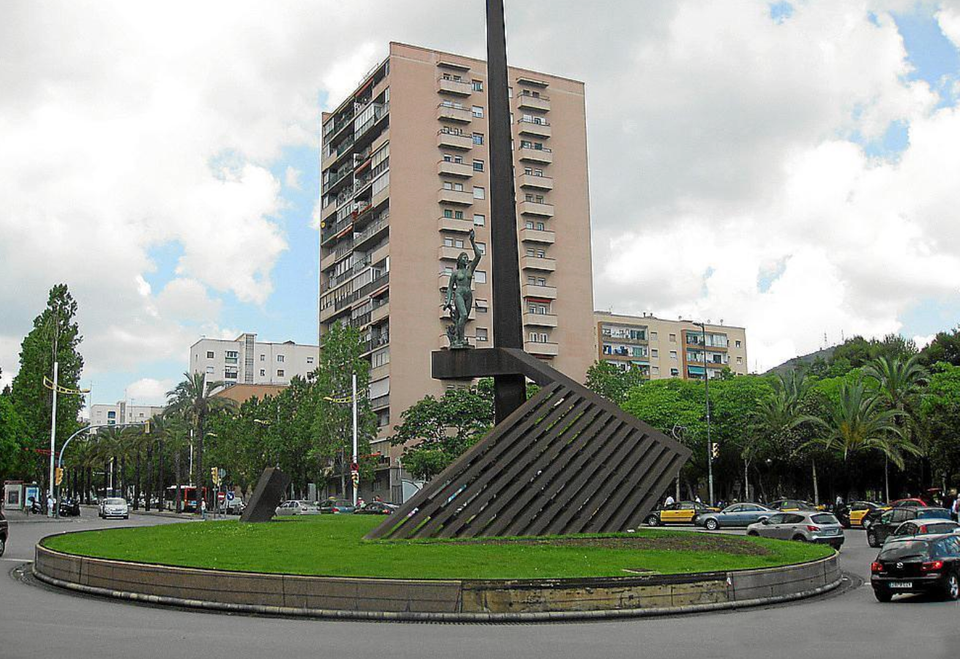
The Llucmajor metro station in Barcelona's Nou Barris district keeps its name, but the square above it officially became Plaça de la República in 2016. This change highlights a significant episode of historical memory and Francoist repression for thousands of residents. Many pass through this Line 4 station weekly, often unaware of the complex history behind its name and the square's republican monument.
A Monument to the Republic
The name change was a deliberate act. It aimed to honour the large republican monument dominating the square. This monument remained hidden for decades. Neighbourhood residents campaigned for its recognition. The sculpture is a unique piece of Barcelona's political memory.
The original work opened in 1936. It stood at the intersection of Passeig de Gràcia and Diagonal. It honoured Francesc Pi i Margall, the first President of the First Spanish Republic. Sculptor Josep Viladomat created the female figure. It crowns the monument. Known as "The Republic" or "The Flame," it symbolised freedom and progress.
Francoist Repression and Reinstallation
The Franco dictatorship removed the monument. It disappeared from public view. It remained hidden in municipal facilities for decades. The regime erased republican symbols from Barcelona's streets. The city recovered the piece in 1990. It reinstalled the monument in Nou Barris, in what was then Llucmajor Square.
This brought the monument back into public space. It had been hidden for over half a century. This reinstallation marked a significant moment for historical memory in Barcelona. It allowed the city to confront its past.
Naming Controversy and Current Debates
The name change in 2016 occurred under the mandate of then-Mayor Ada Colau. However, Jaume Tomàs, the Mayor of Llucmajor, expressed his displeasure. He stated, "I would like to see the name Llucmajor endure in the same square it has named for so many years."
Mayor Tomàs also regretted that Barcelona City Council cited historical memory to justify the change. He added, "A Barcelona councillor, Janet Sanz, said they would change Francoist names, including Llucmajor, to Plaça de la República. We do not want them to put us in the same bag as streets with Francoist reminiscences because Llucmajor has nothing to do with that."
Janet Sanz, then Councillor for Nou Barris, defended the decision. She affirmed, "Since the Republic statue is located in that space, it is logical that it also adopts the name, without this causing any grievance towards Llucmajor."
Barcelona's Enduring Historical Paradox
The paradox continues today. The metro station still bears the name Llucmajor. Meanwhile, the square above it is officially dedicated to the Republic. This situation creates a unique historical juxtaposition.
Many residents consider this one of Barcelona's most historically charged stations. It represents a place where republican memory, Francoism's legacy, and current debates about city names coexist. The ongoing contrast highlights Barcelona's complex relationship with its past. The site serves as a constant reminder of the city's efforts to reclaim its historical memory. It also shows the challenges in reconciling different perspectives on urban symbolism.
Come and join our Barcelona English Speakers community on WhatsApp.
Originally published by Tot Barcelona. Read original article.