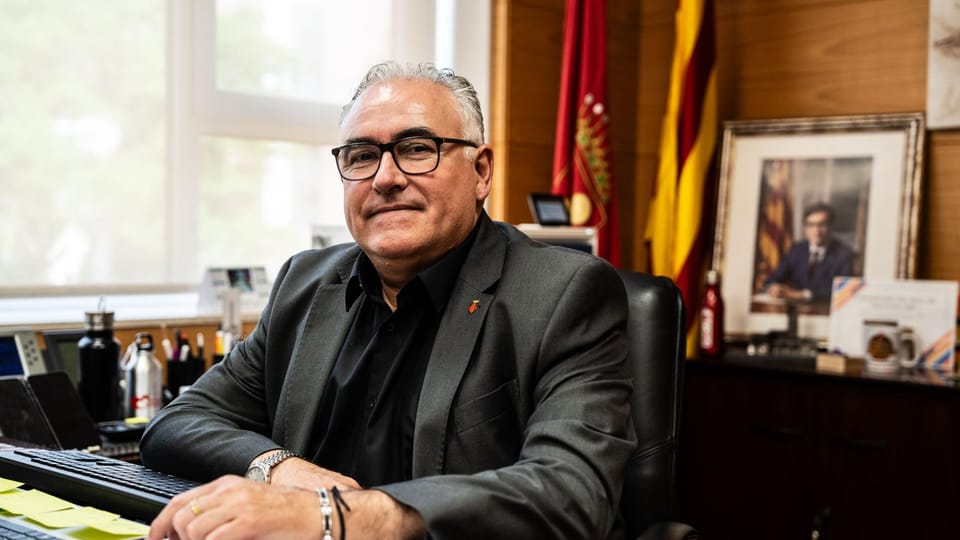
Montcada i Reixac's Mayor Bartolomé Egea, representing the Partit dels Socialistes de Catalunya (PSC), is overseeing a significant urban transformation. This change centres on the €540 million project to bury the R2 Rodalies train line, which began in 2023. This ambitious project aims to reconnect the municipality, home to over 36,000 residents, by eliminating a major physical barrier.
R2 Train Line Burial Project Advances
Mayor Egea describes the R2 burial as "the most important work currently underway in Spain." The project involves constructing a four-kilometre tunnel and a new underground station. Officials expect completion by 2030. Egea highlighted the historical demand for this project, driven by both civil society and political groups within Montcada i Reixac. He stated, "The burial is a city project." The works are progressing according to schedule, with only one significant incident on a 150-metre section of Carril street, which did not affect overall timelines. Over 350 workers are on site daily, requiring extensive coordination between the council, Adif, Renfe, and the Unión Temporal de Empresas (UTE) executing the works.
Montcada i Reixac faces a unique challenge due to its geography. Egea explained, "If you look at the municipality from above, it looks like a barcode: train lines, motorways, rivers, all fragment the city." This fragmentation severely hinders mobility between neighbourhoods and has conditioned residents' daily lives for decades. The mayor views the burial project as more than just railway work; he calls it a "complete urban transformation." This transformation will help to stitch the municipality back together, creating a large commercial and urban axis.
Housing and Economic Growth Priorities
Housing affordability is a primary concern for residents. Upon taking office, Mayor Egea's administration promoted 76 affordable rental homes, delivered in two phases. Additionally, the council transferred three plots of land to expand the protected housing stock. Egea believes the municipality can generate nearly 3,000 new homes in areas like Mas Duran and around the new hospital. He stressed that this growth must include new services and green spaces, ensuring thoughtful development.
Montcada i Reixac also possesses strong industrial potential, with 12 industrial estates. These estates currently operate at 95% occupancy. Egea noted that more companies would relocate if additional space were available. The council aims to continue boosting industry and use its strategic location effectively. However, the ongoing R2 works are affecting local businesses, with some reporting losses of 20% to 25%. The council is working with merchant associations and seeking aid from the Diputació de Barcelona to support and revitalise commercial activity during the construction period.
Enhancing Security and Metropolitan Collaboration
Security remains a top concern for the mayor. Montcada i Reixac has five train stations, a unique feature in Spain, which facilitates mobility but also creates specific areas of insecurity. However, indicators show improvement, with crimes and thefts decreasing. The council reinforced the Local Police, collaborated closely with the Mossos d'Esquadra, and reinstated security committees. Egea stated that the municipality, covering 24 square kilometres with 12 neighbourhoods, industrial estates, and rivers, requires more resources and personnel to meet all needs.
The municipality also tackles the issue of informal settlements. Egea confirmed intensive work, particularly in the Pla del Besòs area, which is a major focus. Recently, authorities dismantled another settlement near the Ripoll river in Can Tapioles, a dangerous and flood-prone area. The mayor emphasised that the council cannot solve this problem alone, requiring collaboration with the Consorci del Besòs, the Diputació, and the Generalitat de Catalunya. He noted a positive shift, with the Besòs area now receiving more institutional attention, fostering better relations with neighbouring municipalities like Santa Coloma and Sant Adrià.
A Vision for Montcada's Future
Mayor Egea believes in the concept of a "Greater Barcelona," recognising shared challenges in housing, mobility, and infrastructure across the metropolitan area. He highlighted strong relations and increasing collaboration with Barcelona, especially along the Besòs corridor. Historically, Montcada often received projects that did not fit within Barcelona. Egea aims to change this perception, asserting Montcada's capacity, land, and potential to define its own urban model. The council is also improving public transport connections, reorganising urban bus lines, and requesting more night bus frequencies. Additionally, they are demanding better access points to motorways that traverse the municipality, which currently offer no useful entries or exits for local residents or industrial estates.
In a move to improve residents' quality of life, the council recently renewed its cleaning service. This project represents an annual investment of €5.7 million, modernising the system and adding seven new staff members for street cleaning and waste collection. Mayor Egea expressed his desire to seek re-election to complete the many projects now taking shape. He hopes to see the R2 burial finished, along with new stations, pending facilities, and ongoing sports and urban projects, believing Montcada will be one of the most transformed municipalities in the metropolitan area within ten years.
Come and join our Barcelona English Speakers community on WhatsApp.
Originally published by Metrópoli Abierta - Urban Life. Read original article.