A new literary route has launched in Barcelona's historic centre. It allows residents and visitors to trace George Orwell's experiences during the Spanish Civil War, as documented in his seminal work, 'Homage to Catalonia'. This unique itinerary connects literature, memory, and urban heritage, bringing a turbulent period of the city's past to life for a modern audience.
Orwell arrived in Barcelona in December 1936. He found a city in the midst of revolutionary fervour. The British writer quickly became involved in the conflict. He joined the militia of the Partit Obrer d'Unificació Marxista (POUM). His stay in Barcelona lasted until June 1937. 'Homage to Catalonia' meticulously details his observations and experiences during this time. The route reconstructs this period, following the exact locations where Orwell lived and acted. It covers everything from his arrival in a revolutionary atmosphere to the intense May Days of 1937. These events marked a significant turning point in the conflict within Barcelona itself. The route offers a tangible link to a crucial moment in European history.
Tracing Orwell's Barcelona Journey
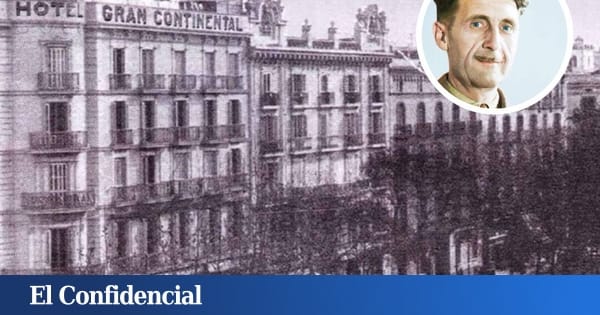
The literary journey begins in Plaça de Catalunya, a major city hub. During the Civil War, this square served as a focal point for two opposing powers. The now-demolished Hotel Colón housed the Communist Party. Meanwhile, the Telefónica building remained under the control of the CNT. From this central point, the route continues along Las Ramblas, Barcelona's famous boulevard. It leads to number 138, where the Hotel Continental stands. Orwell and his wife stayed at this hotel during their time in the city. The establishment was collectivised during the war. It became one of the places from which Orwell observed the city's revolutionary pulse. This provided him with a unique perspective on the unfolding events.
Just a few metres away, the route highlights the Teatre Poliorama. It also includes the Reial Acadèmia de Ciències i Arts de Barcelona. Orwell and other militiamen used the academy's upper observatory. They maintained a watch point there during the armed tensions of May 1937. This provided a strategic vantage point over the city's central squares. Visitors can imagine the vigilance required during that volatile period.
Key Sites of Conflict and Revolution
The route then ventures into the Raval district, known for its vibrant history and diverse community. Stops include the Biblioteca de Sant Pau and the former Hospital de la Santa Creu. These sites offer further insight into the daily life and struggles during the war. They represent the humanitarian and social aspects of the conflict. The itinerary then proceeds towards the Gothic Quarter, one of Barcelona's oldest and most iconic areas. This area holds many layers of history.
A significant stop in the Gothic Quarter is Plaça de Sant Felip Neri. The facades of buildings here still bear visible impacts from a bomb. This devastating attack occurred on 30 January 1938. It represents one of the city's most tragic episodes during the war. These scars serve as a stark reminder of the conflict's brutal reality. They offer a poignant visual testament to the suffering endured by Barcelona's residents.
Echoes of War in the Gothic Quarter
The tour concludes in Plaça de George Orwell, also situated in the Gothic Quarter. This square honours the writer's legacy in Barcelona. The final stop is the Biblioteca Gòtic-Andreu Nin. This library occupies the former building that housed the headquarters of the POUM during the war. This space commemorates Andreu Nin, the party's leader. His disappearance after the May 1937 events symbolises the internal repression Orwell documented in his work. It highlights the complex political landscape of the time.
This literary route offers more than just a historical tour. It provides a direct reading of Civil War Barcelona. Visitors connect specific locations with pivotal historical episodes. These include the 1936 revolution and the May 1937 tensions. Throughout the journey, visitors walk through spaces that still retain visible traces of that period. These historical marks are now integrated into Barcelona's contemporary urban landscape. The route helps both residents and tourists understand the profound impact of the conflict on the city. It offers a unique way to engage with a critical chapter of Barcelona's past.
Come and join our Barcelona English Speakers community on WhatsApp.
Originally published by El Confidencial. Read original article.