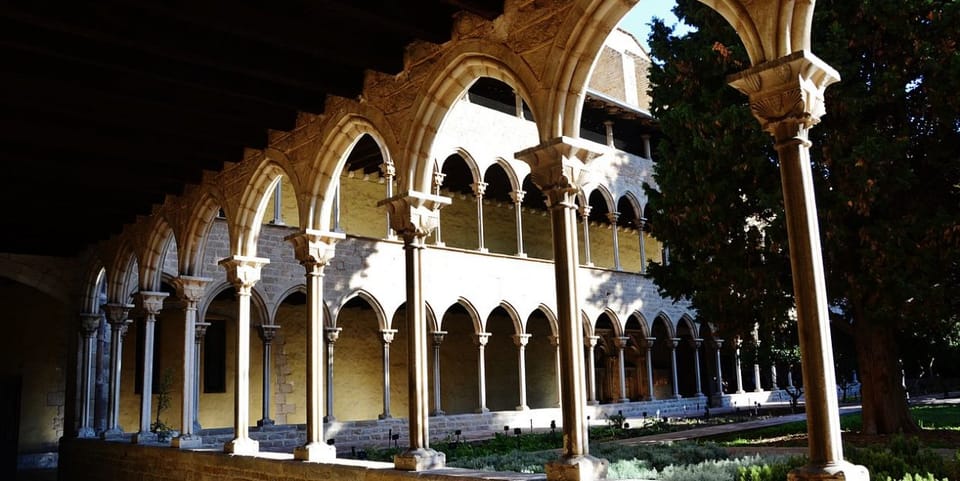
The Catalan Government has officially declared the Archive of the Royal Monastery of Santa María de Pedralbes in Barcelona a National Cultural Asset this week. This significant decision provides full legal protection for the institution's extensive historical collection.
Protecting Centuries of History
This new status aims to complete the legal safeguarding of the heritage accumulated by the institution since its foundation in 1327. The Government highlighted the archive's antiquity and its direct connection to the Crown as key factors. According to the executive, the current inventory confirms the "exceptional importance" of this documentary collection within Catalan heritage. This collection includes invaluable records spanning centuries, offering unique insights into the region's past.
A Royal Foundation and Wartime Sanctuary
Queen Elisenda de Montcada founded the monastery with the support of her husband, King James II. The Royal Monastery of Santa María de Pedralbes itself already holds National Cultural Asset status. This category encompasses Catalonia's most significant cultural heritage assets, ensuring their highest level of protection.
During the Spanish Civil War, the Generalitat took extraordinary measures to protect both the monastery and its archive. Officials temporarily appropriated the complex by decree in 1936. It then served as the headquarters for the General Historical Archive of Catalonia. Pedralbes became a safe haven for Catalan documentary heritage, housing collections from across the region.
After the war concluded, the Poor Clares community regained custody of the monastery and its archive. State archivists recognised that most of the documentary collection had been preserved, despite some isolated losses. In 1972, the Ajuntament de Barcelona and the community signed an agreement. This protected and museumised the movable heritage, while the nuns retained responsibility for the archive, employing their own archivist.
Ensuring Accessibility and Preservation
In 2009, concerns arose regarding difficulties in accessing the archive's consultations. There was also a clear need to guarantee the preservation and accessibility of the collection. Consequently, the Generalitat, the Ajuntament, and the Monastery initiated a comprehensive project. This initiative focused on describing, digitising, and restoring the documentary collection and historical furnishings.
These extensive works concluded in 2013. They successfully enabled the digitisation and description of all documents dating between 1081 and 1899. The last remaining nuns departed the monastery in 2024. This declaration further solidifies the archive's future as a vital part of Barcelona's cultural landscape.
Come and join our Barcelona English Speakers community on WhatsApp.
Originally published by El Nacional. Read original article.