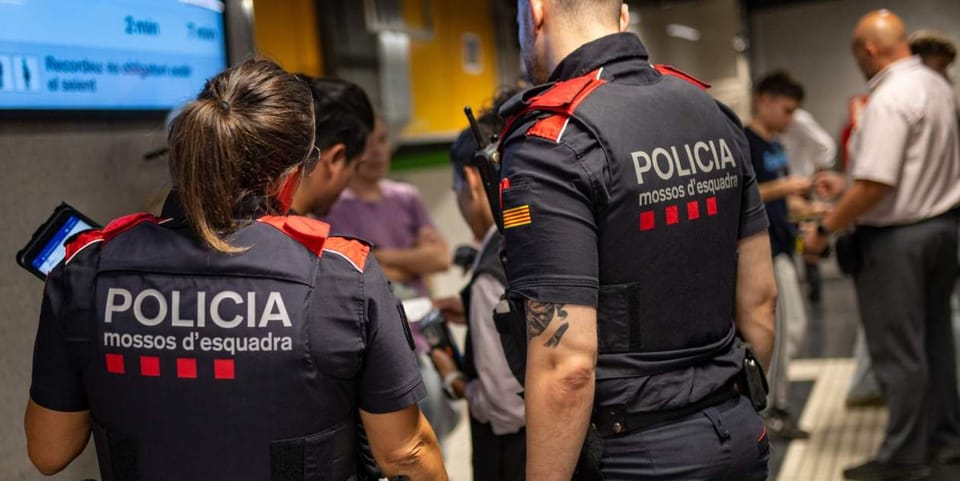
Barcelona and L'Hospitalet de Llobregat police forces have intensified controls across public transport and city squares. This follows a significant resurgence of violent incidents involving organised youth groups, often armed with bladed weapons. Authorities are deeply concerned by this trend.
For months, street-level officers from the Mossos d'Esquadra, Catalonia's police force, observed a troubling rise in these highly violent groups. However, official Mossos sources previously denied the existence of such "Latin-inspired gangs." They asserted these groups had been eradicated through cultural association programmes. This denial, according to El Caso.com, stemmed from a political directive to contain information about these incidents.
The reality has become undeniable. A fatal shooting in L'Hospitalet de Llobregat in late March involved members of the Dominican Don't Play (DDP) gang. This incident forced authorities to activate public order patrols. Similarly, Barcelona City Council launched a "shock plan" with specific controls. This plan involves collaboration with the Guàrdia Urbana, targeting public transport networks and plazas. The aim is to search for bladed weapons and identify individuals linked to these organisations.
Escalating Violence and Criminal Activity
The current surge in gang activity has resulted in multiple injuries and at least one fatality in L'Hospitalet. Incidents reported before summer include a violent clash in July on Via Favència in Barcelona. Police sources indicate that the nature of these groups has evolved. Previously, their objectives centred on a sense of belonging for young people far from their countries of origin. Violence then served as a means of expansion. Now, the primary focus has shifted to criminal activity and violence itself, often under the guise of gang affiliations.
These groups, numbering around 20 according to Mossos d'Esquadra, are informal and vary in size. While popular gangs like the DDP maintain a presence, particularly in L'Hospitalet, new, more localised groups have emerged. The Trinitarios and Mara Barrio 18 gangs are reportedly more active in northern Barcelona districts, including Verdum and La Prosperitat. Police analysts consulted by El Caso.com highlight that some members have adopted a "culture of the knife." Albert Batlle, Barcelona City Council's Deputy Mayor for Security, previously used this term to describe the phenomenon. This imported culture, combined with a disregard for human life, makes these individuals highly aggressive. They often inflict severe injuries on rivals.
Metro Attack and Youth Involvement
A particularly violent incident occurred during the Easter weekend on Barcelona's Metro Line 5. Mossos d'Esquadra officers arrested 13 individuals after a mass brawl on the Coll de la Teixonera platform. The group, armed with large bladed weapons including machetes, attacked two presumed rival gang members. One victim escaped, but the other sustained a deep, almost amputating cut to the hand. Police and Metro security guards quickly apprehended the suspects at Vall d'Hebron station, also on Line 5, seizing several bladed weapons. Six of those arrested were minors. All were of Latin American origin and had prior records related to gang activity. The injured victim was also charged, though not arrested, as police believe he belongs to an opposing gang.
Police records show similar incidents involving these groups regularly occur on weekends. Authorities expect a further increase as warmer weather arrives. Hotspots include the Horta-Guinardó, Nou Barris, and Sant Andreu districts in northern Barcelona. L'Hospitalet and Cornellà, and areas bordering Barcelona, also see frequent activity. The youth of some identified individuals is a significant concern for police. Despite accumulating records for robberies, assaults, and brawls, gang members often perceive a lack of effective punishment. They rarely face imprisonment. This, police sources told El Caso.com, fosters a greater sense of impunity and power among them.
Strategic Response and Future Outlook
The Mossos d'Esquadra are currently developing a strategic plan to address this "new era" of Latin-inspired gangs in Catalonia. The objective is to gain a comprehensive understanding of the situation. They aim to move beyond the visible street incidents that patrol officers encounter every weekend. The police want to map the gangs' integration into the daily lives of these young immigrants. Some are second-generation, replicating models from their countries of origin.
Three years ago, in response to an increase in bladed weapon incidents, the Mossos launched "Plan Daga." This initiative involved street and public transport controls to confiscate knives, switchblades, and machetes. Data from Plan Daga confirmed a growing presence of bladed weapons in youth leisure areas. Police now seek to prevent the situation from deteriorating further. They acknowledge that a delayed response could make future solutions far more complex. The demographic and social landscape of Catalonia, particularly the Barcelona metropolitan area, has changed significantly over the past decade.
Come and join our Barcelona English Speakers community on WhatsApp.
Originally published by El Caso (El Nacional). Read original article.