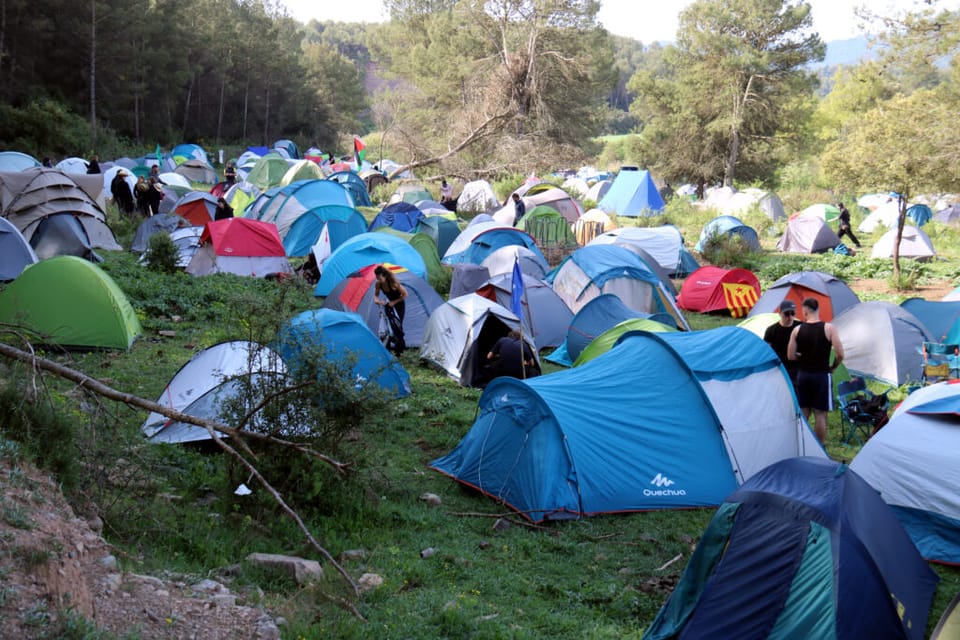
A thousand environmental activists camped overnight in Callús, Bages. This was part of a significant protest organised by Revoltes de la Terra. They demanded that the multinational company ICL cease its mining operations in Catalonia. Activists cited severe environmental impact. The demonstration specifically highlighted the ongoing salinisation of the Llobregat River. It also drew attention to the unchecked accumulation of massive salt waste heaps.
The protest included various workshops and talks throughout the night and morning. These sessions discussed the profound consequences of mining activity. Participants also shared experiences of environmental activism. A slow march was planned, culminating in a direct action at the base of the Sallent waste heap later in the day. Organisers explained that salt waste heaps continue to grow in the region. This occurs despite multiple court rulings mandating their restoration. This fact deeply concerns local communities. This situation significantly accelerates the salinisation of the Llobregat River, a vital waterway for Catalonia. This directly impacts its delicate aquatic ecosystems. It also poses risks to water quality for residents. Additionally, the mobilisation aimed to denounce ICL's perceived ties to Israel. Protesters simultaneously expressed strong solidarity with the Palestinian people. They linked environmental justice with broader geopolitical issues.
ICL's Operations in Central Catalonia
ICL (Israel Chemical Limited) stands as a prominent company within Central Catalonia's industrial landscape. It has operated salt mines in the Bages region since 1998. Initially, it traded under the brand Iberpotash. The company later adopted the name of its Tel Aviv-based parent corporation. Mining activity in this specific area, however, boasts a history spanning over a century. State-owned entities ran the initial operations. The Sallent mine, one of ICL's key sites, ceased its operations in 2020. Since then, ICL's primary activity has concentrated at the Cabanasses mine in Súria. This extensive operation currently provides employment for approximately 1,100 direct workers. It also supports nearly 3,000 indirect workers, making it a significant regional employer. Annually, the company markets around 1.4 million tonnes of salt. This salt is destined for both industrial uses and de-icing applications. Furthermore, ICL exports one million tonnes of potash for fertilisers. This crucial export process occurs through its dedicated terminal located at the bustling Port of Barcelona.
Judicial History and Environmental Concerns
ICL's mining operations have consistently faced several judicial processes concerning environmental crimes. These legal challenges have primarily centred on the salinisation of aquifers and rivers in the region. A significant 2015 conviction against the company and some of its directors specifically addressed the contamination of the Llobregat River. This pollution stemmed from saline waste accumulated at the Cogulló waste heap in Sallent. This site contains an estimated 45 million tonnes of material. Although no new waste has been deposited at Cogulló since 2020, a binding European resolution mandates the comprehensive restoration of this substantial site. A detailed plan, approved in 2018, outlines its total removal over an ambitious 50-year period. During this planning, a proposal to install a photovoltaic park directly on the waste heap was also considered. However, the Catalan Government ultimately rejected this specific initiative. Despite ICL's implementation of various improvement plans in recent years, controversial elements persist. These include the unresolved issues surrounding the Sallent waste heap and the continued expansion of new salt deposits in Súria, such as the Fusteret site.
The ongoing protest by Revoltes de la Terra underscores persistent environmental concerns surrounding large-scale industrial mining in Catalonia. Activists continue to demand greater accountability and decisive action from both ICL and relevant authorities. The long-term restoration of affected areas, particularly the vital Llobregat River basin, remains a critical and complex environmental challenge for the entire region. This issue affects not only local ecosystems but also the water resources for many Catalan residents.
Sign up for our new entrepreneurs community Bizcelona, now accepting our second wave of applicants.
Originally published by VilaWeb Feed. Read original article.