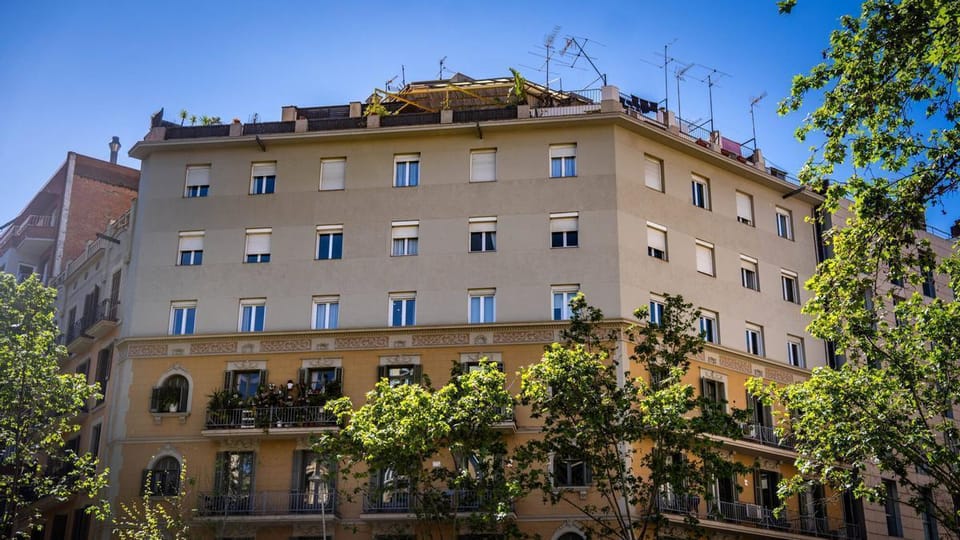
Barcelona faces a critical urban planning dilemma as the Catalan government proposes vertical densification to address housing shortages, a strategy experts warn could severely degrade air quality and diminish vital green spaces. While compact cities offer environmental benefits like reduced carbon emissions, scientific studies and urban planning specialists highlight significant health and environmental risks if not implemented with stringent safeguards.
Tamara Iungman, a scientist at ISGlobal specialising in urban health, climate, and air pollution, explained the theoretical advantages of densification. "Densifying, in theory, can facilitate the reduction of emissions," she stated. She added, "When the presence of citizens concentrates, there is less motorised transport and one can walk, cycle and use public transport." Conversely, a more dispersed urban area typically leads to increased fuel consumption for longer distances. However, Iungman cautioned that these benefits materialise only when densification is paired with robust public transport, energy-efficient buildings, and protected green areas. Without these measures, air quality deteriorates despite a smaller carbon footprint. Recent ISGlobal research indicates that highly densified cities often exhibit higher mortality rates, directly linked to pollution and a lack of green spaces. "Without good urban planning, the negative effects multiply," Iungman summarised, stressing the need for effective traffic reduction strategies.
Balancing Housing Needs with Environmental Health
The Govern de Salvador Illa recently advocated for this vertical densification model. They prefer it over expanding cities into undeveloped land. The aim is to accommodate more people within existing urban footprints, leveraging established services. However, this approach carries substantial environmental and health consequences for residents. Panagiota Kotsila, a researcher at the Institute of Environmental Science and Technology (ICTA-UAB), highlighted the importance of natural refuges within cities. She noted, "In the most compact neighbourhoods, it is often difficult to find pleasant spaces during heatwaves because the ground is very occupied." Kotsila also pointed out that converting post-industrial land for housing frequently results in missed opportunities for creating new green spaces. This contributes to the "heat island effect," where urban areas retain more heat due to extensive asphalt and cement, exacerbated by insufficient vegetation.
Addressing the Urban Heat Island Effect
The urban heat island effect is a particular concern for Mediterranean cities like Barcelona, which already experience high summer temperatures. When cities become more compact without adequate green infrastructure, the problem intensifies. Buildings and paved surfaces absorb and re-emit more solar radiation than natural landscapes. This raises ambient temperatures, especially at night, impacting public health and increasing energy consumption for cooling. Kotsila stressed that current urban compaction often seals everything with asphalt and cement. This lack of vegetation traps heat, intensifying the heat island effect. She urged planners to densify only if urban development actively reduces car usage and significantly expands green spaces.
Potential for Gentrification and Displacement
Kotsila also raised concerns about the social implications of "soft densification," which involves vertical expansion without losing existing green spaces. She warned, "When there are reforms and vertical densification, in what is called 'soft densification', there is a risk that ecological improvements disproportionately benefit new, higher-income inhabitants if current tenants are not protected." This process can lead to the displacement of long-term residents. For example, the expert cited the transformation of small, low-rise houses in Barcelona's Poblenou district, a neighbourhood that has seen significant urban regeneration. Existing residents often endure construction noise, dust, and uncertainty, while new, wealthier inhabitants benefit from the upgraded facilities. Kotsila emphasised the current context of rising rents and speculative demand in Barcelona. She urged planners to consider "What price does the housing being built or renovated have and for whom is it intended?" before proceeding with such projects.
Strategies for Sustainable Urban Growth
To mitigate negative impacts, experts recommend several key strategies. Iungman suggested that Low Emission Zones (LEZs) are useful, but only if accompanied by significant improvements in mobility services. This ensures residents have viable alternatives to private vehicles. Kotsila advocated for the use of sustainable materials in new construction projects. She noted that building more structures has considerable impacts on material consumption, transport logistics, and waste generation. Furthermore, Kotsila argued that Mediterranean cities like Barcelona are already highly densified. This existing density means any further compaction requires exceptionally careful planning to avoid exacerbating current challenges related to air quality, heat, and social equity.
Moving forward, Barcelona's pursuit of housing solutions through densification must balance environmental sustainability with social equity. Careful urban planning, robust public infrastructure, and protective measures for existing communities will be crucial to ensure that growth benefits all residents without compromising the city's liveability and ecological health.
Come and join our Barcelona English Speakers community on WhatsApp.
Originally published by El Periódico Barcelona. Read original article.