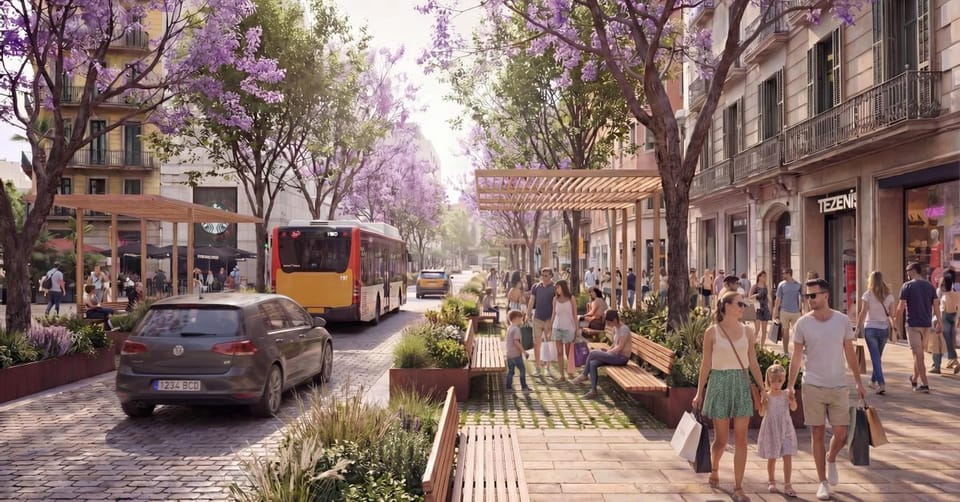
Barcelona City Council has committed to a significant urban transformation of Carrer Pelai, a central artery connecting Plaça Universitat and Plaça de Catalunya. The commitment, announced by Third Deputy Mayor and Ciutat Vella Councillor Albert Batlle, follows a proposal from local merchants to make the street more pedestrian-friendly.
Council Pledges Future Improvements
Mr Batlle confirmed that the redevelopment of Carrer Pelai will form part of the municipal government's roadmap for the next four years. This pledge came during an event with local business owners, where Mr Batlle accepted the proposal from the Pelai Centre i Rodalies merchants' association. Gabriel Jené, who leads the association and also presides over Barcelona Oberta, emphasised the urgency of the project.
"Until now Pelai has not been on the agenda and we must make sure it is," Mr Jené stated. He highlighted that after improvements to other major thoroughfares, including La Rambla, Via Laietana, Ronda Sant Antoni, and Passeig de Gràcia, "now is the time" to redevelop Carrer Pelai. The merchants' association presented its own reform proposal for the avenue on Thursday, advocating for substantially wider pavements and the addition of urban furniture and trees.
Merchants Propose Pedestrian-Friendly Design
The proposal, developed by the L35 architectural studio, outlines master lines for the project, aiming to create a "much more comfortable space" for pedestrians. It suggests wider pavements and seeks to address the current disproportion between the sea and mountain sides of the street. Additionally, the plan proposes reordering spaces such as motorcycle parking and loading zones, and reducing the approximately 30 waste containers currently present.
Mr Jené clarified that the vision is not for a "green axis" but a "pacification" that still allows for vehicle circulation. The proposal does not specify the number of traffic lanes or how to resolve the connection with Carrer Balmes. However, it does suggest redirecting some traffic to streets above Pelai. A render accompanying the project illustrates Carrer Pelai with a single lane for car circulation.
Connecting Key City Areas
Mr Batlle expanded on the council's vision, stating that the redevelopment should also encompass the street's continuation through Carrer Fontanella and Carrer Trafalgar. This extension would significantly improve the connection between Plaça Universitat, a major transport hub, and Passeig de Sant Joan, a popular tree-lined avenue. This comprehensive approach aims to integrate Carrer Pelai more effectively into the city's central pedestrian network.
In the previous municipal mandate, the government led by Ada Colau had begun to outline plans for new Carrer Pelai and Carrer Fontanella designs. These earlier sketches also featured wider pavements, only two traffic lanes, and a dedicated cycle lane on the side. However, Mayor Jaume Collboni dismantled the tactical urbanism measures implemented by the previous administration on Carrer Pelai shortly after taking office. This earlier action involved removing temporary installations that had been placed on the main artery.
Mr Jené stressed that the City Council must ultimately formulate the definitive proposal for reordering the space. He called for a clear commitment to tackle this long-standing issue and a "public timetable" ahead of the 2027 municipal elections. The council's commitment marks a significant step towards revitalising this important city centre street for residents and visitors alike.
Sign up for our new entrepreneurs community Bizcelona, now accepting our second wave of applicants.
Originally published by Ara Cat. Read original article.