Esteve Camps, President Delegate of the Sagrada Família Foundation, recently shared insights into the basilica's ongoing construction, future plans, and community relations at an event in Barcelona. He highlighted that despite its global recognition, its architect, Antoni Gaudí, "remains largely unknown."
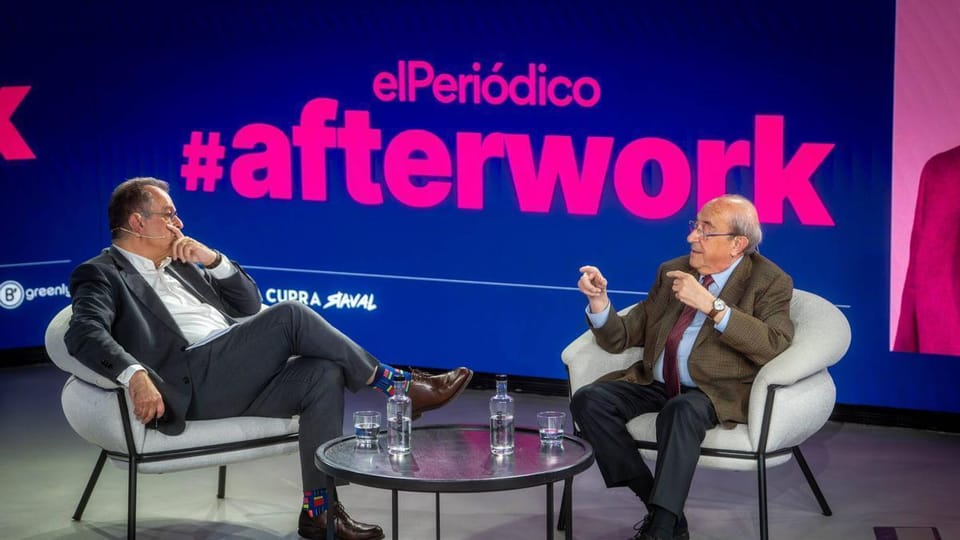
Camps spoke at an #Afterwork event organised by El Periódico at Casa Seat, discussing the temple's progress 144 years after construction began. He noted that Gaudí's work was not even studied in Barcelona's architecture schools during the 1960s and 1970s. This illustrates a historical disconnect with the architect's profound influence on the city.
Gaudí's Enduring Mystery
The Sagrada Família has faced significant opposition from the architectural community in the past. Esteve Camps acknowledged that many professionals once protested against continuing the temple's construction. Architect Oscar Tusquets, for example, has publicly admitted that this intransigence was "a youthful error." This shift in perspective demonstrates a growing acceptance of Gaudí's vision within the professional sphere.
Further evidence of this reconciliation came during a recent holiday call to Camps. Guim Costa, Dean of the Col·legi d’Arquitectes de Catalunya (College of Architects of Catalonia), informed him of a unanimous decision. Organisers of a global congress, set to take place in Barcelona this June, wished to hold one of its central events, an awards ceremony, within the basilica's central nave. This marks a significant moment of recognition for the temple from the architectural establishment.
Community Relations and Future Plans
The basilica's presence in the Eixample district, a densely populated area, inevitably raises questions about its impact on local residents. Albert Sáez, director of El Periódico, questioned Camps about coexistence with neighbours. Some residents experience the challenges of large tourist crowds and commercial degradation in the immediate vicinity. Others express concern about potential displacement if the Ajuntament de Barcelona (Barcelona City Council) approves the construction of the Glory Façade staircase.
Camps addressed these concerns, stating, "Relations with the city council are excellent, and with neighbours and the Avinguda Gaudí commercial hub, they are also very good." He acknowledged the legitimate worries of those affected by the staircase plans. However, he also revealed that the Sagrada Família owns a plot just one block away. This land could accommodate approximately 300 flats, potentially resolving the displacement issue. Any announcement regarding this solution will not occur before a papal visit on 10 June, coinciding with the centenary of Gaudí's death.
Managing Visitor Numbers
A previous papal visit by Benedict XVI in 2010, which consecrated the temple as a minor basilica, led to a 48% increase in ticket sales. Camps remained cautious about a similar surge following the upcoming visit. He noted the current daily visitor count of 17,900. The foundation aims to maintain this level to ensure a pleasant visitor experience, rather than exceeding capacity. The goal is qualitative improvement, not merely quantitative growth.
Visitor capacity may increase slightly when the Jesus Tower becomes accessible, anticipated in 2027 or 2028. This depends on the installation of an interior glass lift, currently under construction in Germany. In 2025, the Sagrada Família welcomed nearly 4.9 million visitors. Americans represent the largest group, with Chinese visitors ranking third and expected to soon surpass local Spanish visitors.
A Unique Funding Model
From its inception, the Sagrada Família has operated as an expiatory temple, financed solely through donations. Ticket sales are considered donations, ensuring no public money contributes to its construction or maintenance. Camps recounted an anecdote where Gaudí himself would collect donations around the city. On one occasion, he asked a wealthy Barcelonan for a sum. When the man readily agreed, Gaudí doubled the request, explaining it "has to be a sacrifice."
In 2025, ticket sales generated €134 million for the temple's accounts. Construction and running costs amounted to €113 million. As the works approach completion, these expenses will decrease. The foundation plans to increase its social aid fund, which began three years ago. In 2025, this fund reached €5 million, benefiting 362 entities. This commitment to social welfare will continue to grow as construction costs diminish, reflecting the temple's enduring charitable mission.
Sign up for our new entrepreneurs community Bizcelona, now accepting our second wave of applicants.
Originally published by El Periódico Barcelona. Read original article.