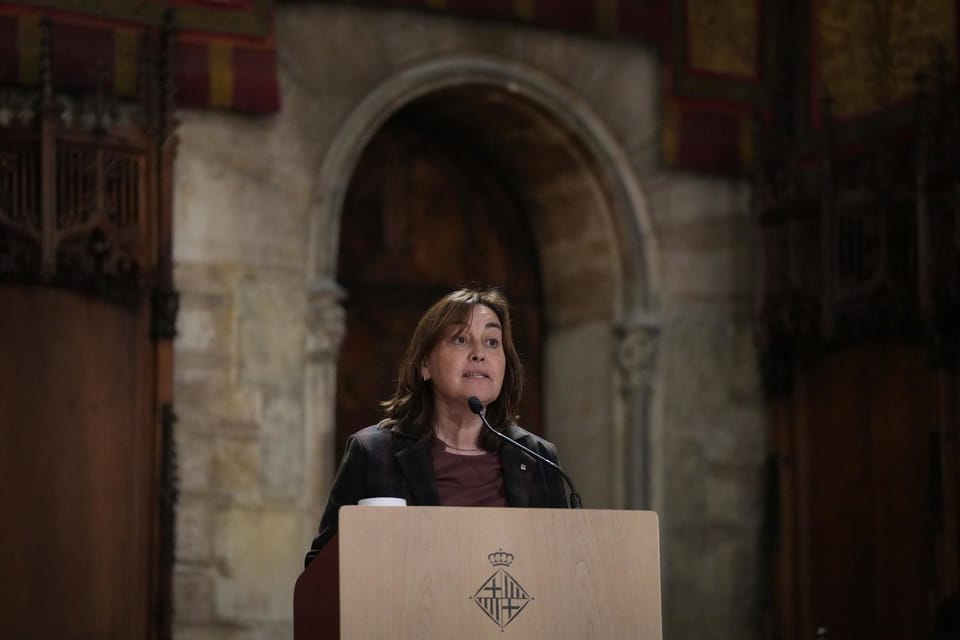
Barcelona officials have inaugurated 'Any Cerdà' (Cerdà Year), a commemoration marking 150 years since the death of visionary urban planner Ildefons Cerdà. Generalitat Minister of Territory, Housing and Ecological Transition, Sílvia Paneque, highlighted Cerdà's "solidity of thought" in designing Barcelona's iconic Eixample district during the event last Thursday.
Minister Paneque spoke at the inauguration ceremony held in the Saló de Cent of the Barcelona City Council. She affirmed that Cerdà's design for the Eixample maintains a remarkable capacity for adaptation. Barcelona Mayor Jaume Collboni and Pere Calvet, Dean of the College of Engineers, also participated in the event.
Paneque emphasised Cerdà's profound social awareness. She stated he demonstrated that poor people died much earlier than rich people due to a lack of water, light, and space. This understanding led him to create a new way of conceptualising Barcelona. Paneque added this fact "is an opportunity to connect his legacy with today's debates."
Cerdà's Enduring Influence on Urbanism
The Eixample district, home to over 260,000 residents, stands as a testament to Cerdà's foresight. Its distinctive grid pattern, wide streets, and internal courtyards revolutionised urban living in the 19th century. This design aimed to improve public health and quality of life for a rapidly growing city. Paneque further insisted that urbanism aims for cities to be refuges for their inhabitants, protecting them. Cerdà understood from the outset that a city's form would significantly impact people's lives.
Dean Calvet underscored Cerdà's exceptional ability to envision beyond his time. He stated this foresight "should be one of Cerdà's contributions to the country's public culture." Calvet added that the College of Engineers plans to explore how Cerdà's legacy can address current challenges. He stressed his collective's deep commitment to common good and technical rigour in advancing projects.
A Year of Reflection and Public Engagement
The 'Any Cerdà 2026' programme aims to rediscover Cerdà's multifaceted figure and position him at the centre of contemporary discussions. These debates encompass the city, territory, and infrastructure. The initiative also seeks to highlight his extensive career beyond the Eixample. This includes his contributions as an engineer, social thinker, economist, and politician.
Planned activities will combine academic reflection with public dissemination. The programme will feature institutional events, academic activities, cultural initiatives, and participatory proposals. The Department of Territory is contributing to the programme with the exhibition 'Modèliques. Cerdà als Top 10'. This exhibition is organised in collaboration with the Official College of Architects of Catalonia (COAC) and the Polytechnic University of Catalonia (UPC). It will run at the COAC from 23 July to 15 October, showcasing 10 fundamental proposals of modern urbanism.
Connecting Cerdà's Vision to Modern Challenges
Additionally, the Department of Territory will participate in the informative session cycle 'Repensant Cerdà i la ciutat d'avui. Del segle XIX als reptes urbans i territorials de la Catalunya del segle XXI' (Rethinking Cerdà and Today's City: From the 19th Century to the Urban and Territorial Challenges of 21st Century Catalonia). The College of Civil Engineers, Canals and Ports organises this series. Minister Paneque reflected that urbanism has always responded to climate. She posed the guiding question: "Should our cities facilitate people's lives?" She hopes this year, when Barcelona becomes a global focal point for urbanism and architecture, will foster these crucial reflections.
Sign up for our new entrepreneurs community Bizcelona, now accepting our second wave of applicants.
Originally published by Europa Press Barcelona. Read original article.