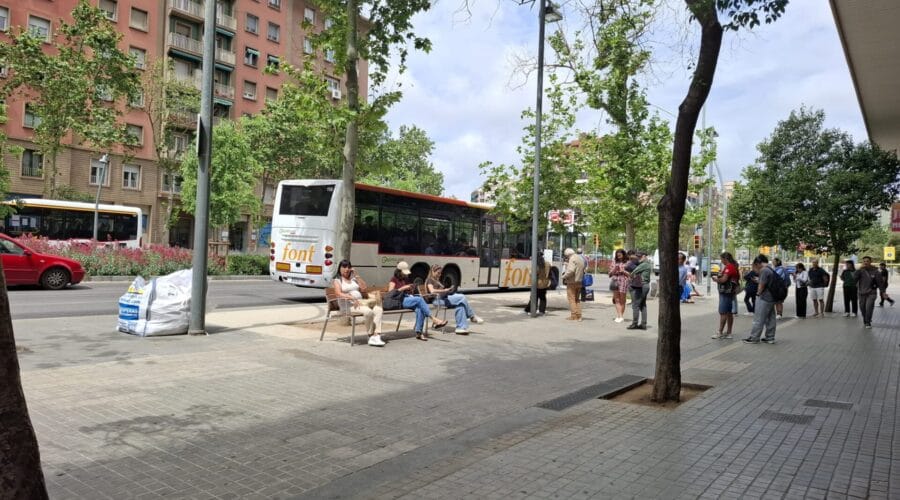
Barcelona City Council will invest €12 million to upgrade 20 intercity bus stops and create new ones across the city. This significant project aims to improve services and comfort for thousands of daily commuters by 2028.
Each day, 7,000 intercity buses enter and leave Barcelona. This number has increased significantly in recent years, especially due to recent disruptions on the Rodalies commuter rail network. Many current bus stops operate directly on pavements, lacking essential services for passengers.
First Deputy Mayor Laia Bonet highlighted the City Council's commitment to residents and daily visitors. She stated, "Barcelona City Council wants to play an active role in changing the paradigm of intercity and connection mobility and its impact on the city and on people who use intercity buses." Bonet added, "Barcelona wants to contribute to improving mobility within the city and also that which comes from outside. Therefore, it is urgent that we address the situation and implement solutions."
Addressing Growing Passenger Numbers
Key areas like Diagonal Avenue, Plaça d'Espanya, and the central Gran Via corridor see between 10,000 and 20,000 daily passengers. The upper section of Diagonal, between Francesc Macià and Zona Universitària, experiences the highest footfall. The new strategy focuses on improving accessibility, services, comfort, and information at these busy points.
The City Council plans to revise pathways to bus shelters and pedestrian crossings. They will also repave tree pits and pavements at existing stops. Additionally, new street furniture, including benches, chairs, and bins, will be installed. The project also includes systems for shade and shelter, vertical and horizontal signage, and, where possible, information kiosks and public toilets.
Three-Pronged Approach to Improvements
The municipal strategy involves three types of interventions across all entry corridors and the city centre. Firstly, the project includes remodelling and updating the Sants and Fabra i Puig bus stations. Work is also already underway at Estació del Nord, a major transport hub.
Secondly, the City Council will draft and approve public space planning projects over the coming months. These will improve existing bus stops in several key areas. These locations include Plaça d'Espanya, the three main points on upper Diagonal (Francesc Macià, Maria Cristina, and Zona Universitària), and the city centre (Urquinaona, Catalunya, and Universitat). Improvements will also target Glòries, Tetuan, and the combined Sagrera and Meridiana areas.
Creating New Intercity Bus Stops
Finally, Barcelona City Council will create new intercity bus stops. This aims to spread out existing demand and reduce the impact on public spaces. These new stops will be close to existing ones, ensuring smooth intermodality with urban public transport. This includes the metro, Transports Metropolitans de Barcelona (TMB) buses, and the tram network.
New stops will be located at the entrance to the municipality via Gran Via Sud. Others will appear near Plaça de Pius XII and the L'Illa shopping centre on Diagonal. Further new stops are planned between Sagrera and Clot on Meridiana, and between Plaça de les Glòries and Plaça de Tetuan on Gran Via Nord. These new points will offer services and resources equivalent to the upgraded existing stops.
This short-to-medium term plan will see the 20 projects drafted and approved between 2026 and 2027. The City Council expects to execute and complete these works during 2027 and 2028. In parallel, Barcelona City Council continues to work with the Government of Catalonia, which holds responsibility for larger bus stations and interchanges, to develop major transport infrastructure.
Sign up for our new entrepreneurs community Bizcelona, now accepting our second wave of applicants.
Originally published by Barcelona City Council Press Room. Read original article.