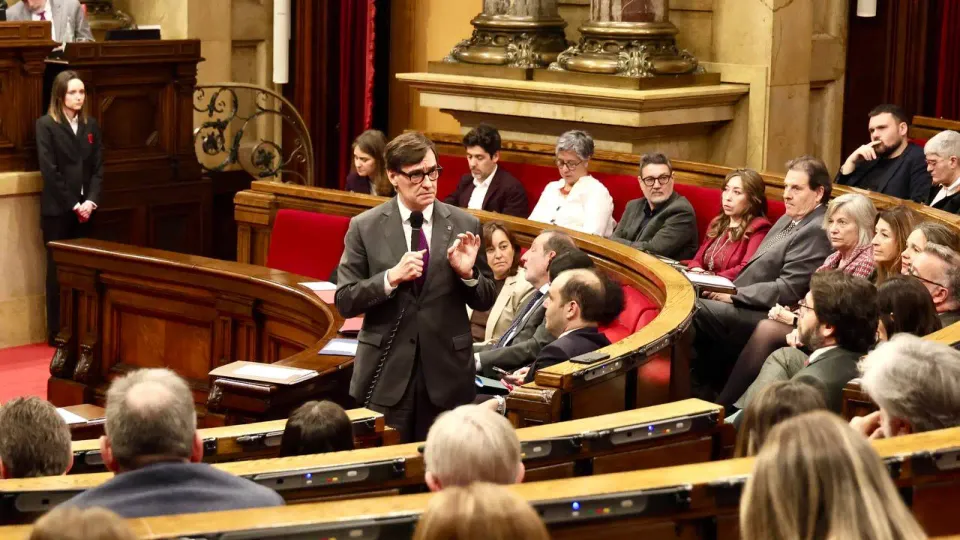
Catalan President Salvador Illa defended a pilot programme deploying six Mossos d'Esquadra officers in 14 public schools across Catalonia on Wednesday. He stated the initiative is voluntary and responds to demands from parts of the education sector, despite widespread criticism from opposition parties and unions.
President Illa reiterated his government's commitment to achieving "excellent" education in Catalonia. He also expressed "total confidence" in teachers. Consellera d'Educació, Esther Niubó, further defended the measure. She explained it aims to help "prevention and mediation work" and "reinforce coexistence" within schools. However, opposition parties strongly rejected the plan during the control session in the Catalan Parliament. Junts deputy Anna Feliu stated the decision was made "without consensus with the educational community." She added that it also lacked dialogue with other parliamentary groups, most of whom oppose the measure.
Opposition Calls for Resources, Not Police
Feliu predicted the presence of police officers would "weaken" school management, not empower it. She insisted that "more resources" in classrooms, not police, provide "effective prevention." ERC deputy Ester Capella rejected the pilot programme completely. She argued that "more community" is needed to prevent conflicts. Capella stated, "In a democracy, schools educate, not the police." The CUP's Pilar Castillejo also called for the programme's withdrawal. She said, "The educational community demands more educators, psychologists, and counsellors, not Mossos d’Esquadra." Castillejo criticised the government for acting "without transparency, without decrees, nor resolution." She called it "a bad way of governing."
Unions and Comuns Criticise Programme
Education unions, which did not join a previous agreement to improve the public education system, announced new strikes. These mobilisations will continue until the end of the academic year. Protests against the police deployment have already occurred in L'Hospitalet de Llobregat and Vic. Jéssica Albiach, leader of the Comuns in the Parlament, also criticised the pilot. She highlighted a study by the Ustec union. This study indicated that 60% of teachers reported physical or verbal aggression from students. Albiach argued, "They have ended up turning a social problem into a police problem." She added that opponents are not stigmatising the police, but the measure itself stigmatises the schools that apply it.
Broader Parliamentary Debates
The parliamentary session also addressed other significant issues. President Illa faced questions regarding an investigation into his chief of staff, Eduard Rivas. A judge in Martorell is investigating Rivas over contracts awarded by Esparreguera Town Council when he served as mayor. Illa publicly expressed "total confidence" in Rivas. Lawmakers also voted to deploy aid for patients with Amyotrophic Lateral Sclerosis (ALS). They also moved to take a reform of the Euthanasia Law to the Congress of Deputies. This reform aims to prevent judicial appeals from prolonging the process.
Immigration and Security Discussions
Aliança Catalana leader Sílvia Orriols criticised the school police pilot. She attributed the need for police to the government's "pro-immigration policies." Orriols asked, "When we were children, there were no guards on trains or in classrooms, what has happened now? Have Catalans become savage?" She claimed that "importing the third world" left minors "in a state of defencelessness." Parlament President Josep Rull warned Orriols for linking security and immigration. Consellera Niubó responded, stating that Aliança Catalana "undermines security in Catalonia." Vox parliamentary group president Ignacio Garriga asked Illa to condemn "recent aggressions" against his party members. Illa condemned "all violence" but rejected Garriga's accusations. He reminded Garriga that the PSC and other groups had also faced attacks. PP leader Alejandro Fernández focused on the burka. He argued it "submits and humiliates" women and should be "immediately prohibited." Illa stated he also dislikes the burka but does not see it "on every corner of Catalonia."
President Illa reiterated that the pilot programme is voluntary and time-limited. He stated, "We will see how it goes," regarding its potential extension. He also reaffirmed his trust in both teachers and Mossos officers. The ongoing union strikes and protests highlight the continued disagreement over the future of education policy in Catalonia.
Sign up for our new entrepreneurs community Bizcelona, now accepting our second wave of applicants.
Originally published by 20 Minutos Barcelona. Read original article.