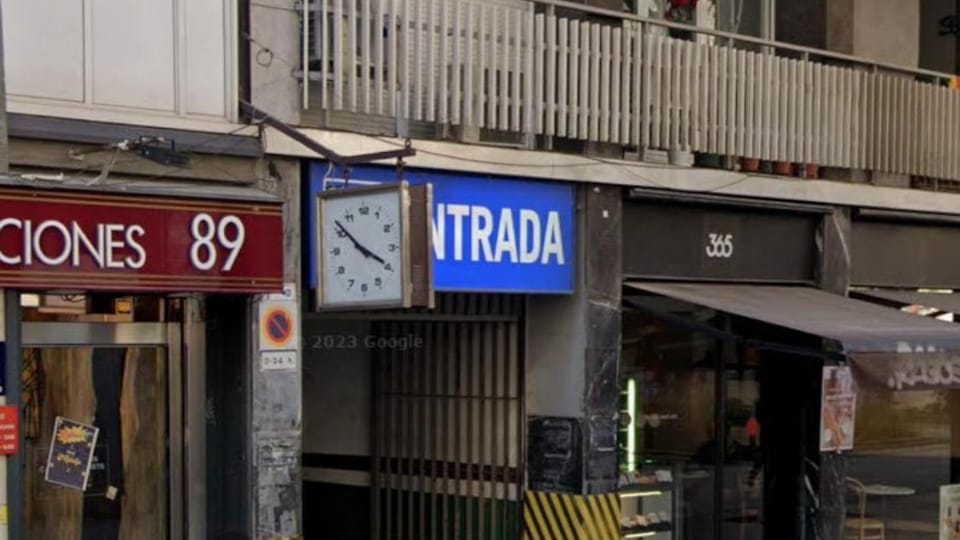
Residents and local businesses in Barcelona's Sant Antoni neighbourhood are rallying to protect an iconic clock. It belongs to the recently closed historic shop, Confeccions El Rellotge. The community has formally requested the city council to safeguard the timepiece. It has marked the hours on Calle Comte Borrell for over four decades.
Community Rallies for Preservation
The beloved clock, a prominent feature at number 89 Calle Comte Borrell, faces removal. This follows the permanent closure of Confeccions El Rellotge in February. This closure, attributed to evolving consumer habits and escalating rental costs, threatens the removal of the large clock from its façade.
Sant Antoni Comerç (SAC), a local traders' association, has launched a campaign to prevent this loss. The organisation formally petitioned the Eixample District and Barcelona City Council's Heritage department for protection. They aim to keep the clock in its original location, regardless of future tenants or businesses.
Jordi Arias, president of Sant Antoni Comerç, emphasised the clock's significance. He stated, "We are asking the council to keep it as a symbol of the commerce we are losing in Sant Antoni and as a tribute to Evaristo Sender, who was a true benchmark in the world of commerce."
A Clock's Enduring Legacy
The clock's story began in the 1920s with Evaristo Sender's mother. She opened a modest stall inside the Mercat de Sant Antoni, using a clock as a visual draw. Evaristo expanded the business in the 1970s, opening a clothing shop in Calle Riera Alta in El Raval.
In 1982, he moved to Calle Borrell, specialising in men's fashion. In 1983, Sender installed a replica of the original market clock on the new shop's façade. This proved so successful that the clock eventually gave the shop its name, Confeccions El Rellotge, meaning 'El Rellotge Garments'.
Its sentimental value to the community became evident during the COVID-19 pandemic. When the mechanism broke, residents insisted on its repair. This prompted a train clock specialist to restore it. The Eixample district, home to over 260,000 residents, has seen numerous historic establishments close. This trend highlights the challenges faced by traditional businesses in Barcelona.
Future of the Iconic Timepiece
The Heritage Commission is scheduled to convene on 30 April to evaluate the petition. Traders hope for a positive municipal decision to preserve the clock in its historic location. The association also requests a commemorative plaque be installed alongside the clock. This would honour Evaristo Sender and the shop's legacy.
However, Sant Antoni Comerç has prepared a contingency, a 'plan B'. Another associated neighbourhood shop has volunteered to host the clock on its own façade. This ensures the centenarian icon continues to tell time for Sant Antoni residents, even if the initial request is denied.
Sign up for our new entrepreneurs community Bizcelona, now accepting our second wave of applicants.
Originally published by Metrópoli Abierta - Urban Life. Read original article.