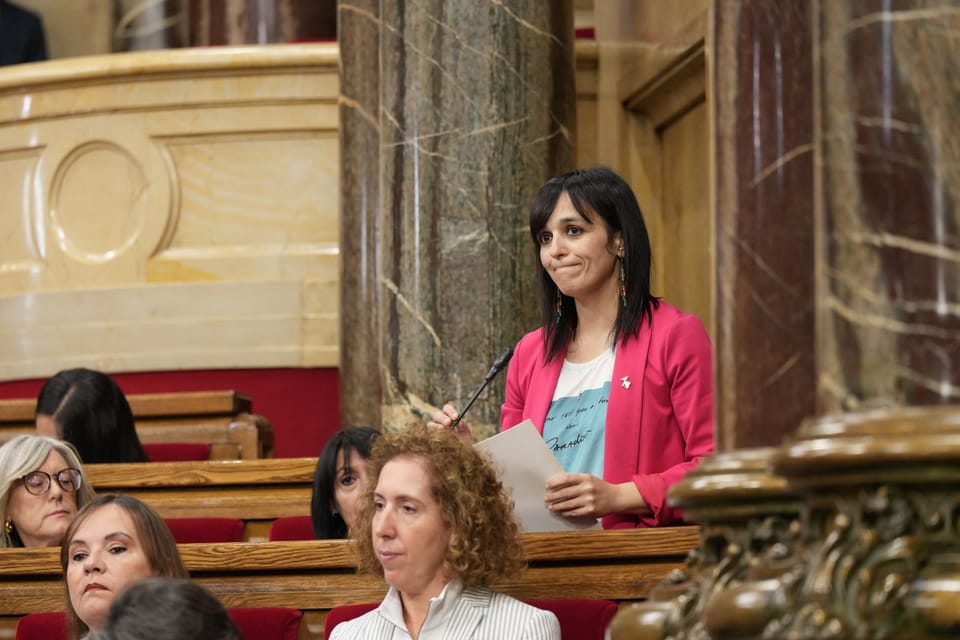
Catalan Alliance (AC) will not present a mayoral candidate for Barcelona's municipal elections on Saint George's Day, April 23rd, after their intended candidate withdrew. AC President Sílvia Orriols confirmed the setback at a press conference in the Parliament of Catalonia this Thursday. This unexpected development leaves the party without a leader for its first-ever Barcelona municipal campaign.
Orriols stated the party would not "rush" the decision, indicating ongoing discussions with other potential leaders for the Barcelona list. She confirmed, however, that AC has secured candidates for Girona, Tarragona, and Lleida. "We do not want to rush," Orriols told reporters at the Parliament of Catalonia, emphasising a cautious approach.
Candidate Search Continues
This development follows previous rejections from high-profile figures. Earlier this year, former Economy Minister of the Generalitat, Jaume Giró, revealed that Catalan Alliance had approached him to be their mayoral candidate. He publicly declined the offer, according to Centre for Opinion Studies. Jordi Amela, AC President for the Barcelona region, subsequently denied this offer existed, creating some internal confusion.
Previously, AC also ruled out Santiago Espot as a potential head of list for Barcelona. Espot is a former columnist for El Món and was a Catalan Solidarity mayoral candidate in Barcelona in 2011. He now promotes another pro-independence list with similar ideology for the City Council, further fragmenting the pro-independence vote.
Electoral Thresholds and Poll Predictions
Catalan Alliance holds two seats in the Parliament of Catalonia with Sílvia Orriols and Rosa Maria Soberana. The party plans to contest Barcelona's municipal elections for the first time. Political analysts view the Barcelona candidacy as a "thermometer" for the 2028 Catalan elections. This is because the city's electoral performance often reflects broader regional sentiment.
To enter Barcelona's Plenary Council, a party needs 5% of the votes. This threshold is higher than the 3% required for the Catalan parliament. Recent polls suggest Catalan Alliance could surpass the 5% threshold, indicating potential for representation. A September survey by Gesop for El Periódico indicated the party could secure two councillors with 5.4% of the vote. This percentage equates to approximately 37,000 to 38,000 ballots.
Barcelona's Political Landscape
The Plenary Council of Barcelona currently comprises 41 councillors. If the city's population remains above 1.7 million residents by late 2026, the political representation will increase to 43 councillors. This potential increase in seats makes securing a strong candidate even more critical for parties aiming to gain influence.
Catalan Alliance continues its search for a suitable candidate to lead its Barcelona municipal election campaign. The party aims to establish a presence in the city's political landscape ahead of future regional contests. Their ability to find a compelling leader will significantly impact their electoral prospects in the coming months.
Come and join our Barcelona English Speakers community on WhatsApp.
Originally published by Tot Barcelona. Read original article.