The Centre for Contemporary History of Catalonia (CHCC) faces an existential threat after the Generalitat de Catalunya proposed zero budget allocation for the institution. This decision could lead to its absorption by the Museum of the History of Catalonia, jeopardising its unique identity and research function.
This move comes despite the Parliament of Catalonia unanimously approving a motion on 19 March. The motion, supported by 122 votes, aimed to guarantee the centre's continued operation and funding. Historian Jordi Oliva, who coordinated the 'Human Cost of the Civil War' project for decades, expressed grave concerns about the situation.
Oliva stated, "If we believe in our country, we must make it possible for it to live with normality, and this also includes knowledge of its own history." He further emphasised the importance of an independent Catalan historical narrative. Oliva added, "Otherwise, they make history, they write it, with their uniform vision, not from the national and Catalan perspective. This disappears."
Established in 1984 by Josep Benet, the CHCC aimed to normalise Catalan historiography after decades of Francoist intellectual subordination. Its core mission involved recovering memory and constructing knowledge about Catalonia's past. The centre has published over a thousand works since its inception.
It also houses the Josep Benet Library, a key resource with approximately 40,000 books and 2,000 specialised periodicals on contemporary Catalan history. Additionally, the library holds significant documentary collections, many originating from donations by prominent Catalan figures.
Benet envisioned the centre as an institutional tool, serving the Parliament and government by providing essential historical works. He believed political leaders required historical knowledge to effectively exercise their responsibilities. The CHCC has also organised various exhibitions, lecture series, and public outreach initiatives.
Institutional Abandonment and Integration Fears
These initiatives include commemorations for the centenary of the Bases de Manresa and the execution of President Lluís Companys. The centre plays a crucial role in fostering a distinct Catalan historiographical ecosystem. This work has helped compensate for the historical marginalisation of contemporary Catalan history.
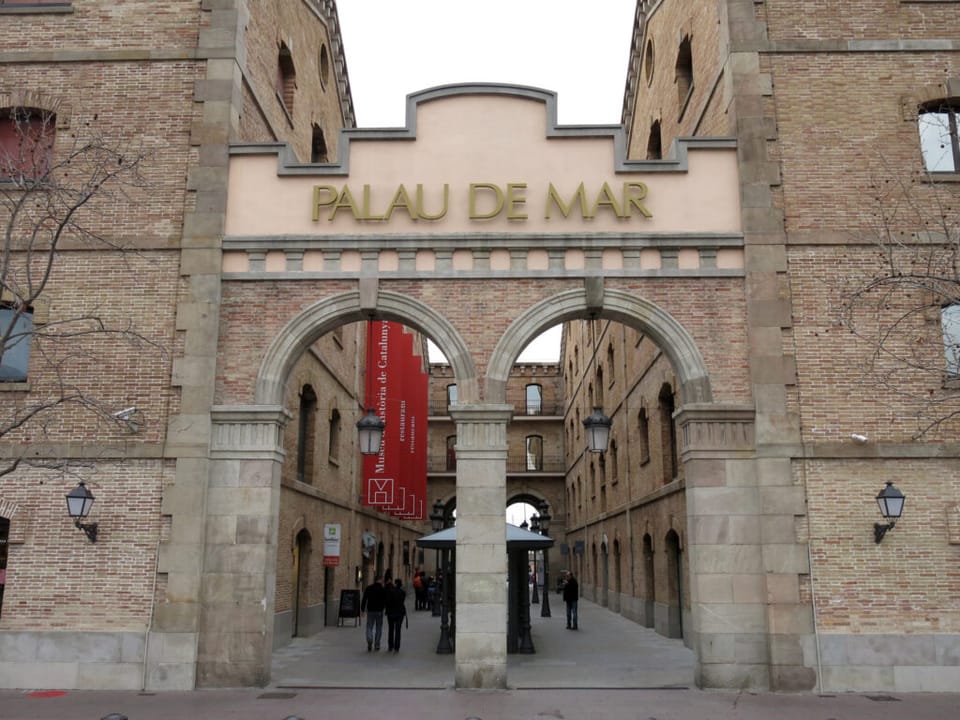
Despite its vital function in national normalisation, the CHCC now faces a critical situation. The current Generalitat government's decision to provide no budget allocation and reassign it to the Department of Culture could lead to its integration into the Museum of the History of Catalonia. This move threatens the centre's unique identity, even though they already share a building in Barcelona.
The CHCC's specific function involves fostering historical research and knowledge of the recent past. It supports researchers and projects often operating outside university or museum circuits. Oliva explained that the CHCC has always acted as a "collaborative and complementary" structure.
It intervened where universities faced resource limitations or academic orientation constraints, assisting with theses, promoting research, and facilitating publications. One of its most unique contributions has been building a "bottom-up history" through local and regional research. This work allows for the subsequent creation of national syntheses, structured town by town.
Such tasks are often less appealing to academic dynamics, making the CHCC's role indispensable. The potential integration into the museum echoes similar processes, such as El Born Cultural and Memorial Centre in Barcelona. El Born transitioned from an independent centre to one diluted within the broader Museum of the History of Barcelona structure.
A Sustained Degradation of Funding
The current predicament is not sudden; it stems from budget cuts initiated in 2011. The centre nearly disappeared then, saved largely by historian Jaume Sobrequés, who assumed the directorship without remuneration. Since then, it has operated under structural precarity. Oliva described the annual budget of approximately 65,000 euros as "an absolute disgrace."
A key turning point occurred in 2019 with the transfer of the 'Human Cost of the Civil War' project to the Democratic Memorial. This exhaustive investigation, built over decades, documented deaths, disappearances, and repression across Catalonia. It provided crucial academic and practical value, supporting exhumations, identifying mass graves, and establishing DNA banks.
This shift highlights a critical distinction often blurred in public debate: the difference between history and memory. Catalan institutions have recently invested in democratic memory policies, like the Democratic Memorial. These policies focus on reparation, recognition, and dissemination of the past.
However, such initiatives require prior research and a solid historiographical foundation. Oliva summarised, "History is research, contrast, archive, methodology. Memory is interpretation and transmission." He firmly added, "Without history, there can be no memory. Doing it the other way around is starting the house from the roof."
Oliva was emphatic: "Many resources have been spent on memory, and historical research, which had the CHCC as its fundamental pillar, has been abandoned." This prioritisation of disseminating existing knowledge has weakened the structure responsible for creating and expanding historical understanding.
Political Support Lacks Concrete Action
Paradoxically, the centre's current dismantling occurs amidst almost unanimous theoretical political support. Beyond the parliamentary motion, four former Generalitat presidents, two former Parliament presidents, seven culture ministers from various governments, and over 200 personalities and entities have endorsed a manifesto to save and revitalise the CHCC.
Despite this broad backing, the government's budget proposal allocates no funds. This is not an isolated decision but the culmination of a long-standing pattern of neglect. In recent years, the centre operated with a minimal annual allocation of 65,000 euros. This sum barely sustained residual activity, offering no real capacity to promote research, projects, or independent policies.
With a zero budget, the CHCC faces reduction to a mere administrative function without influence, or simply a label within the museum's structure. Oliva outlined the necessary steps: "We need to devise a good action plan that reinstates the figure of a remunerated director. This centre must have sufficient staff and budget to develop an action plan, work, research, aid publishing, support the Parliament and government, and promote exhibition projects."
Without the CHCC, vital research will remain undone, publications will not exist, and young historians will lack support. Historiographical gaps, from biographies of key figures to studies on Carlism, the Republics, Francoism, or the Transition at local and regional levels, will persist. These studies are essential for constructing rigorous syntheses.
This situation threatens to erode the central idea championed by Josep Benet: normality. A normal country understands its history, investigates it, discusses it, and makes it accessible to institutions and citizens. Oliva concluded, "It should continue to be an absolutely necessary research space." Without it, he warned, the country risks becoming "a mere administrative office of the Spanish state."
Sign up for our new entrepreneurs community Bizcelona, now accepting our second wave of applicants.
Originally published by VilaWeb Feed. Read original article.