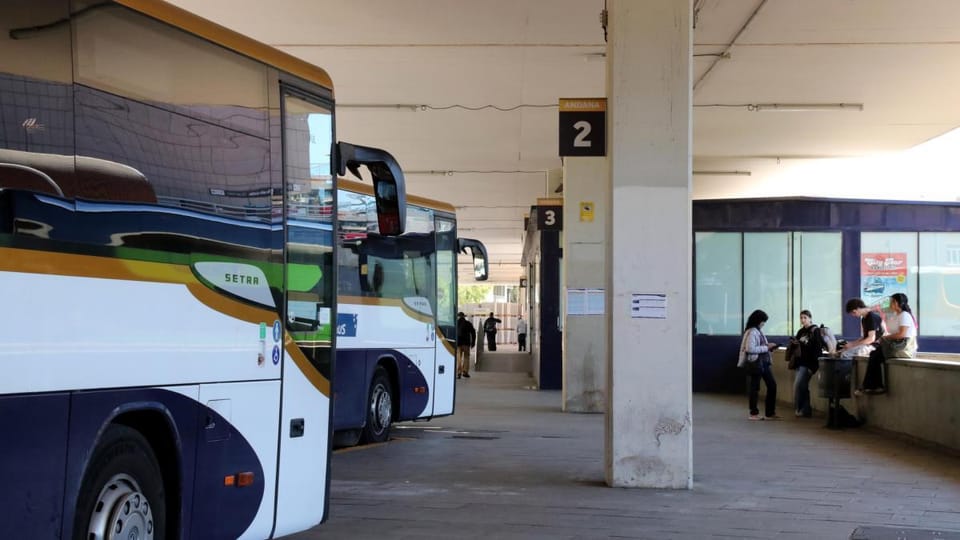
Catalonia's Mobility Secretary, Manel Nadal, called for the preservation of the Sants bus terminal on Tuesday, despite its planned demolition during the Sants train station renovation. This plea follows a doubling of intercity bus passengers in Catalonia over the past five years, highlighting Barcelona's critical lack of adequate bus infrastructure.
Growing Demand and Outdated Facilities
Intercity bus usage across Catalonia has surged, increasing from 50 million to 100 million annual trips within five years. This significant growth exposes Barcelona's persistent lack of suitable facilities for these vehicles upon their arrival in the city. Barcelona currently operates without a dedicated intermodal bus hub, a common feature in other major European cities like Madrid for decades. Existing facilities, such as the Fabra i Puig and Estació del Nord stations, are outdated and inadequate for current demand.
Manel Nadal, speaking at an event organised by the bus employers' association Fecav, specifically addressed the Sants terminal. He stated, "the station condemned to the wrecking ball should be maintained in some way." Nadal emphasised the importance of this location for intercity bus arrivals and departures. The current renovation plans for Sants train station, designed by the RCR architecture studio, envision a new environment that eliminates the existing bus terminal. This new design includes a semi-subterranean patio for taxi drop-offs and pick-ups, alongside stops for Transports Metropolitans de Barcelona (TMB) buses. However, it makes no provision for a dedicated intercity bus station.
Conflicting Visions for Sants and City Centre Access
Modifying the agreed project between the Administrador de Infraestructuras Ferroviarias (Adif) and the Ajuntament de Barcelona would be necessary to retain an intercity bus presence at Sants. The Sants terminal would then join a long-term list of planned intercity bus interchanges for the Catalan government. Meanwhile, the city's Deputy Mayor, Laia Bonet, expressed a different perspective in a recent interview with El País. She favoured a "drastic reduction" in the number of intercity buses entering central Barcelona.
Nadal, however, does not support limiting intercity bus access to central streets like Gran Via or Passeig de Gràcia. He argues against such restrictions until Barcelona possesses "at least five or six adequate bus stations" within its urban fabric. This ongoing debate highlights the tension between managing city centre traffic and providing essential transport infrastructure for a growing number of commuters and visitors.
Future Interchanges and Redevelopment Plans
The Generalitat has several long-term projects for new intermodal bus interchanges. The most advanced plan is for Plaça Espanya, currently in the drafting phase. This project anticipates an underground station connected to Ferrocarrils de la Generalitat (FGC) access, coinciding with the expected extension of the FGC L8 line to Gràcia. Additionally, an interchange is planned alongside the new La Sagrera railway station, though its opening date remains unconfirmed with substantial work still required.
Further plans include an interchange along the Diagonal, with potential locations at Zona Universitària or Francesc Macià. These sites offer significant interchange potential, especially once tram lines connect and the FGC L8 line extends through Francesc Macià. The existing Fabra i Puig and Estació del Nord stations also require remodelling to meet contemporary needs and maximise their utility. Years ago, authorities removed some bus stops from central streets, such as Ronda Universitat, but further steps to decentralise intercity bus traffic have not materialised.
Barcelona faces a critical juncture in its urban planning and transport strategy. The decision regarding the Sants bus terminal and the development of new intermodal hubs will significantly shape the city's future connectivity and its ability to manage increasing passenger volumes efficiently.
Sign up for our new entrepreneurs community Bizcelona, now accepting our second wave of applicants.
Originally published by La Vanguardia Barcelona. Read original article.