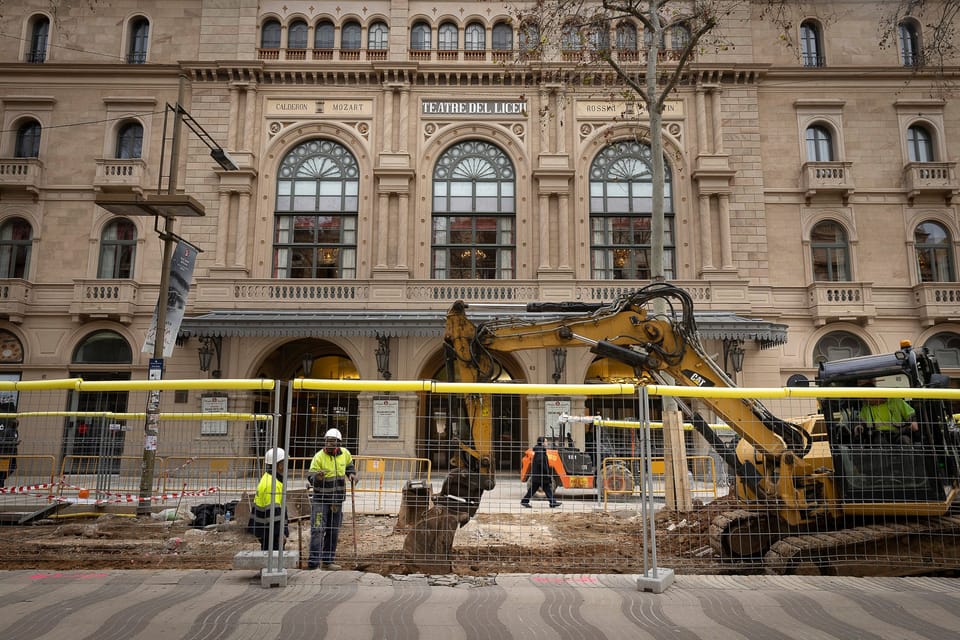
Barcelona's iconic La Rambla is undergoing a significant transformation, with its extensive renovation project now expected to conclude by early 2027. The Ajuntament de Barcelona confirms the schedule remains on track for completion by February next year, ahead of the municipal elections.
Mayor Jaume Collboni accelerated the project upon taking office. He made the transformation a “priority”, according to Fermín Villar, former president of Amics de la Rambla. This decision shortened the execution period to 34 months. Former Mayor Ada Colau's administration had projected a completion date of 2030. The future La Rambla will feature a unified terrace design, a reduction in the number of tables, and a third more space for pedestrians.
Significant Budget Increase for La Rambla Works
The renovation works for La Rambla will cost an estimated €55.6 million. This figure represents an increase of over €11 million from the initial projections of €44.5 million. The Ajuntament de Barcelona released these latest figures. For instance, the Drassanes-Colom section alone saw a 20% cost overrun. This was due to the installation of anti-terrorist bollards, archaeological works, and improvements to Maritime Museum access. These enhancements ensure safety and preserve historical elements along the promenade.
Mayor Collboni considers the recovery of La Rambla a flagship project of his mandate. He envisions the internationally renowned promenade becoming a crucial cultural axis. The first phase of works, covering the roadway and pavement on the Gòtic side, concluded in June last year. Currently, workers are focused on the Raval side, which constitutes phase two. This section is expected to finish during May. Phase three, involving the central promenade, commenced in early 2026. This central work required the temporary removal of establishment terraces. Officials expect these terraces to reopen progressively, with all of them operational by February next year.
La Rambla Transforms into a Cultural Hub
La Rambla is set to become a major cultural corridor. Existing venues like the Palau de la Virreina, Centre d’Arts Santa Mònica, Gran Teatre del Liceu, and Teatre Poliorama will be joined by new additions. The Antiga Foneria dels Canons will open in 2028 as the Digital Art Centre of Catalonia. Additionally, the Club Capitol will become a municipal theatre with two new performance spaces. The Teatre Principal, Barcelona's oldest theatre, also recently confirmed its reopening. Atir Hospitality, the group managing the venue, announced works have begun. The Teatre Principal will raise its curtain again in 2028, offering theatre, musicals, live music, temporary exhibitions, and dining options. Its renovation budget totals €45 million.
Eight florists, who temporarily relocated to Plaça de Catalunya in March, will return to La Rambla upon completion of the renovation. This marked the first time these vendors left La Rambla since 1888, when Flors Carolina, the promenade's oldest stall, first opened. The florists are operating from new stalls, which they will use upon their return. Flors Carolina will maintain its FAD-awarded cubicle, which has been in place since 1992. The kiosk itself will undergo restoration.
New Terrace Regulations and Heritage Preservation
This week, the Ajuntament announced the initiation of procedures to declare La Rambla a “Terrace Excellence Zone”. This designation will lead to the approval of a style guide. The guide will establish a unified terrace model with a distinct image for the entire area. This aims to enhance and reinforce the promenade's identity as an emblematic city thoroughfare. The council has reached an agreement with the Gremi de Restauració (Restaurant Guild) and Amics de la Rambla. The new terrace regulations will reduce the number of tables by 16%, from 382 to 322. Each establishment will be limited to a maximum of 24 tables.
The architectural project by Km 0 studio, led by former councillor Itziar González, underpins La Rambla's transformation. It proposes a single lane for uphill and downhill traffic, a reduction from the current two lanes. Traffic will be restricted to residents, services, and public transport. Pavements will also be widened to over three metres, as will the central promenade. Furthermore, the reform will incorporate three new squares: at Palau Moja-Betlem, Pla del Teatre, and Pla de la Boqueria. The renovation also prioritises heritage preservation. Important elements such as the Joan Miró mosaic and the Canaletes fountain will be restored. Four or five-arm lampposts, along with the Art Deco lamppost at the top of La Rambla opposite Bar Zurich, will also be preserved. The Ajuntament states that single-arm lampposts, though present for decades, were not original and will be replaced with contemporary lighting. The sculpture dedicated to writer Serafí Pitarra has been rehabilitated. An integral reform of the Columbus monument is also planned for the future. Its deterioration has accelerated due to “the low quality of the materials, its location, climate, and atmospheric agents.”
Project Timeline and Future Outlook
The Special Plan for the Reorganisation of La Rambla received approval in mid-2016. Barcelona en Comú, PSC, ERC, and Ciutadans voted in favour, while PP and CUP voted against. However, works did not commence until over six years later, in October 2022. The Colau government initially set out five phases, extending the project until 2030. Amics de la Rambla even displayed a counter above the Cafè de l’Òpera, highlighting the delays. Mayor Collboni's new calendar, presented in September 2023, led to the counter's removal. The accelerated timeline and comprehensive changes aim to revitalise La Rambla. This will ensure its continued prominence as a cultural and pedestrian landmark for Barcelona residents and visitors alike.
Sign up for our new entrepreneurs community Bizcelona, now accepting our second wave of applicants.
Originally published by Tot Barcelona. Read original article.