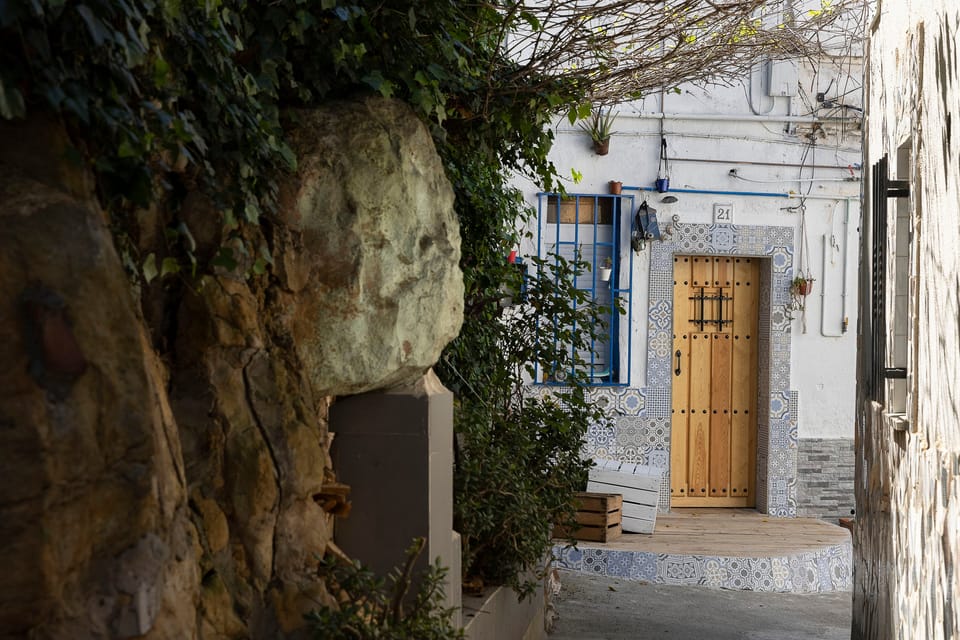
Residents of Barcelona's Turó de la Guatlla neighbourhood on Montjuïc are criticising a new €4 million urbanisation plan. They argue it fails to address decades of underinvestment and excludes their input. Works are set to start in the coming weeks in an area that has endured 50 years of neglect.
Decades of Neglect in Turó de la Guatlla
The neighbourhood, located on the slopes of Montjuïc, has faced an uncertain future since the 1976 General Metropolitan Plan (PGM) designated much of it as green space. This designation earmarked many homes for demolition. This threat led to minimal investment from both the Ajuntament de Barcelona and the Generalitat de Catalunya for half a century. Álex Casero, spokesperson for Salvem el Turó, a local residents' group, highlighted the profound impact of this policy. "The house at number 36 is a symbol for us," Mr Casero stated. "My grandmother died thinking her house would be demolished."
Mr Casero added, "Many people have lived poorly for decades due to an absurd urban planning decision." This long-term abandonment means many streets still have unburied lighting. Some homes lack sewage connections. Sections of the area remain unpaved. These basic infrastructure issues persist despite the neighbourhood's central location within Barcelona.
Residents' Fight for De-designation
Demolitions began in the late 1990s, removing many homes. A decade later, a second phase cleared more low-rise houses. Approximately 40 families still reside in Turó de la Guatlla today. Their homes were finally de-designated in early 2020 after years of resident mobilisation. This victory offered a crucial reprieve, ending decades of uncertainty for the community. Residents had hoped this would usher in a new era of investment and improvement.
Despite this success, the promised public works have not materialised until now. The new €4 million budget will fund improvements to mobility and accessibility across six streets. This budget is split between the upper and lower parts of the neighbourhood. However, residents express deep dissatisfaction with the plan. They say officials did not consult them on their needs or priorities.
Unaddressed Needs in New Urbanisation Plan
"We haven't had any meetings with the Ajuntament since the last government change," Mr Casero explained. "This is a lack of respect because we were key players in the de-designation process." One major point of contention is the decision not to urbanise Carrer de la Dàlia. This street is one of the neighbourhood's two main arteries. It is also a common route for driving schools.
Carrer de la Dàlia is the only one of the seven streets on the hill excluded from the reform plan. It is home to nearly 40% of the affected families. "When we asked, they didn't give much explanation, only that it wasn't a priority," Mr Casero said. The plan also proposes changes to street directions, complicating resident mobility. It includes a large slide in a future green area, which divides opinion among the community.
Community Exclusion and Key Omissions
Crucially, the plan offers no aid package for asbestos removal. Many roofs in the area contain asbestos. It also lacks support for housing and building rehabilitation. This was one of Salvem el Turó's main concerns. Oscar Julià, a 57-year-old resident, pointed out the stark contrast in the area. "Here you can perfectly see the difference between the part of the neighbourhood that was urbanistically affected and the part that wasn't. Between investment and disinvestment," Mr Julià reflected.
Mr Julià, who owns a corner house in Pas de Valls, a passage built for Galician workers for the 1929 Universal Exposition, expressed his attachment. "How could I not want to stay here?" he asked, proudly showing his home. Despite its charm, the rear of the passage still lacks a sewage connection. Most roofs are made of Uralite, a material containing asbestos. "We've fixed things, but our economy doesn't allow for everything," he admitted.
A Debt of Underinvestment
Santiago Agut, 61, whose grandfather settled in Turó de la Guatlla before the Civil War, echoed these concerns. "Here they only talk about concrete and gardens, but nothing about aid," Mr Agut added. He highlighted another issue: the plan leaves building number 7 on Carrer d'Hortènsia without its main access road. This would hinder emergency vehicle access. "It's so ridiculous," he commented.
The neighbourhood's proximity to Poble Espanyol also causes problems. Residents must contend with noise and litter from large events held there. Moving around the area involves constant changes in elevation. Residents would have proposed automatic escalators if consulted. They also would have insisted on including Carrer de la Dàlia. Its narrow pavements force pedestrians into single file.
Mr Julià concluded, "I don't think we're asking for anything outrageous. There's a debt of over forty years of underinvestment here, and we just want a bit of consensus. Patching things up would be a lost opportunity." Residents hope the Ajuntament will reconsider its approach. They seek genuine collaboration to ensure the urbanisation truly benefits the community.
Sign up for our new entrepreneurs community Bizcelona, now accepting our second wave of applicants.
Originally published by Tot Barcelona. Read original article.