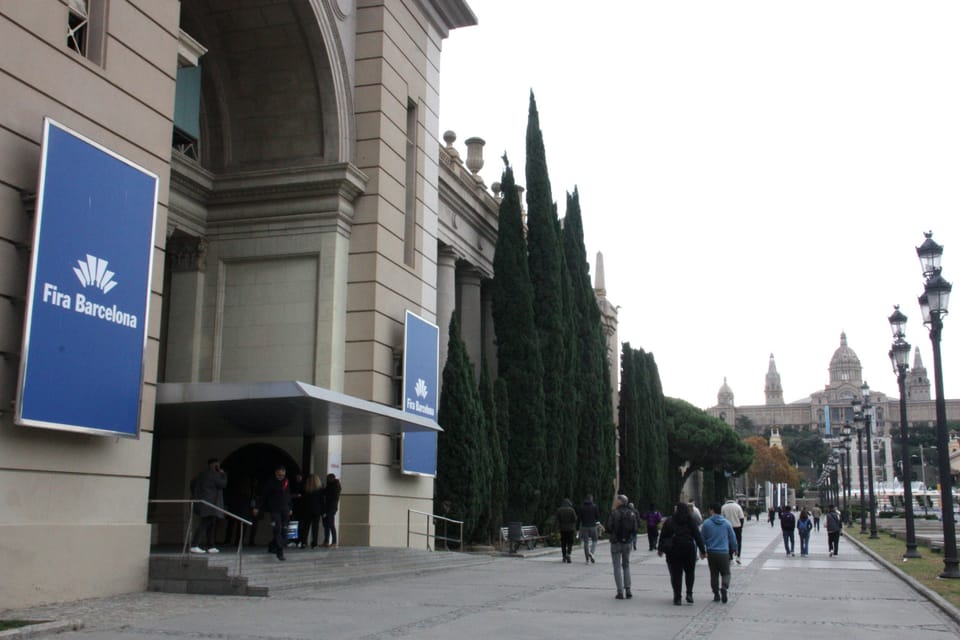
The Association for the Barcelona Transport Museum has formally challenged the City Council's 50-year concession of the Montjuïc exhibition palaces to Fira de Barcelona, alleging severe procedural irregularities. This legal move could potentially halt significant urban development plans for the iconic Montjuïc area.
The association filed an appeal with the Ajuntament, Barcelona's City Council, requesting an official review and declaration of "absolute nullity" for the concession. They claim the City Council did not follow established procedures for adjudicating the exhibition venues. Such a major decision, they argue, should have passed through the full Plenary session, not just a commission.
"The commission that approved the measure is 'manifestly incompetent' to greenlight a decree of this nature," the association stated in its appeal, accessed by Tot Barcelona. They added that the process "violated rights and freedoms susceptible to constitutional protection," effectively invalidating a public participation process. This process had gathered signatures to allocate one pavilion for the new Barcelona Transport Museum.
The Economy and Finance Commission unanimously approved the concession on 19 March 2025. This decision granted Fira de Barcelona the "exclusive use of the Montjuïc exhibition grounds" for 50 years. The agreement specified the use for "fairs, congresses, conventions, exhibitions, or other cultural and/or civic events," with an annual fee.
Following publication in the Official Bulletin of the Province of Barcelona (BOP), a 20-day period was set for claims or allegations. With no appeals submitted, the concession of the pavilions was definitively awarded on 24 April 2025. Fira de Barcelona secured the rights until 2075, paying an annual fee of 750,000 euros.
The Montjuïc exhibition grounds, located on the prominent Montjuïc hill, are a vital part of Barcelona's urban landscape. They host numerous international events annually, attracting millions of visitors and contributing significantly to the city's economy. The area is also home to several museums and cultural institutions, making it a key destination for both residents and tourists.
Allegations of Procedural Flaws
The Association for the Barcelona Transport Museum outlines three main irregularities in its appeal. They argue these make the adjudication "improper" and subject to "numerous defects of absolute nullity." Firstly, they contend the City Council violated citizens' right to participate in public affairs.
The citizen initiative proposing the museum in the former Palace of Communications and Transport, now Fira's Palace number 1, was already underway for a month. This occurred when the concession proposal went before the Economy and Finance Commission. The City Council had authorised signature collection for a Plenary demand without objection from political officials or legal services.
"The Plenary agreement of 30 January 2026, which unanimously agreed to create a commission to analyse the museum's viability, is a political impulse, not a resolution," the association explained. They added, "This does not mean it can be thwarted by a parallel administrative process, conducted with total opacity and a questionable procedure." They concluded that this "empties the right to participation of its content."
Commission's Competence Questioned
Secondly, the association asserts the Economy and Finance Commission was "manifestly incompetent" to approve the plan "due to the subject matter." They cite Article 60.1 of the Local Entities' Heritage Regulation. This article states that granting public domain concessions falls under the Plenary's jurisdiction.
The Barcelona Municipal Charter, approved by Law 22/1998, further clarifies this. It assigns the Plenary the competence to "contract works and concessions of all kinds if the amount exceeds 2,500 million pesetas, equivalent to just over 15 million euros." This also applies to multi-year contracts and concessions lasting over four years.
The Montjuïc concession to Fira de Barcelona involves an annual fee of 750,000 euros. Over its 50-year term, this totals 37.5 million euros. This figure significantly surpasses the 15 million euro threshold. "Both the Barcelona Municipal Charter and the Local Entities' Heritage Regulation indicate that a concession under these conditions can only be granted by the Municipal Council in Plenary," the association concluded.
Omission of Essential Procedures
Finally, the association alleges the concession proceeded "totally disregarding the established procedure" and omitted essential steps. They justify these accusations by highlighting the use of an initial approval of clauses to effectively grant a concession. "What presents as the initial approval of a document becomes, in reality, a direct, automatic concession by administrative silence," they claimed.
They argue the process combined initial approval, direct award to Fira, a 20-day public information period, and automatic elevation to definitive approval in a single act. The association defends that the announcement of the adjudication proposal was "misleading," presenting a "mere formality" for a resolution involving a 50-year public facility concession.
"[This] can have no other purpose than to conceal the object of this resolution," the association stressed. They also added that the public information period for claims does not replace a public hearing, as required by procedure. "The City Council should have granted a hearing to the Association as an interested party," they insisted, stating the omission caused them "defencelessness."
The resolution also lacks "the slightest motivation," they claim. It fails to explain why a concession was sought instead of the previous use assignment. "The City Council has been deprived of any possibility to intervene in the uses of the exhibition palaces during the concession," they asserted. "Neither Fira justifies why it needs the concession, nor does the City Council explain why it grants it."
City Council Response and Future Implications
Municipal sources, consulted by Tot Barcelona, maintain that the administrative process for the concession was "correct at all times." They emphasised their "commitment to maximum transparency on the matter." These sources also noted that the project underwent a public information process after approval by the Economy and Finance Commission. They highlighted that "no allegations were presented" during this period.
If the City Council rejects the current appeal, or if six months pass without a response, the citizen platform could file an administrative contentious appeal. This would challenge both the concession and the urban plan affecting the area. The likely acceptance of this appeal could lead to a precautionary halt of the Special Integral Plan for Urban Improvement (PEliMU). This plan aims to develop the exhibition pavilions.
Such a halt would remain in place until the appeal and detected procedural defects are resolved. Failure to resolve this could initiate a judicial dispute, prolonging the transformation process for the Montjuïc exhibition area. This transformation is planned for the centenary of the 1929 Universal Exhibition.
The legal challenge introduces significant uncertainty into the future of the Montjuïc exhibition grounds. It highlights ongoing tensions between urban development, public participation, and administrative transparency in Barcelona. The outcome will shape not only the Fira de Barcelona's long-term operations but also the potential for new public cultural institutions like the Transport Museum.
Sign up for our new entrepreneurs community Bizcelona, now accepting our second wave of applicants.
Originally published by Tot Barcelona. Read original article.