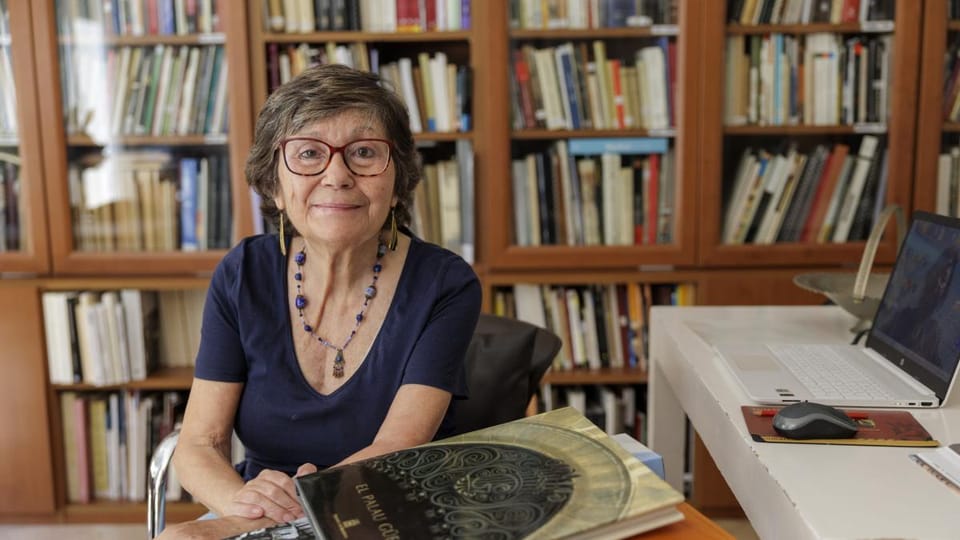
Art historian Raquel Lacuesta offers fresh perspectives on Antoni Gaudí's architectural brilliance and his unique bond with Eusebi Güell. Her insights coincide with the recent publication of "Gaudí: Windows on the Future", a book exploring the architect's distinctive window designs. Lacuesta challenges common perceptions of Gaudí, focusing on his intuitive architectural methods.
Lacuesta, an art historian and restorer, describes Gaudí as an architect with an "intuitive intelligence". She states he "used poetics and musicality in a way that has not been repeated". She rejects labels like "genius" or "saint" for Gaudí, emphasising his professional skill. Lacuesta herself worked on the restoration of Palau Güell, a masterpiece by Gaudí located in Barcelona's El Raval district.
Lacuesta has also published several books on Güell and Barcelona Modernism. She clarifies the relationship between Gaudí and his client, Eusebi Güell. "Güell was not Gaudí's patron, as many say," Lacuesta explained. "It was a client and architect relationship, and also a friendship, because both were so intelligent and cultured that they understood each other immediately." She views Palau Güell as a fusion of their two minds.
Unveiling Palau Güell's Unique Features
The new book, "Gaudí: Windows on the Future", published by Triangle Postals, highlights Gaudí's most distinctive windows. Lacuesta contributed to the book, specifically detailing Palau Güell's innovative design elements. She points out the building's wall openings, which enhance interior lighting and depth. Additionally, she notes the attic roof's ruled surface, similar to those found in the Sagrada Família's schools. Lacuesta also identifies the trencadís mosaic work as "the first expression of abstract art".
Another unique feature of Palau Güell is its central hall, which boasts a star-studded dome and perfect acoustics. Lacuesta calls this space "the first Palau de la Música that came to Barcelona". This reference highlights the building's early significance as a venue for musical performances. Palau Güell, a UNESCO World Heritage site, stands as a testament to Gaudí's innovative approach to both aesthetics and functionality.
Gaudí's Playful Architectural Approach
Lacuesta's deep understanding of Gaudí developed through her connection with Cèsar Martinell, one of Gaudí's disciples and biographers. She initially met Martinell to discuss Baroque architecture for her thesis. Through him, she discovered the "wine cathedrals", Gaudí, and Modernism, subjects "not taught at university" at the time. Martinell opposed the continuation of the Sagrada Família's construction, believing they were "inventing the building".
Lacuesta initially shared Martinell's scepticism regarding the Sagrada Família's ongoing work. However, she changed her perspective after Jordi Bonet and subsequent architects took over. She credits them with "empirically materialising Gaudí's sole drawing and models through an extraordinary constructive architectural experiment". Lacuesta acknowledged, "we made a mistake, and when one makes a mistake, one rectifies." This reflects a shift in her understanding of the project's legitimacy.
Early Commissions and Experimentation
Before Palau Güell, Eusebi Güell tested Gaudí's abilities with smaller commissions. The first was a musical kiosk for the López gardens in Comillas, which proved very popular. This kiosk was later moved to Finca Güell in Barcelona. "Gaudí did what he always did, he played; he liked to play by making architecture," Lacuesta remarked. Following this, Gaudí designed El Capricho, which Lacuesta identifies as "the first Modernist building in Spain and Europe".
Later, Gaudí also renovated Finca Güell. Lacuesta describes this project as "a culmination of contributions and games by Gaudí, Güell, and Verdaguer," who had already written "L'Atlàntida". The Crypt Güell, whose restoration caused controversy, also served as a crucial experimental ground. Lacuesta studied it in depth, calling it "a marvel, a field of experimentation for everything that would come later". This highlights its importance in Gaudí's development.
Raquel Lacuesta's ongoing research and publications continue to enrich the understanding of Antoni Gaudí's legacy. Her work provides valuable insights into his architectural philosophy and the intricate details of his masterpieces like Palau Güell. The new book, "Gaudí: Windows on the Future", offers residents and international visitors a fresh perspective on Barcelona's iconic Modernist heritage.
Come and join our Barcelona English Speakers community on WhatsApp.
Originally published by La Vanguardia Barcelona. Read original article.