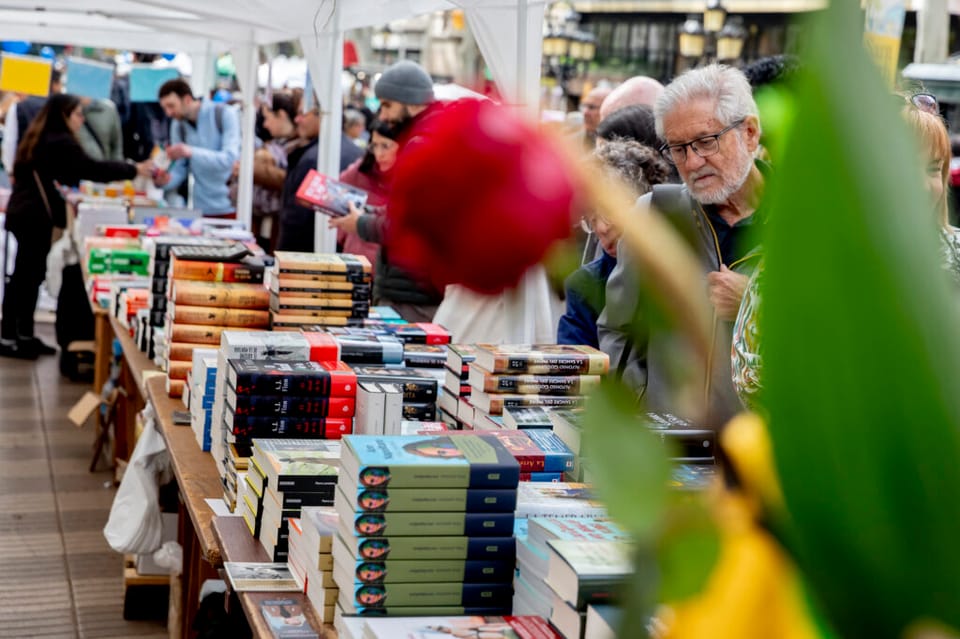
A recent article published by VilaWeb, a prominent Catalan news outlet, strongly asserts Sant Jordi's primary role as a celebration of Catalan language and literature. On 23 April, Barcelona transforms into a vast open-air bookshop, yet the piece argues this day holds a deeper, more specific meaning for the Catalan language itself.
The article states, "Sant Jordi is another thing. Sant Jordi is the day in which a language that in most of the territory, except Andorra, has no state, comes out splendidly onto the street to be seen: with its books in hand." It positions the annual festival, where books and roses are exchanged, as a vital cultural and linguistic affirmation. The author asserts, "Sant Jordi... is a political festival in the cleanest and oldest sense of the word: it is a festival of the city, of the polis, of culture, of the community that recognises itself in a language."
Sant Jordi: A Celebration of Catalan Identity
The piece highlights that while other days exist for books in general, Sant Jordi specifically champions Catalan literature. It argues that small gestures, such as reading, buying, and gifting books in Catalan, are crucial for the language's continuity. These acts, often understated, contribute significantly to the cultural fabric of Catalonia.
The author draws a parallel with Hungarian novelist Sándor Márai, who read in his native language daily while in exile. Márai believed this practice preserved the nuances and rhythm of his mother tongue. The VilaWeb article applies this sentiment to Catalan, underscoring the vital role of books in preserving a language's essence.
Preserving Linguistic Heritage Through Literature
The article states that conversations fade and dissolve, but books endure as a language's long memory. It argues that books store words, both those currently in use and those that might otherwise be forgotten. The piece argues, "A language without books is a language that becomes small. A language with books is a great language." This perspective underscores the profound impact of literature on linguistic vitality.
Catalan possesses a rich and diverse literary tradition, spanning various genres and historical periods. The article highlights an extensive catalogue of Catalan authors, from medieval poets like Ausiàs Marc to contemporary novelists such as Mercè Rodoreda and Quim Monzó. It also notes the availability of splendid translations of international classics into Catalan.
The Enduring Pleasure of Reading in Catalan
This robust literary output, the article suggests, forms a library "worthy of any country." It has been built through the consistent effort of thousands of readers, often with fewer resources than desired. VilaWeb frames the act of buying a Catalan book on Sant Jordi as a "gesture of continuity," a silent yet effective vote for the future of Catalan publishers, translators, writers, and readers.
The author also highlights the "great pleasure" of reading in one's native tongue, stating, "Reading in one's own language has a quality that reading in no other has, however well we master it. It is like walking barefoot at home." This intimacy allows words to resonate perfectly, without the need for mental translation, offering one of literature's greatest luxuries.
Supporting Catalan Literature in Barcelona
VilaWeb encourages residents to purchase Catalan books not only on Sant Jordi but throughout the year, supporting local bookstores. The article notes that booksellers rely on year-round sales, not just the annual festival. It advises leaving books around the house and gifting them to children and friends, suggesting reading aloud to children as a way for the language to become deeply embedded.
For those celebrating in Barcelona, VilaWeb itself offers specific Sant Jordi activities. Its headquarters on Carrer de Ferlandina, 43, will operate with special hours, from 10:00 to 20:00, including public events. Additionally, VilaWeb Libres will have its own book stall on Carrer de Mallorca, situated between the iconic Passeig de Gràcia and Rambla de Catalunya.
The piece concludes with a powerful call to action, urging daily engagement with Catalan literature. It suggests reading a few pages each day, even if one is far from home, to ensure the language's vitality for future generations across Catalonia and beyond.
Come and join our Barcelona English Speakers community on WhatsApp.
Originally published by VilaWeb Feed. Read original article.