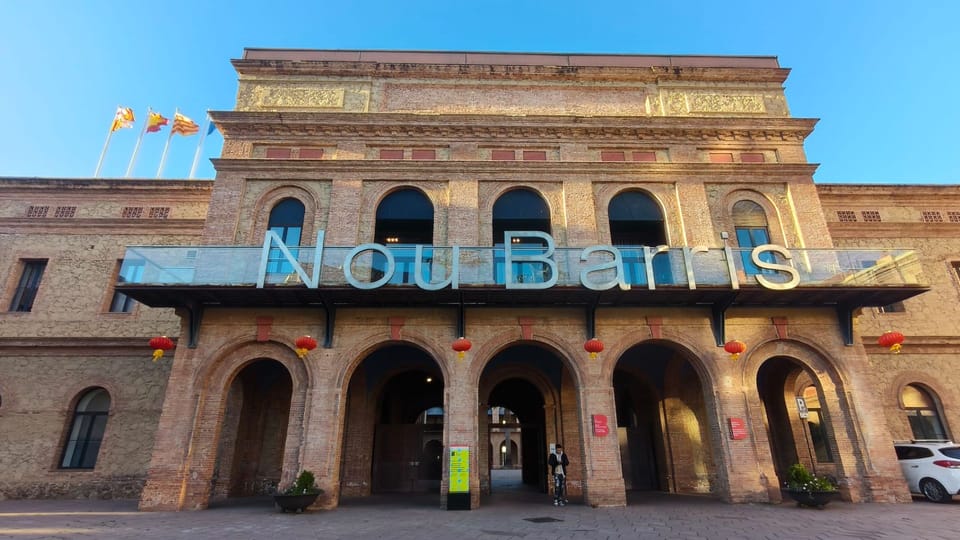
Barcelona's Nou Barris district, despite its name meaning "Nine Neighbourhoods," currently comprises 13 distinct areas, a historical anomaly rooted in a 1970s residents' movement. This discrepancy often confuses residents and visitors alike, as the district's identity is deeply tied to its unique nomenclature.
The 13 neighbourhoods making up Nou Barris are Can Peguera, Canyelles, Ciutat Meridiana, la Guineueta, Porta, la Prosperitat, les Roquetes, Torre Baró, la Trinitat Nova, el Turó de la Peira, Vallbona, Verdum, and Vilapicina i la Torre Llobeta. The district's name originates from a period of intense community activism in the 1970s.
The Origin of the Name
Residents from several areas, then part of the Sant Andreu district, mobilised against an urban development plan proposed by Mayor Josep Maria de Porcioles. This plan aimed to reorder their neighbourhoods. As a result of this unified neighbourhood struggle, activists created an informative bulletin. This publication was initially titled "Information Sheet of the Neighbourhood Association of the Vallbona, Torre Baró, Trinitat Sector," also encompassing Verdum, Roquetes, Prosperitat, Canyelles, and Ciutat Meridiana.
Ignasi Catalán, a prominent neighbourhood leader, decided to shorten the lengthy name for practical reasons. He explained in 2016, "I believed the other name was too long and didn't have a hook. I counted how many neighbourhoods there were, and since there were nine, then 9 Barris." This bulletin's title, "9 Barris," became the unexpected origin of the district's official name, reflecting a spirit of unity and resistance.
District Formation and Early Changes
When the Ajuntament de Barcelona established the city's district divisions in 1984, officials initially considered "Ciutat Nord" (North City) for this territory. However, they ultimately discarded this option. Instead, the council adopted the name chosen spontaneously by the neighbourhood associations, solidifying "Nou Barris" as its official designation. Historically, a curious coincidence also exists: before the 1984 division, Sant Andreu was District 9, and the territory now known as Nou Barris formed section 9-B within it.
Upon its independence from Sant Andreu in 1984, the newly formed Nou Barris district actually comprised 14 neighbourhoods, one more than its current count. Vilapicina, distinct from Vilapicina i la Torre Llobeta, held its own identity at that time. This was reasonable, given its status as the oldest settlement, inheriting the core of Santa Eulàlia de Vilapicina.
Modern Neighbourhood Adjustments
Significant changes to the district's composition occurred in 2006. The Ajuntament de Barcelona redesigned the neighbourhood map, merging Vilapicina with la Torre Llobeta to form the current Vilapicina i la Torre Llobeta. This consolidation reduced the total number of neighbourhoods. Additionally, the council also proposed uniting Can Peguera with el Turó de la Peira during the same period.
However, residents of the "cheap houses" (cases barates) in Can Peguera rejected this merger. They held a referendum during the Festa Major de Can Peguera in 2006. Over 60% of residents participated in this vote. Although the referendum was non-binding, the Ajuntament respected the popular will. The council recognised the historical uniqueness of Can Peguera, preserving its separate identity and maintaining the district's count at 13 neighbourhoods.
The Ambiguity of "Nou"
Beyond its historical and community-driven origin, the ambiguity of the word "nou" contributes to the district's intriguing name. In Catalan, "nou" can mean both the number nine and the adjective "new." Some residents ponder whether the name refers to the number 9 or to the district being the "new" or latest one created in the city. If it referred to "new," the correct plural form would be "Nous Barris."
Nevertheless, the fact that Nou Barris was the last district formally established in Barcelona adds weight to the interpretation that its name might also imply novelty. However, many local entities and facilities unequivocally adopt the numerical interpretation. For example, the Coordinadora Cultural 9 Barris, the Ateneu Popular 9 Barris, and the association 9 Barris Imatge all use the numeral "9" directly in their names. This choice reinforces the numerical meaning for many within the community.
The enduring name of Nou Barris, a testament to community action and historical evolution, continues to shape the identity of this vibrant Barcelona district. Its story highlights how local activism can leave a lasting mark on urban geography and nomenclature.
Come and join our Barcelona English Speakers community on WhatsApp.
Originally published by betevé. Read original article.