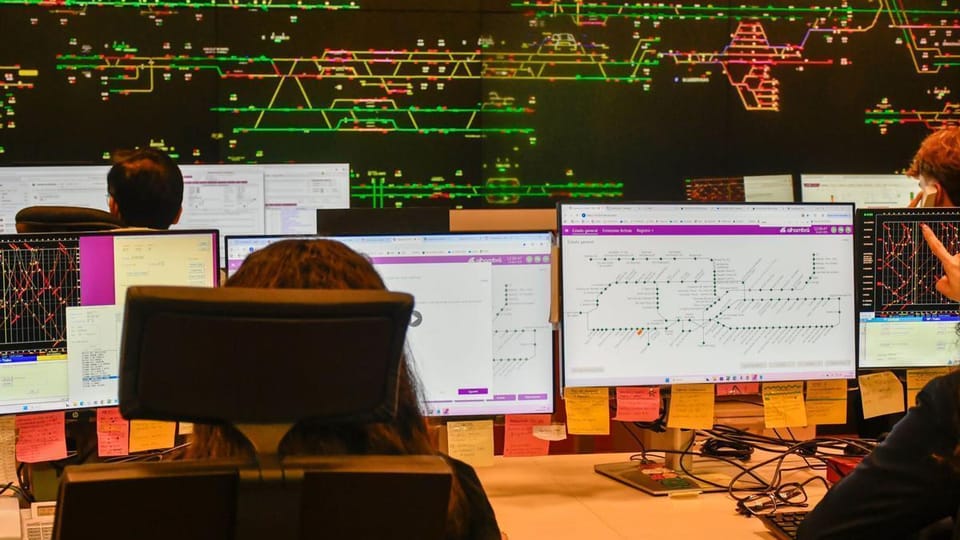
Renfe recently strengthened its Rodalies Operations Management Centre (CGO) at El Clot station by adding 25 new incident management technicians. This recruitment brings the total staff at the critical control centre, often called the "brain" of Rodalies, to 68 employees. The move aims to enhance the response to railway disruptions and improve communication for passengers across the network.
Initial Staff Boost for Rodalies
This latest hiring differs from previous recruitment drives. Earlier CGO staff typically transferred from other Renfe departments, receiving only general training. However, the 25 new technicians underwent a rigorous selection process and completed a four-month training programme. This specialised programme focused exclusively on the specific operational details of the Rodalies network. Sources from the railway operator acknowledged the ongoing challenges, stating, "There is still a way to go, but we have started to get better."
Specialised Training and Future Plans
The El Clot management centre coordinates 272 trains and 982 daily services, overseeing 900 train drivers. Its future depends not only on these new technicians but also on better coordination with Adif's Circulation Regulation Centre (CRC) at França Station. Adif manages the railway tracks and infrastructure, while Renfe handles planning and train drivers. The long-term vision involves both entities working from a single, shared control centre within a few years.
Steps towards this integration are already underway. In recent months, Renfe has increased its personnel working directly at Adif's control centre. Up to three Renfe operators now work per shift at the França Station facility, providing real-time information to their colleagues. A unified centre would significantly improve one of Rodalies' main weaknesses: timely information for users during incidents.
Improving Incident Response
The incident management system, directly overseen by the El Clot centre, starts with an alert from a train driver or Adif. Once the CGO receives the notification, staff immediately inform affected passengers via public address systems. Simultaneously, the Rodalies Management Centre protocol activates. An operations technician and the centre head then issue directives for managing the incident on the ground. These directives often involve planned delays, service cancellations, or arranging alternative road transport.
After designing a response plan, a Renfe technician decides how and through which channels to communicate the measures. They use station screens, public address systems, social media, SMS, and websites. The entire process can vary in length depending on the incident's type and severity, though some cases conclude within ten minutes. While the El Clot centre maintains constant communication with Adif, a single shared location would further reduce the time needed to report infrastructure incidents.
Real-Time Information at Stations
Since the full integration of control centres remains a long-term project, Renfe has implemented more immediate measures to improve passenger information. From mid-February, CGO staff have been deployed to several "intermediate head stations." These include Mataró, Castelldefels, Granollers Centre, L'Hospitalet, and Sant Celoni. At these stations, some trains end their journeys, while others make stops before continuing.
Small, last-minute incidents often occur at these locations, making it difficult to update information screens or public address announcements in time. For example, a train might be announced on platform 5 but depart from platform 2, causing confusion and rushes among passengers. The Rodalies control centre staff deployed at these stations receive direct information from El Clot. They then transmit it to passengers as quickly as possible. Sources from the railway company celebrated this initiative, stating, "For the first time, we are leaving the centre to understand the reality."
Looking Ahead for Commuters
Another ongoing challenge for Rodalies, also managed by the El Clot control centre, is providing real-time information. Renfe has been developing a new mobile application for several months. This app aims to offer more precise train information than currently available tools. For now, users must continue to rely on existing web portals that display real-time train locations.
Renfe officials confirm they are studying ways to improve these portals. However, they note the portals have been active for too short a period to fully assess their performance. These ongoing efforts show Renfe's commitment to enhancing the daily travel experience for thousands of commuters in Barcelona and across Catalonia.
Come and join our Barcelona English Speakers community on WhatsApp.
Originally published by El Periódico Barcelona. Read original article.