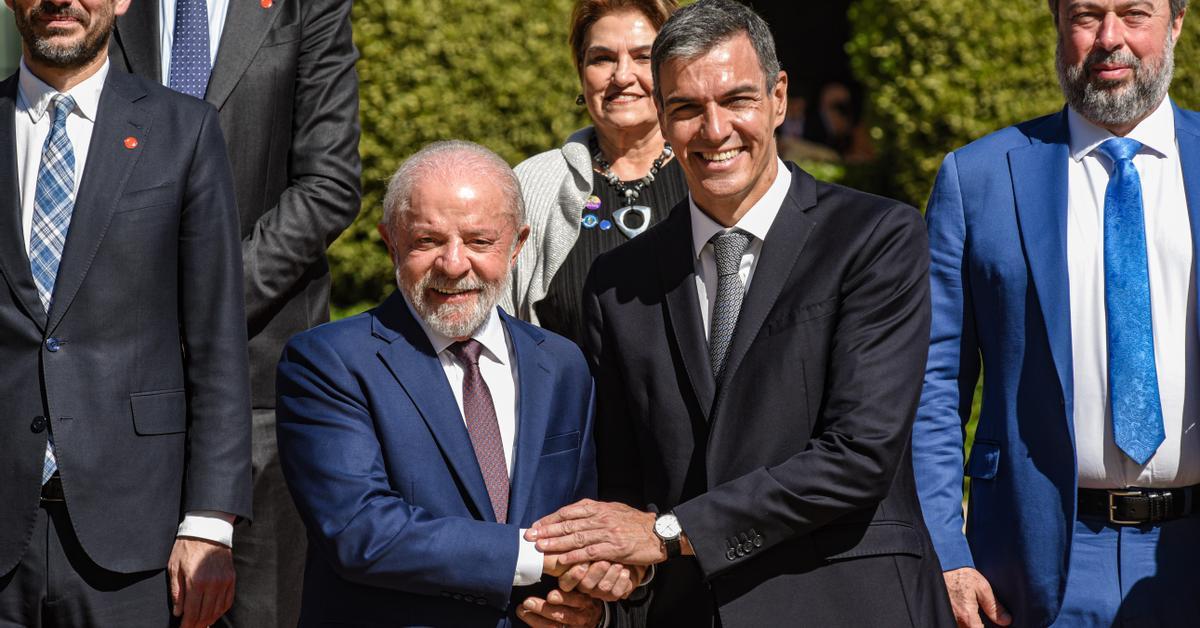
Spain's Prime Minister Pedro Sánchez and Brazilian President Luiz Inácio Lula da Silva have held their countries' first official summit at Barcelona's Palau de Pedralbes, positioning themselves as leaders of progressive resistance to global far-right expansion. The two heads of state signed 15 strategic and commercial agreements whilst emphasising their shared commitment to multilateralism and peace.
"Brazil and Spain are in the same trench," Lula declared at a joint press conference following the summit. Sánchez echoed the sentiment, stating: "Whilst others open wounds, we want to heal them." Both leaders directly referenced their opposition to Donald Trump's interventionist foreign policy, with Sánchez warning that values supporting peace "are being attacked by reactionary waves and totalitarianism."
Strategic agreements and trade
The two governments signed agreements spanning economics, commerce, critical minerals, innovation, and science. A key accord involved Mercosur trade arrangements, which Sánchez described as "the largest free trade area." Spain ranks as Brazil's second-largest importer, and both nations committed to expanding bilateral trade ties. Ministers from both governments, including Spanish Vice President Yolanda Díaz and Foreign Affairs Minister José Manuel Albares, participated in ministerial-level discussions at the same venue.
Lula, 80, reaffirmed Brazil's stance against military confrontation. He recalled 2003, when the Bush administration invited Brazil to join the Iraq War: "I told them our war was different. We fight for a just society." He echoed Sánchez's earlier call for "no to war" when tensions escalated between the United States and Iran.
Multilateralism under pressure
Both leaders criticised the erosion of international order. Lula stated that the United Nations and other international bodies are "very weakened," noting that nations that created the UN "do not respect" it and fail to implement its decisions. Sánchez called for renewing the multilateral system and international law against what he termed deliberate attempts to undermine the established world order.
The leaders also identified social media as a battleground where far-right movements gain ground. Sánchez called the platforms "a failed state," whilst Lula added: "It is easier to lie there than to tell the truth."
Domestic political context
The summit marks a significant moment for both leaders amid internal political challenges. Sánchez faces declining polling ahead of Spain's next general elections, with most surveys predicting victory for right-wing and far-right parties. His parliamentary majority is fragmenting in Congress. Lula, despite favourable polling predicting first-round re-election victory in October's Brazilian elections, faces competition from Flávio Bolsonaro, son of former president Jair Bolsonaro.
The summit establishes a new institutional framework for Spain-Brazil relations. Friday's gathering was the first such bilateral summit between Spain and Brazil, though Sánchez and Lula have previously met during official visits. The two nations agreed to make the summit a regular, likely biennial, event, formalising their strategic alliance.